

Level 1 sweep and inspection to the NFPA 211 annual standard - flue, crown, cap, and flashing checked and photographed
Chimney sweep logs do not sweep chimneys. They loosen some creosote - which then falls where a brush and vacuum still have to collect it.


 Before
 After
After Before
 After
After Before
 After
AfterTrusted Chimney Cleaning & Sweep for New York City Homeowners
Chimney Cleaning & Sweep in South Gate costs $189-$329 for a standard sweep and Level 1 inspection, and we complete most jobs in under two hours. If you’ve noticed a smoky smell in your living room after a fire, or you can’t remember the last time anyone looked past the damper, the flue needs attention. Emberly Chimney Cleaners has inspected and cleaned more than 38,000 chimneys since 2009, and every one of them got a written price before work started and a photo record when we finished. That’s how Corrine Halstead built the company: documenting what’s actually happening inside the flue, so you don’t have to take anyone’s word for it.
Call (980) 580-8641 and you’ll speak with a live person who can schedule your sweep, talk through what we’ll check, and get you a written quote before anybody sets foot in your home.
What Our Chimney Cleaning & Sweep Service Includes
Every sweep we do in New York City is built around one principle: you should see what we see. That means a camera goes down the flue on every visit, not just when something looks wrong. Here’s what each part of the service covers.
Level 1 Inspection
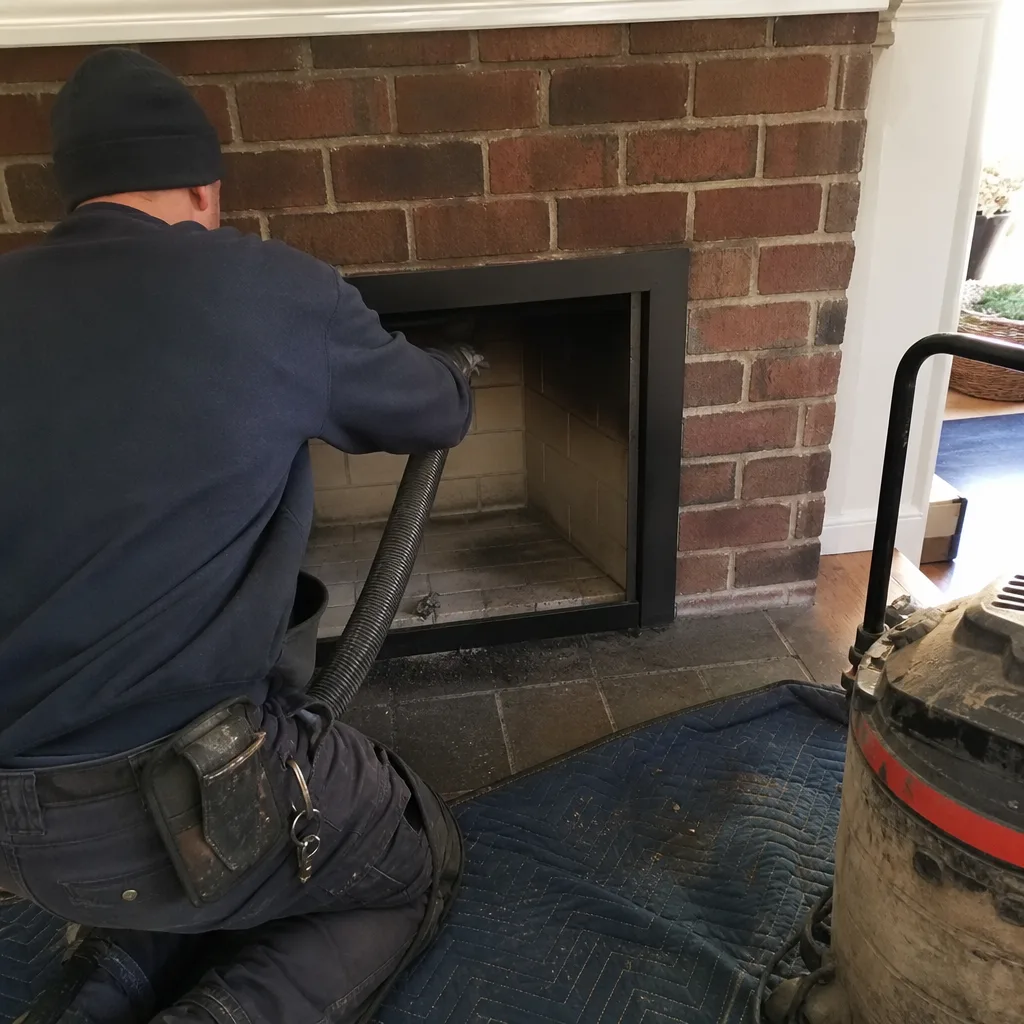
A Level 1 inspection is the baseline check we include with every standard sweep. We’re looking at the accessible portions of the fireplace, the flue interior, and the exterior chimney structure, checking for blockages, creosote buildup, and any visible damage. This is the right level when you’ve been using the fireplace regularly and nothing has changed since the last cleaning. Under Clause 4 of the Haven Standard, you get photos of what we find, not a verbal summary you have to trust.
Level 2 Inspection
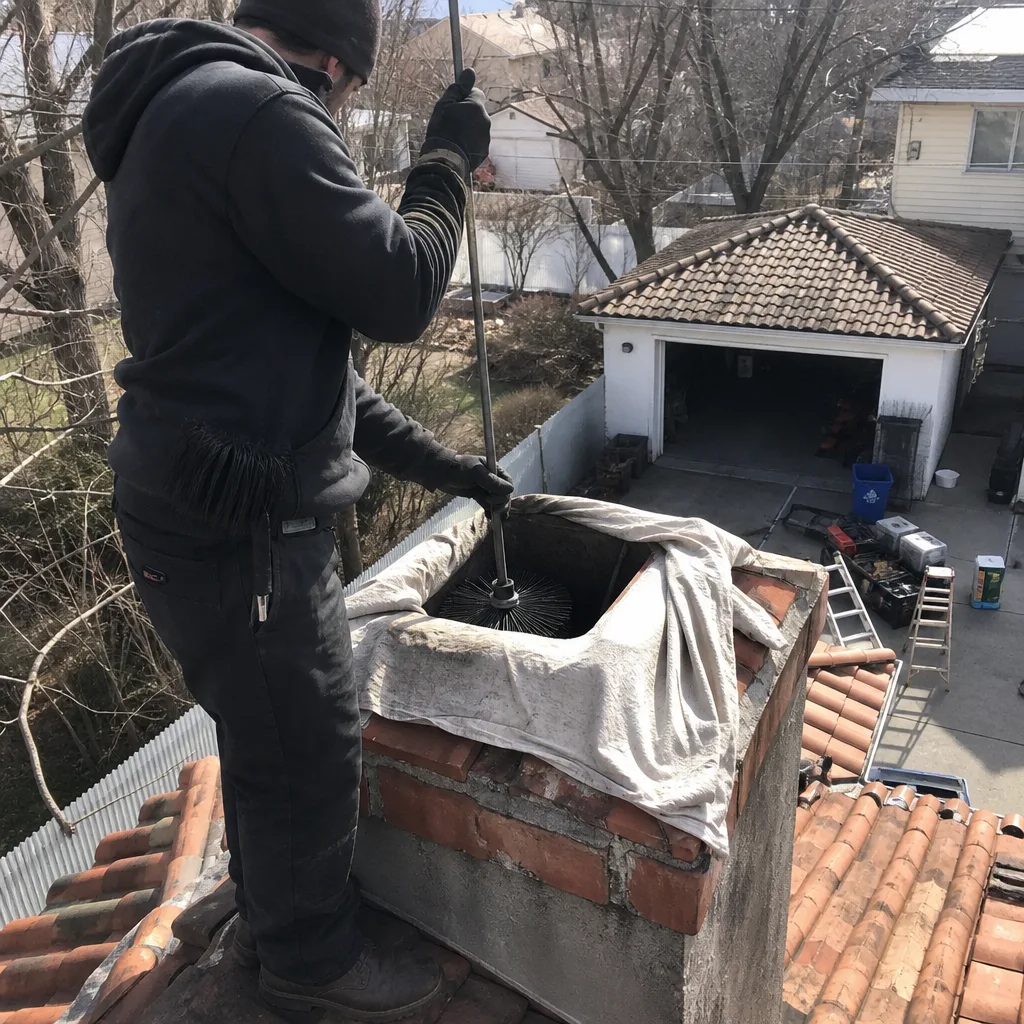
A Level 2 inspection is what we recommend when something has changed: you bought the home, you’re switching fuel type, you had a chimney fire, or a storm shook the house. We run a camera down the entire flue length, checking the liner joints, the smoke chamber, and the flue tile surfaces for cracks, gaps, or spalling – that’s when the masonry surface starts flaking off in thin layers. Homeowners in neighborhoods like Park Slope and Riverdale call us for Level 2 inspections before closing on a house, because the seller’s “recently cleaned” claim rarely comes with footage. If we find a problem, we’ll show you the photo and explain what it means in plain terms before any repair conversation happens.
Creosote Removal
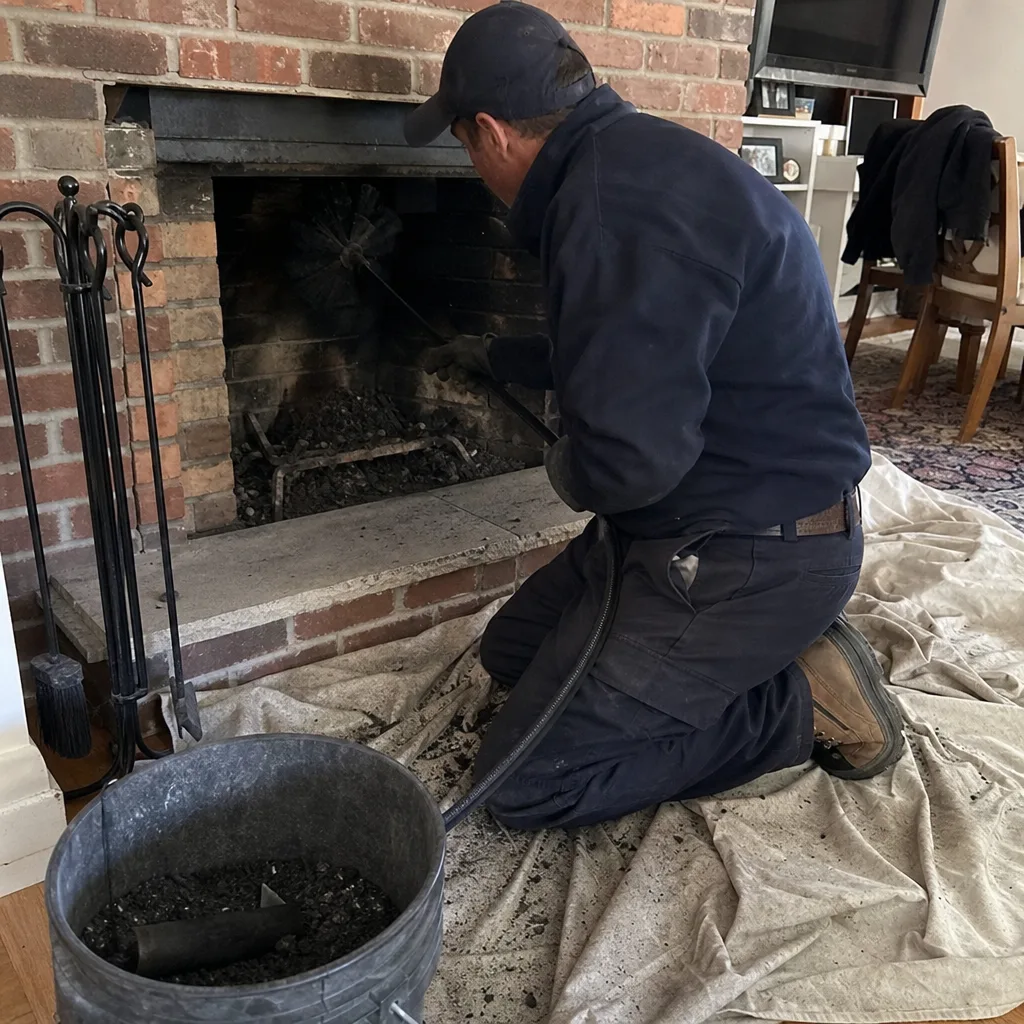
Creosote is the tar-like residue that condenses inside the flue when wood smoke cools on its way up. It comes in three classes: Class I is dusty soot, Class II is flaky and crusty, and Class III is a hardened glaze that looks like black glass. Class III creosote can’t be brushed out with standard equipment – it requires chemical treatment or rotary cleaning heads, and it’s the type most likely to fuel a chimney fire. In New York City’s older housing stock, particularly prewar brownstones with unlined flues, we see Class III buildup more often than people expect. We’ll tell you what class you’re dealing with and what it costs to remove before we start.

Soot Removal
Soot is the lighter, powdery byproduct of combustion, and it’s what most people picture when they think of a dirty chimney. Even gas fireplaces produce soot over time, though in smaller amounts than wood-burning units. We remove soot from the flue walls, the smoke shelf, and the firebox, which is the chamber where the fire actually burns. If you use your fireplace more than a few times per season, an annual soot removal keeps the draft strong and the air in your home cleaner.

Annual Sweep
The National Fire Protection Association recommends a chimney inspection at least once a year, and a sweep whenever there’s 1/8 inch or more of soot or creosote buildup. Most New York City homeowners who burn wood during the winter months schedule an annual sweep in late summer or early fall, before the first fire of the season. We’ll clean the full flue, check the damper operation, and document the condition so you have a year-over-year record. If we swept the same flue last year, we’ll compare the new photos to the old ones and tell you if anything changed.

Fireplace Cleaning
Fireplace cleaning covers the firebox, the hearth, the damper, and the visible masonry around the opening – everything below the flue. Soot and ash collect here after every fire, and if the damper isn’t sealing properly, cold air and occasionally small animals get in. In Manhattan apartments with decorative fireplaces that get converted to gas logs, we still clean the firebox and check the gas line connection points. A fireplace that looks clean at the front can hide a lot of soot at the back of the smoke chamber, so we always clean what we can see and photograph what we can’t reach.

What happens when you call
- 1
A real person answersNo phone trees - you reach a local pro.
- 2
You get an upfront price rangeHonest numbers before anyone is dispatched.
- 3
A background-checked tech heads outLicensed & insured, dispatched right away.
- 4
You approve before work beginsNothing starts until you say go.
Signs You Need Chimney Cleaning & Sweep Right Now
- Smoke drifting back into the room after the fire gets going. A weak draft usually means creosote buildup or an obstruction in the flue, and it puts carbon monoxide at risk of entering the living space. If you’ve noticed this more than once, the flue needs a camera inspection before your next fire.
- A strong, sharp smell coming from the fireplace, especially in humid weather. Creosote absorbs moisture and releases a campfire-like odor that gets worse when the air is damp. This is one of the most common complaints we get in New York City during summer months, and it almost always means there’s a creosote layer that’s been there for years.
- You bought the house in the last three years and no one has inspected the chimney since. Pre-listing cleanings are often cosmetic, and the previous owner rarely leaves behind photos of the flue interior. A Level 2 camera inspection tells you what you actually bought, not what the disclosure form says.
- Flakes of black material falling into the firebox between fires. That’s creosote or spalling flue liner material. Either way, something is deteriorated, and the flakes only fall when the deposit is thick enough to break off under its own weight.
- You burn fires more than twice a week during heating season. Frequent burning means faster creosote accumulation, especially with softwoods or unseasoned wood. The 1/8-inch threshold NFPA sets can be reached in a single season of heavy use, and most people can’t tell by looking up the flue.
BeforeAfterOur Chimney Cleaning & Sweep Process - Step by Step
We follow the same procedure on every job in New York City, whether it’s a single-brownstone flue in Brooklyn Heights or a six-story walkup in The Bronx, just as we do with Chimney Cleaning & Sweep - Bell. No shortcuts, no surprises.
- 1
Written scope and price before we arrive. You tell us about your fireplace, your fuel type, and when it was last serviced. We send a written quote that lists exactly what’s included and what it costs. Clause 1 of the Haven Standard requires this – no “we’ll see when we get there” pricing, ever.
- 2
Arrival and setup. A named, background-checked technician arrives in uniform and texts before showing up. We lay drop cloths around the hearth and fireplace opening, run the HEPA vacuum line, and set up the camera rig. The tech’s license number is on the work order.
- 3
Camera-scan inspection, every time. Before any brush touches the flue, we run the camera from the firebox to the top of the chimney. You’ll see the feed in real time if you want to. We document everything – creosote class, liner condition, damper function, smoke chamber condition, and any water entry signs at the crown.
- 4
The sweep itself. We brush the full flue length with the appropriate head for your liner type, remove soot and creosote from the smoke shelf and firebox, and vacuum everything with the HEPA system so the room stays clean. For Class III creosote, we’ll switch to rotary cleaning heads or a chemical treatment depending on the severity.
- 5
Post-sweep camera verification and written record. After the sweep, we run the camera again and compare the before and after footage side by side. You get photos of the clean flue, notes on anything that needs watching, and a written record of what was done and when. That’s Clause 4 of the Haven Standard in practice, and we’ve done it on every job since 2009.
How Much Does Chimney Cleaning & Sweep Cost in New York City?
A standard chimney sweep with a Level 1 inspection in New York City runs $189-$329 for a single flue. If you add a Level 2 camera inspection – and we recommend it if you haven’t had one in the last two years – the combined service is $349-$479. Multi-flue homes, which are common in the outer boroughs, add $75-$125 per additional flue.
What moves the price: the type of creosote we find (Class III glaze requires more labor and sometimes chemical treatment), the flue height and accessibility, whether there’s a rain cap or spark arrestor that needs removal before cleaning, and the condition of the existing liner. A clay tile liner with cracks costs more to clean carefully, because aggressive brushing can worsen the damage. We’ll tell you what you need and what can wait, with photos to back it up.
The fastest way to overpay in New York City is to accept a low teaser sweep price and then get hit with add-ons for things like camera inspection or creosote treatment. We quote the full scope in writing before work starts, and that’s the price you pay. If you have a written estimate from another company, bring it to us – we’ll give you a free second opinion on it.
Chimney Cleaning & Sweep Near New York City - Our Service Area
We work across all five boroughs, including home to some of the most challenging chimney configurations in the country. Manhattan fireplaces with 40-foot flues, Brooklyn brownstones with original masonry, Queens homes with gas conversion retrofits, and The Bronx walkups with shared flue stacks are all familiar territory. Most sweeps can be scheduled within 5-7 business days, and we prioritize annual maintenance appointments during September and October. Homeowners in nearby markets like Chicago and Los Angeles ask us how the service translates to their markets, but we’re focused on the five boroughs and the surrounding metro. If you’re reading this from outside New York City, the same Haven Standard applies everywhere we work.
Serving New York City, NY - Our Local Coverage Area
We’re based in the New York City area and know this community well, and we also offer our Chimney Cleaning & Sweep in Los Angeles. Use the map below to see our service coverage - if you’re nearby, we can almost certainly help.
Frequently Asked Questions - Chimney Cleaning & Sweep in New York City
Chimney Cleaning & Sweep - Huntington Park is the removal of soot, creosote, and debris from the inside of a chimney flue, along with the firebox and smoke chamber. It’s not just about the visible surfaces – a proper sweep includes an inspection of the flue liner, damper, and chimney cap. We combine the cleaning with a camera inspection so you can see the before and after condition yourself. At Emberly Chimney Cleaners, every sweep includes the documented photo record required by Clause 4 of the Haven Standard.
A standard sweep and Level 1 inspection takes 90 minutes to two hours for a single flue. If we’re adding a Level 2 camera inspection or dealing with heavy creosote, it can run closer to three hours. We’ll give you a specific time window when you book, and the technician texts when they’re on the way.
A chimney sweep in New York City costs $189-$329 for a single flue, with Level 2 camera inspection adding $160-$200 on top. Multi-flue homes and Class III creosote removal cost more. We quote the full price in writing before work starts, and that’s the number on your invoice. Call (980) 580-8641 for an exact quote – estimates are free.
Not always, and anyone who tells you that without showing you camera footage of the existing liner isn’t doing their job. A liner only needs replacement when it’s cracked, spalling, or too small for the appliance it’s serving. We show you the video and the still images before recommending anything. If the liner is sound but dirty, a sweep is all you need.
Once a year, at minimum, for any chimney that’s used regularly. The NFPA standard applies regardless of fuel type, though gas fireplaces can often go longer between sweeps. The key variable is creosote accumulation, which depends on how often you burn and what kind of wood. We’ll check the buildup during your sweep and recommend a schedule based on what we actually find, not a generic calendar.
Creosote accumulates, and at a certain thickness it becomes fuel for a chimney fire. Even below that threshold, it restricts the draft, which sends smoke and carbon monoxide into the home instead of up the flue. In New York City’s attached housing stock, a chimney fire in one unit is a building-wide problem. The cost of a sweep is a fraction of the cost of a chimney fire repair, and we’ve documented enough of both to say that with confidence.
Clear the area around the fireplace – move furniture back about six feet, remove anything from the mantel, and take down any decorative screens or glass doors. Don’t use the fireplace for at least 24 hours before we arrive, so everything is cold. We bring drop cloths and HEPA vacuum equipment, but the less you have near the hearth, the faster the job goes.
Schedule Your Chimney Cleaning & Sweep Service in New York City Today
Call (980) 580-8641 to schedule your chimney sweep in New York City. A live person answers around the clock, and you’ll get a written price before work begins – no obligations, no pressure. Every job comes with the 365-Day Done Right Promise: if it’s not done right, we make it right.
Written by Corrine Halstead, Owner at Emberly Chimney Cleaners, serving New York City since 2009.