

Level 1 sweep and inspection to the NFPA 211 annual standard - flue, crown, cap, and flashing checked and photographed
Chimney sweep logs do not sweep chimneys. They loosen some creosote - which then falls where a brush and vacuum still have to collect it.


 Before
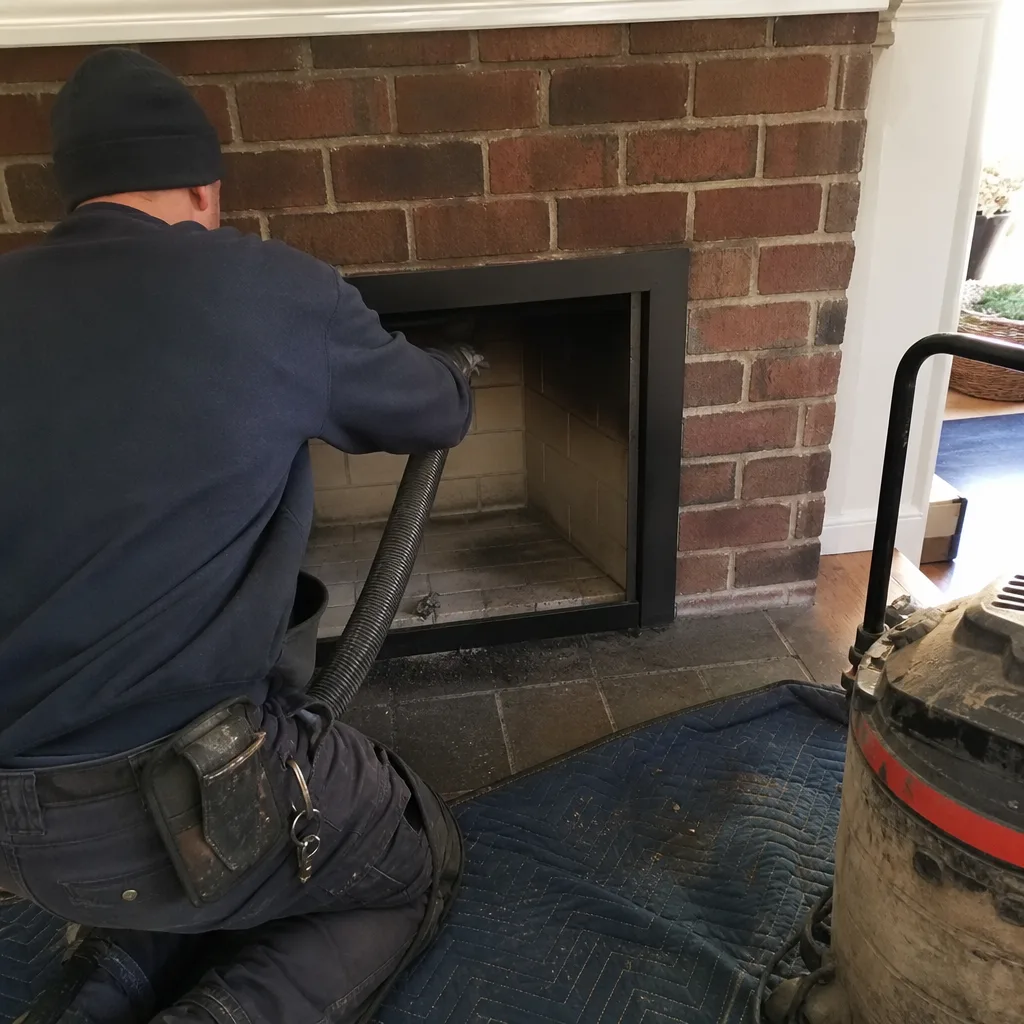 After
After Before
 After
After Before
 After
AfterChimney Cap & Crown in South Boston: What It Costs and Why Salt Air Changes the Math
A chimney cap replacement in South Boston typically runs $220-$480 for a standard single-flue stainless cap, while crown repair (including prep, mortar work, and sealing) lands between $650 and $1,400 depending on how far the spalling has spread. Multi-flue caps for the neighborhood’s converted triple-deckers usually fall in the $900-$1,800 range because they require custom fabrication. That’s the honest spread, and we’ll put it in writing before any work starts. Call (980) 580-8641 and we’ll get a tech to your block, camera in hand.
But South Boston isn’t like the rest of the metro. The harbor-facing east and south sides of the peninsula take sustained salt mist off Boston Harbor and the Reserved Channel, and that changes how often you need to look at your cap and crown, what materials actually hold up, and what a “minor repair” should cost you. This page covers what we actually find on Southie chimneys, what it runs in this market, and what to do about it.
Key Takeaways
- Annual cap and crown inspection is the practical standard on harbor-facing South Boston chimneys; inland neighborhoods can go biennial, but you shouldn’t.
- Standard single-flue stainless cap replacement: $220-$480. Multi-flue caps on triple-decker stacks: $900-$1,800. Crown repair: $650-$1,400.
- Salt air corrodes galvanized caps at the seams within a few seasons; stainless is the only material we recommend east of Dorchester Street.
- Converted triple-deckers often share one stack under split ownership, with improperly decommissioned flues back-drafting carbon monoxide into upper units.
- Every job includes a written price, written scope, written warranty, and a documented photo record under Clause 4 of the Haven Standard.
Why South Boston’s Location Punishes Chimney Caps and Crowns
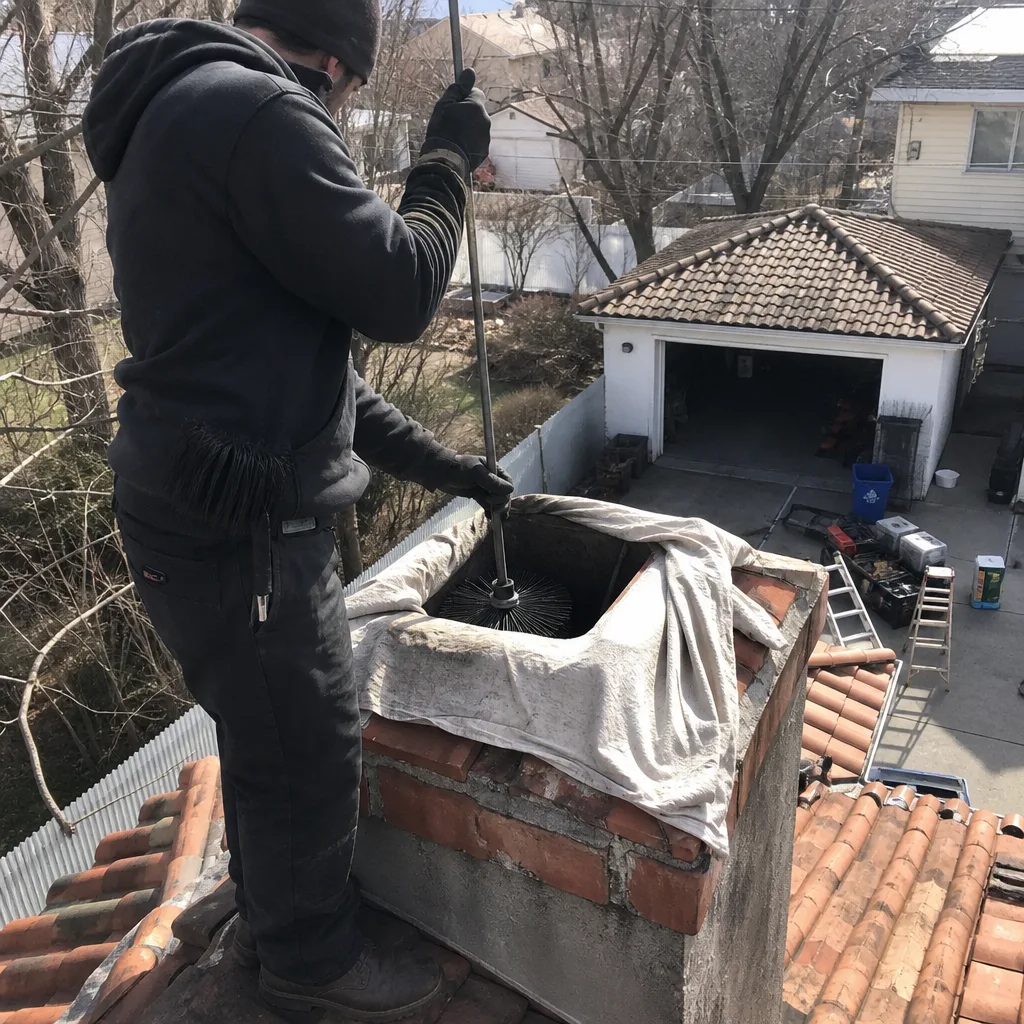
South Boston is a peninsula. Water on three sides. Prevailing winds coming off the harbor and across Castle Island, through City Point, and up the streets toward Andrew Square carry salt mist that settles on brick and mortar. That salt chemically attacks lime mortar joints. It gets worse when condensation and rain saturate the porous surface, then winter freeze-thaw cycles push the joints apart from the inside. On the east and south sides, between L Street, East Broadway, and the waterfront, this happens faster than anywhere inland, including Back Bay, which sits sheltered behind the rest of the city.
What this means practically: a galvanized steel cap that would last a decade in Worcester might be rust-perforated at the seams in three or four seasons on East Broadway. A crown that got a fresh coat of sealant two winters ago can be spalling at the corners again by the time the next inspection rolls around. We recommend annual inspection on any chimney with direct harbor exposure. Not because we want the extra visit. Because the evidence we catalog every year shows the interval is shorter here, and the cost of missing it is a chimney fire, carbon monoxide back-drafting, or a liner failure that costs four figures to fix. Our Chimney Cap & Crown team has documented this pattern across the neighborhood since 2009.
BeforeAfterWhat We Found on East Broadway Last Season
A three-flue triple-decker near the corner of East Broadway had a rust-perforated galvanized cap. The crown underneath was crumbling at the corners from salt-driven spalling. But the real problem was the middle flue. During the condo conversion, someone had decommissioned it with a loose brick instead of a proper UL-listed closure. It wasn’t dead. It was back-drafting carbon monoxide into the top-floor unit. The owners didn’t even know they shared the stack. We retrofitted a stainless multi-flue cap with a proper closure, re-pointed the crown with salt-resistant mortar, and sealed the flashing before the next nor’easter came through. That’s not an unusual job for this neighborhood. It’s close to the median.
How Much Does a Chimney Cap or Crown Cost in South Boston?
Here are the numbers for the South Boston market, based on the work we’ve done in the neighborhood:
| Service | Typical South Boston Price Range | What Affects It |
|---|---|---|
| Single-flue stainless cap (standard) | $220-$480 | Flue tile dimensions, access height |
| Custom stainless cap | $500-$900 | Non-standard flue size, decorative requirements |
| Multi-flue cap (triple-decker stack) | $900-$1,800 | Number of flues, crown condition, fabrication |
| Crown repair (re-point and seal) | $650-$1,400 | Spalling extent, salt damage depth |
| Crown rebuild (full replacement) | $1,400-$2,600 | Access, structural condition of top courses |
| Cap replacement + crown repair (common combo) | $850-$1,900 | Combined scope; we discount when done together |
These are written-price ranges, not “call for a quote” placeholders. The specific number comes down to what the camera shows: flue tile condition, whether the crown is salvageable, how much of the top course has spalled. We don’t recommend anything without showing you the photos first. If you already have a written estimate from another company, bring it in. Our Free Second Opinion applies to any competitor’s written quote for scope we’d be doing anyway.
Why Emberly Chimney Cleaners Is the Right Call for South Boston Homes
Emberly Chimney Cleaners has operated under the Haven Standard since 2009, with more than 38,000 chimney inspections and cleanings completed since then. Every single one included a written price before work started and a documented photo record when it was done. That’s Clause 4 of the Haven Standard, and it’s been our default practice for sixteen years, not a recent add-on. Corrine Halstead leads the business, and she built the inspection practice around documentation, not vibes: camera down the flue, photos on file, scope in writing.
Why that matters in South Boston specifically: this neighborhood has a lot of brick, a lot of waterfront exposure, and a lot of converted triple-deckers where one stack serves multiple units under different owners. Liability gets murky fast. Who’s responsible for the flue that serves only the top floor? What happens when the cap rusts through and water damages all three liners? We document everything because that record is what tells you, your condo association, and your insurer exactly what was found and what was recommended. Not a guess.
Our techs are background-checked and uniformed. License information is on every page. We answer the phone with a live person, 24 hours a day, seven days a week, for the full service area. You get a named technician, a text when they’re on the way, and a written warranty before the work starts. That’s Clause 1 of H.A.V.E.N., the “have it in writing” standard: Written price, written scope, written warranty, delivered before anyone picks up a tool.
Our Chimney Cap & Crown Services in South Boston

Cap Installation
A properly sized stainless cap keeps rain, birds, squirrels, and harbor wind-driven debris out of the flue. In South Boston, we size caps to the actual flue tile dimensions, not the “close enough” universal fit. On East Side conversions, that often means measuring two or three flues on the same stack with different dimensions from unit to unit. Installation runs $220-$480 for a standard single-flue stainless cap.
Cap Replacement
Most cap replacements in this neighborhood are galvanized caps that rusted through at the seams. The seams are where salt water sits, and that’s where the failure starts. We replace with stainless, which holds up far better against harbor salt air. If you’re in City Point, Jeffries Point, or anywhere east of Dorchester Street, we don’t recommend galvanized at all. It’s not a question of if it fails. It’s a question of when, and the answer is sooner than you’d expect.
Crown Repair
The crown is the concrete or mortar slab that sits on top of the chimney, shedding water away from the flue. South Boston crowns take a beating. Salt spalling eats the edges first, then the cracks widen, then water gets into the top courses of brick and the freeze-thaw cycles do structural damage. Crown repair in South Boston runs $650-$1,400. We re-point with salt-resistant mortar and seal with a waterproof crown coating. On triple-deckers where the crown is shared, we document condition across the whole stack so every unit owner knows what they’re dealing with.
Crown Coating
For crowns that are structurally intact but showing early surface deterioration, a crown coating extends life without a full rebuild. We use products from Gelco and Copperfield that are designed for coastal masonry exposure. Coating runs toward the lower end of the crown repair range, but we’ll be straight with you: if the crown already has hairline cracks that penetrate, coating alone won’t fix it. You need the re-point first. We’d rather show you the camera footage and lose the quick sale than seal over a failing crown and come back to a bigger problem.

What happens when you call
- 1
A real person answersNo phone trees - you reach a local pro.
- 2
You get an upfront price rangeHonest numbers before anyone is dispatched.
- 3
A background-checked tech heads outLicensed & insured, dispatched right away.
- 4
You approve before work beginsNothing starts until you say go.
Common Chimney Cap and Crown Problems We See in South Boston
- Salt-corroded galvanized caps. Boston Harbor salt mist attacks galvanized seams within a few seasons. Once the seam rusts through, rain and wind-driven debris enter the flue. We replace with stainless, which is the only material that holds up on the east and south sides of the peninsula.
- Freeze-thaw crown spalling. Saturated mortar freezes and expands. On the harbor-facing sides of South Boston, this cycles happens dozens of times each winter. Crown edges crack, spall, and widen. Annual inspection catches this before a $600 repair becomes a $2,000 crown rebuild.
- Improperly decommissioned flues. Condo conversions in the 2010s frequently left flues with a loose brick or a rusted plate instead of a UL-listed closure. Those “dead” flues can back-draft carbon monoxide into upper-floor units whose owners share the stack without knowing it.
- Shared stacks under split ownership. Triple-deckers built between 1885 and 1925 have one stack with separate flues per unit. When one flue is active, one is capped, and one was never properly lined for the appliance venting into it, the whole stack needs a documented assessment. That’s exactly what our camera-scan inspection provides.
Why Annual Inspection Is the Southie Standard, Not a Sales Tactic
Inland Boston neighborhoods can safely go biennial on chimney cap and crown inspections. South Boston cannot. The reason is specific to this peninsula: sustained onshore winds carry salt mist that chemically degrades lime mortar joints and causes brick face-spalling faster than anywhere else in the metro. The harbor-facing east and south sides, from the waterfront up through City Point and toward the South End line, take the worst of it. The same exposure amplifies freeze-thaw cycling through winter. So the math changes. Where a two-year interval works in Jamaica Plain, a one-year interval is what actually protects a Southie chimney. This page exists to tell you that plainly, because most chimney companies won’t. They’ll stick to the industry-standard boilerplate because it’s easier to copy-paste. We’ve got sixteen years of photo records from the neighborhood that say the standard interval is wrong here.
Salt Air, Stainless Steel, and What Actually Fails First
When salt mist settles on a galvanized cap, the zinc coating corrodes. The seams go first because that’s where the protective layer was compromised during fabrication. Then the cap opens up. Rain gets in. On a triple-decker stack with multiple flues, one open cap can send water down all three flues, rusting dampers, saturating masonry, and accelerating crown failure. On harbor-facing chimneys, the crown then starts pushing apart at the mortar joints. Spalling widens. Water gets into the brick courses. The whole assembly fails from the top down.
The fix that lasts in this neighborhood is stainless steel for the cap and salt-resistant mortar for the crown. We source stainless caps from Copperfield and DuraFlex, and our crown materials from Gelco. The material choice is not an upsell. It’s the difference between doing the job again in three years and not doing it again for a decade or more.
Triple-Deckers, Condo Conversions, and the Flue You Don’t Know About

South Boston’s housing stock is mostly brick triple-deckers and attached rowhouses built between 1885 and 1925. One stack. Multiple flues. One per unit. That worked fine when the building was all one owner and the heating systems were all coal, then oil. But the post-2010 condo boom changed everything. Units split off. Heating systems switched to gas. Flues that used to vent oil burners now vent high-efficiency gas units that don’t produce the same draft, or they were decommissioned entirely, often with a brick or a rusted cap. The owner of the top-floor unit frequently has no idea that the middle flue, the one they’ve never seen, is back-drafting into their space. We find this on East Side conversions constantly. The fix is a proper UL-listed closure for the dead flue, a stainless cap for the active ones, and a documented photo record so everyone on the deed knows what they own. That’s the job on a South Boston triple-decker. It’s not a generic chimney cap install. It’s a liability assessment for a shared stack under split ownership.
Trusted Brands We Use in South Boston
We source materials from Copperfield, DuraFlex, and Gelco through the Haven buying network. That’s not about brand loyalty. It’s about keeping customer prices honest without cutting corners on coastal-grade materials. When we install a stainless cap on an East Broadway stack, we’re not pulling from whatever’s sitting in the truck. We’re ordering to the flue dimensions and the exposure level. Parts come in fast, and for most South Boston jobs we can complete the work in a single visit once the fabricated cap or crown materials arrive.
We Also Serve Cities Near South Boston

Beyond South Boston, our crews cover the broader metro: Chimney Cap & Crown in South Boston is our home base for this area, and we serve Boston, Worcester, Springfield, and Lowell with the same written-price, documented-photo standard. Same Haven Standard. Same live person on the phone 24/7.
Serving South Boston, MA - Our Local Coverage Area
We’re based in the South Boston area and know this community well. Use the map below to see our service coverage - if you’re nearby, we can almost certainly help.
FAQs: Chimney Cap & Crown in South Boston

Because South Boston’s east side faces the open harbor, and the onshore winds carry salt mist that settles on the cap seams and accelerates galvanic corrosion. Back Bay sits sheltered behind the rest of the city and doesn’t take the same continuous salt exposure. The fix is stainless, not galvanized, and the inspection interval should be annual, not biennial. Call (980) 580-8641 and we’ll show you what your cap looks like right now.
Annually, if the building is on the harbor-facing east or south side. The salt mist and freeze-thaw cycling saturate the crown and push apart mortar joints faster than inland. If the building is on the west side, closer to the South End line, you can stretch it to every 18 to 24 months. But “annually” is the safe answer for most of the neighborhood, and it’s the standard we recommend for any stack with multiple flues and mixed use. Annual inspection catches crown spalling before it becomes a rebuild.
Yes, and that’s what a multi-flue cap does. We measure the entire crown, account for each flue tile opening, and fabricate a stainless cap that covers all of them while maintaining proper draft and ventilation. The catch: every flue on the stack needs to be addressed, including decommissioned ones. A multi-flue cap doesn’t fix a dead flue that’s back-drafting. That needs a UL-listed closure. We’ll show you what each flue is doing on camera, then write the scope. Multi-flue caps on Southie triple-deckers run $900-$1,800.
It accelerates the failure. Salt water gets into the hairline cracks, then freeze-thaw cycles widen them. Within one winter, hairline cracks become visible spalling at the crown edges. Within two, water is getting into the top brick courses and the liner is at risk. Small crown cracks in South Boston are not a watch-and-wait situation. They’re a repair this season, before the freeze-thaw cycle makes it a full rebuild. Crown repair runs $650-$1,400.
No. A loose brick is not a closure at all. It allows back-drafting into upper-floor units and lets moisture into the stack. The proper fix is a UL-listed closure installed to code and documented with photos. If you bought a condo in a converted triple-decker and you’ve never had the shared stack inspected, the first step is a camera-scan of every flue. That’s what we do on every Level 2 inspection, and the record is yours to keep. Call (980) 580-8641 and we’ll schedule it.
Get a Written Price for Your South Boston Chimney Cap or Crown
If you’re on the harbor-facing side of South Boston and you haven’t had your cap and crown looked at in more than a year, book an inspection. We’ll camera-scan the flue, photograph everything, and hand you a written price and scope before any work starts. No “call for a quote” dance. No flashlight-and-a-hunch. Just evidence, written down, with a warranty attached. Call (980) 580-8641 to schedule. Estimates are free, and the record is yours whether you hire us or not.
Written by Corrine Halstead, Owner at Emberly Chimney Cleaners, serving South Boston under the Haven Standard since 2009.