

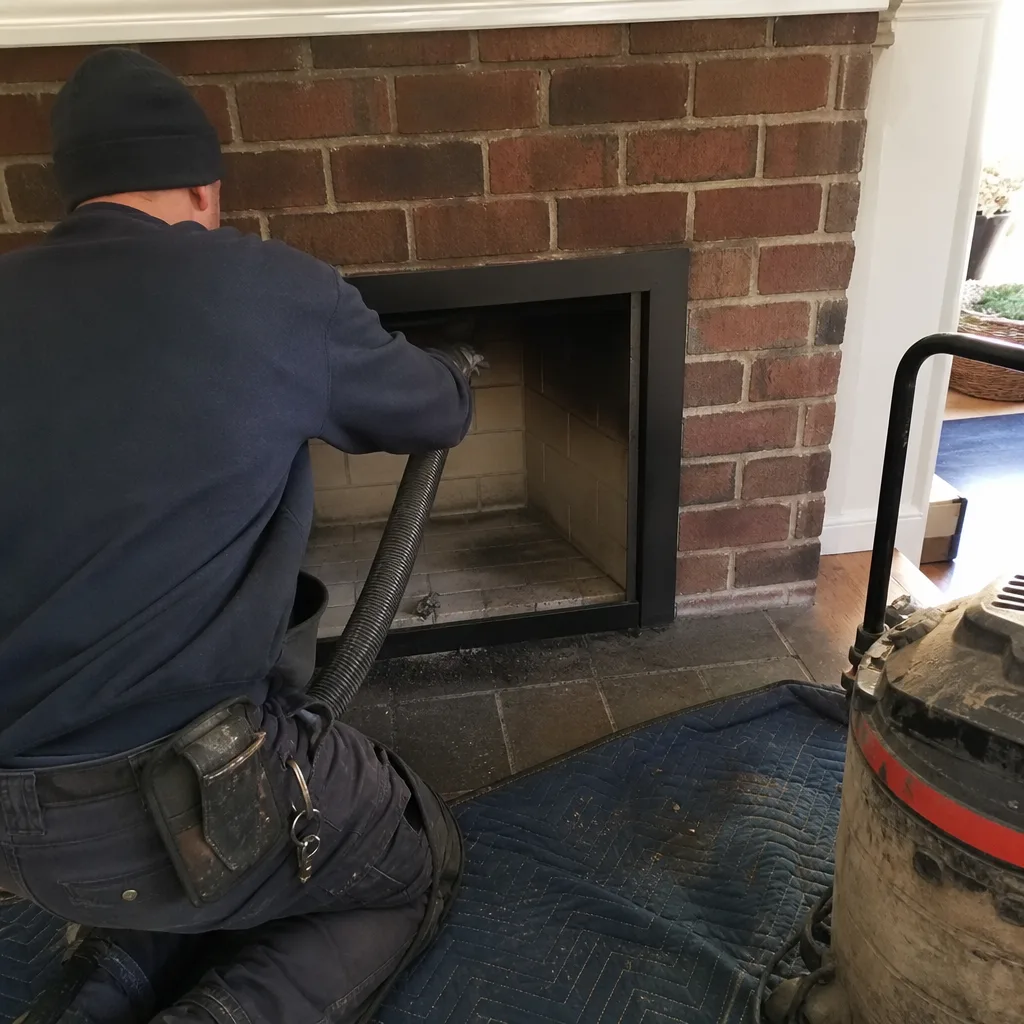
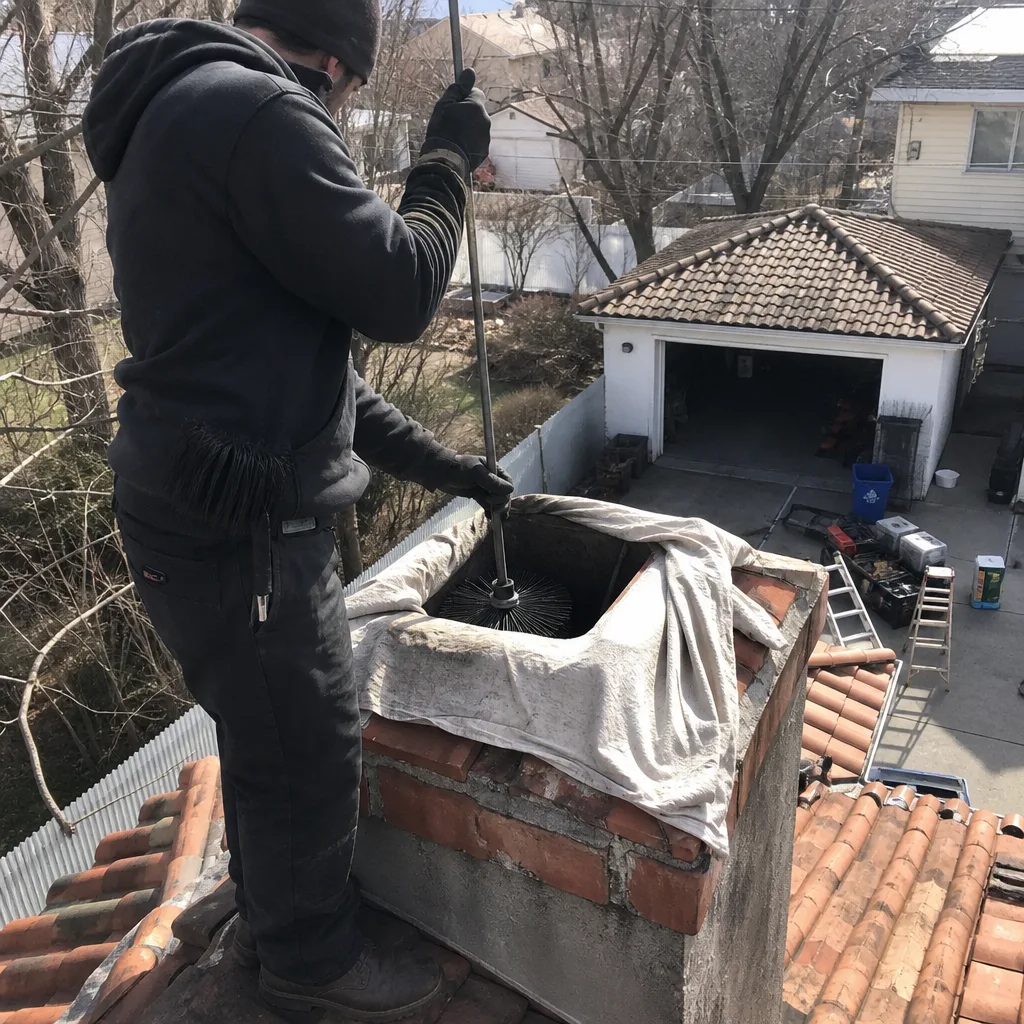
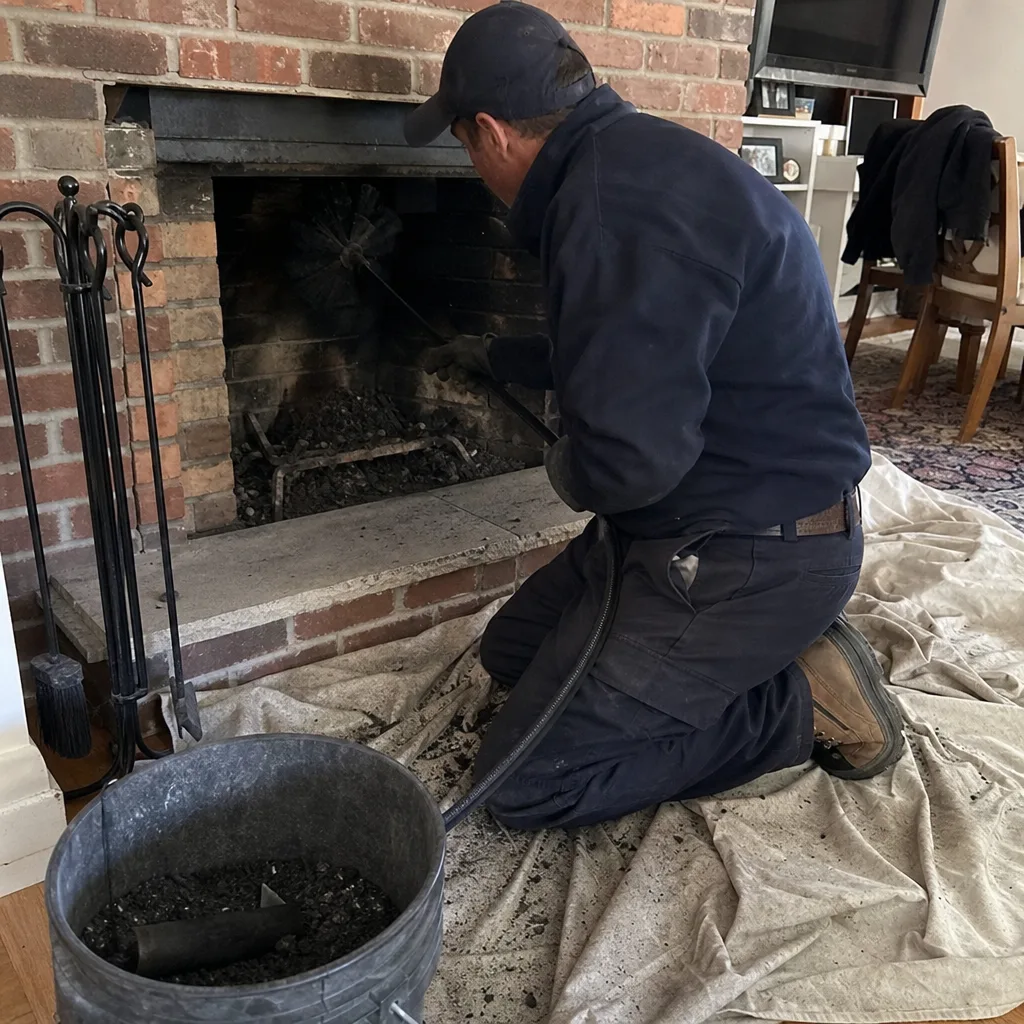
Level 1 sweep and inspection to the NFPA 211 annual standard - flue, crown, cap, and flashing checked and photographed
Chimney sweep logs do not sweep chimneys. They loosen some creosote - which then falls where a brush and vacuum still have to collect it.


 Before
 After
After Before
 After
After Before
 After
AfterHeatShield Chimney Cleaning in Austin, NY | Emberly Chimney Cleaners
We provide independent Fireplace Services in Austin, including HeatShield chimney cleaning and repair, and the one thing that separates our work here is simple: we know what Austin’s soil does to a coated flue. Most HeatShield failures in Austin follow a pattern we can predict from the street address alone: expansive Blackland Prairie clay on the east side, prefab zero-clearance fireboxes in the 1980s-to-2000s buildouts, and a first fire lit by someone who just closed on the house. Call (980) 580-8641 for a written estimate, or keep reading to see exactly what we do and what it costs.
Why Austin Residents Choose Us for HeatShield Service
HeatShield is a ceramic coating system, not a product line you can fix with a caulk gun and good intentions. Our technicians train on HeatShield’s ceramic and refractory products specifically: hands-on practice on both new installations and aged ones pulled from Austin’s prefab-heavy housing stock. We’re independent. No manufacturer affiliation, no authorized-dealer badge. What that means for you is we tell you what the flue walls actually show, not what protects a brand relationship.
Corrine Halstead, our owner, came up inspecting chimneys across all five boroughs of New York City before running Emberly Chimney Cleaners She’s the one showing customers the camera footage herself, pointing at the exact spall or crack before any conversation about price starts. The camera doesn’t soften what it finds. Neither do we. Every visit includes a documented photo record under Haven Standard Clause 4, a written price under Clause 1, and a 365-Day Done Right Promise stamped on the job.
We source genuine HeatShield repair mortars and coatings, not aftermarket substitutes. The adhesion and thermal expansion properties are different, and on a chimney that’s already failing, the cheaper product is the more expensive decision.
Common HeatShield Chimney Cleaning Problems We Solve in Austin
These are the failure modes we see most often in Austin, and each one ties back to how this city builds, burns, and settles:
- Blistered and spalled ceramic coating from rare cold snaps. Austin’s typical January low is about 39°F, so fireplaces get used sporadically: two or three fires a season. Then February 2021 arrives and thousands of fireplaces light simultaneously for a week straight. The thermal shock hits a coating that has sat idle for months, and the surface blisters. We see this pattern city-wide after every severe cold snap.
- Cracked refractory mortar joints in smoke chambers from east-side soil movement. The Blackland Prairie clay under Austin’s east side shifts foundations by up to 4 inches seasonally. That movement telegraphs up through the chimney structure and separates mortar joints in the smoke chamber. Homeowners in Hyde Park or Travis Heights on older masonry rarely see this; east-side residents deal with it constantly.
- Warped ceramic panels in zero-clearance units from smoldering first fires. New arrivals from San Francisco or New York buy a house in Northwest Hills or off Slaughter Lane, light their first fire with convenience-store bundle wood that’s far from seasoned, and let it smolder. Low-temperature, low-draft fires generate glazed creosote fast, and the heat sits against ceramic panels long after the flames die. Panels warp and crack.
- Delamination from water intrusion during spring thunderstorms. Austin’s spring storm season is violent. Failed flashing around the chimney lets water run down the flue walls, and moisture works its way under the HeatShield coating. The ceramic layer peels away from the substrate in sheets. We see this most in older homes in Clarksville and Bouldin Creek where flashing is original to the house.
- Glazed, third-degree creosote from infrequent, low-temperature fires. Austin’s mild winters mean fireplaces burn sporadically. The fires people do light are often low and smoky: damp wood, a homeowner who doesn’t fully understand draft, a chimney that hasn’t been swept in years. Glazed creosote is hard, shiny, and gasoline-like when it ignites. It doesn’t brush out; it requires chemical treatment or mechanical removal.
BeforeAfterHeatShield Service in Austin: What Local Conditions Mean for Your Equipment
Here’s what makes HeatShield work in Austin different from HeatShield work in, say, Houston or Dallas: the failure pattern maps to soil type. Austin’s east side sits on expansive Blackland Prairie clay that shifts foundations by up to 4 inches seasonally. That movement cracks flue tiles and separates mortar joints in HeatShield-coated chimneys in a way that’s almost unheard of in the limestone-based neighborhoods on the west side. So when someone in Mueller or East Cesar Chavez calls us about a failing HeatShield coating, our first question isn’t about burn frequency; it’s about when the house was built and whether they’ve noticed doors sticking or drywall cracks. The chimney is usually the symptom, not the root cause. West of MoPac, the same coating failure usually traces to water intrusion or thermal shock instead. This means we diagnose differently from one side of I-35 to the other, and we stock our Austin trucks accordingly.
HeatShield Models & Products We Service in Austin
We service all four HeatShield product lines: the Ceramic Coating System, Joint Repair System, Smoke Chamber Repair System, and Firebox Repair System. For all brands of HeatShield work, we use genuine HeatShield repair mortars and coatings only. Aftermarket substitutes lack the adhesion and thermal expansion properties these systems depend on, and a failed patch job inside a flue is a chimney fire waiting for the next cold snap. We keep the core HeatShield repair compounds stocked locally so we’re not waiting on a distributor in Fort Worth when your fireplace needs attention before burning season. Spot repairs on ceramic panels and smoke chambers are what we recommend when the liner is structurally sound. Full HeatShield relining only gets recommended when the original liner has failed structurally, and we’ll show you the footage that supports the call either way.
HeatShield Service Pricing in Austin
HeatShield chimney cleaning in Austin typically runs $230 to $420 depending on creosote class and flue condition. HeatShield spot repairs on ceramic panels or smoke chamber mortar usually land between $600 and $2,400. Full HeatShield relining starts around $3,000 and goes up based on flue height and access. What drives the cost: the degree of creosote glazing, how much of the coating has spalled or delaminated, and whether we’re working on a prefab firebox or a masonry flue. Every estimate is written, scoped, and priced before we touch anything. Every job includes a photo record when it’s done. Call (980) 580-8641 for an exact quote; estimates are free.
Key Takeaways:
- HeatShield chimney cleaning in Austin costs $230 to $420; spot repairs run $600 to $2,400.
- We use genuine HeatShield products and we’re fully independent: no manufacturer affiliation, no authorized-dealer claims.
- Every job includes a documented photo record under Haven Standard Clause 4 and a written price before work starts under Clause 1.
- We bring a Free Second Opinion on any competitor’s written estimate.
Serving Austin, TX - Our Local Coverage Area

We’re based in the Austin area and know this community well. Use the map below to see our service coverage - if you’re nearby, we can almost certainly help.
FAQs - HeatShield Chimney Cleaning in Austin
Yes, and on the east side especially. Expansive Blackland Prairie clay shifts foundations seasonally by up to 4 inches, and that movement cracks flue tiles and separates mortar joints in HeatShield-coated chimneys. If your house is east of I-35 and you’re seeing coating failure, soil movement is the likely culprit. Call (980) 580-8641 and we’ll run a Level 2 camera scan to confirm what’s moving and what’s still sound.
That’s efflorescence: mineral salts migrating through the brick or refractory as moisture evaporates. In Austin, it usually means water is getting in behind the HeatShield coating, often through failed flashing or a Chimney Cap & Crown - Austin issue. It’s not a coating failure by itself, but it’s a sign the coating is trapping moisture against a surface that’s now eroding. We’ll trace the water, fix the entry point, and tell you whether the coating underneath is still viable.
Usually we can repair individual ceramic panels if the firebox itself is intact. On a service call in the Slaughter Lane-MoPac corridor, our tech found a 1994 Heatilator zero-clearance with severe HeatShield ceramic panel spalling. The homeowner, a transplant from San Francisco, had burned two smoldering fires with damp wood that winter. We removed the creosote-glazed ceramic, inspected the metal firebox for corrosion, repaired the HeatShield coating, and reinstalled the factory panels. Full replacement only gets recommended when the firebox metal behind the panels has corroded through. Call (980) 580-8641 for a camera-scan assessment.
Thermal shock. Your chimney sat cold and unused for months, maybe years. Then Uri hit, temperatures dropped into single digits, and thousands of Austin fireplaces lit simultaneously for a solid week. That rapid, sustained heat cycling blisters ceramic coatings that haven’t been conditioned. The failure wasn’t sudden; the stress accumulated over years of sitting idle, and one hard freeze week exposed it. We see this pattern city-wide after every severe cold snap, and we can repair the coating if the underlying liner is still sound.
No. A visual check from the firebox or the roof can’t tell you what’s happening on the flue walls 15 feet up. We run a Level 2 video scan on every HeatShield inspection, and the footage is yours to see before any repair gets recommended. That’s Haven Standard Clause 4, and we’ve done it that way since 2009. If a company tells you they can assess a HeatShield coating without putting a camera down the flue, get a second opinion.
Service Areas Near Austin

We serve Austin and the surrounding communities across Central Texas. Our HeatShield crews also work regularly in the Houston metro area, and we’ve handled HeatShield service in Jacksonville for clients with second homes or rental properties along the coast. West Coast transplants who’ve moved to Austin often recognize our work from HeatShield service in San Francisco, where we’ve built a reputation for camera-scan documentation and straight answers.
Book Your HeatShield Service in Austin Today
We cover Austin service area calls Monday through Saturday, with seasonal slots filling fast before burning season. Our HeatShield work is done by background-checked, uniformed techs who arrive with the camera, the written quote, and the full HeatShield sales & service toolkit on the truck. Call (980) 580-8641 for a free estimate, or to schedule a Level 2 camera inspection before your next fire.
Written by Corrine Halstead, Owner at Emberly Chimney Cleaners, serving Austin since 2009.