

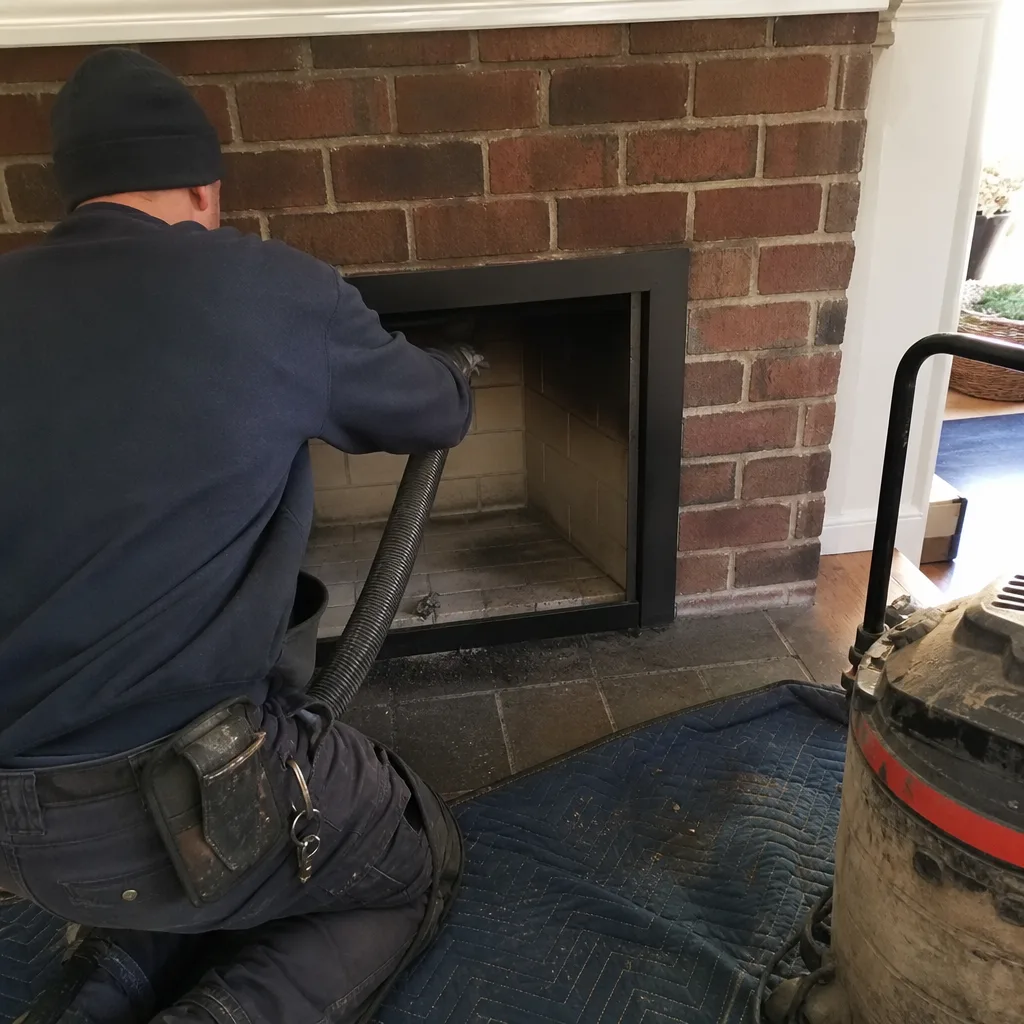
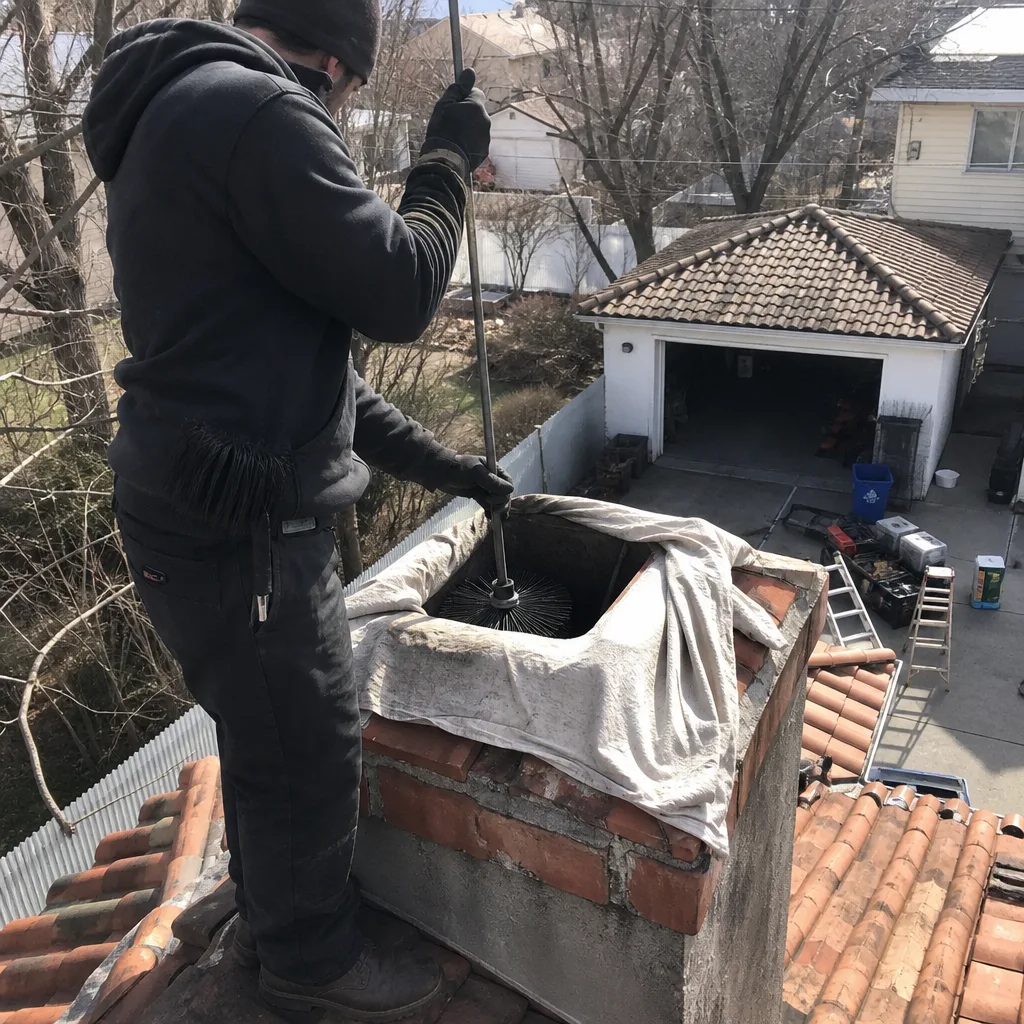
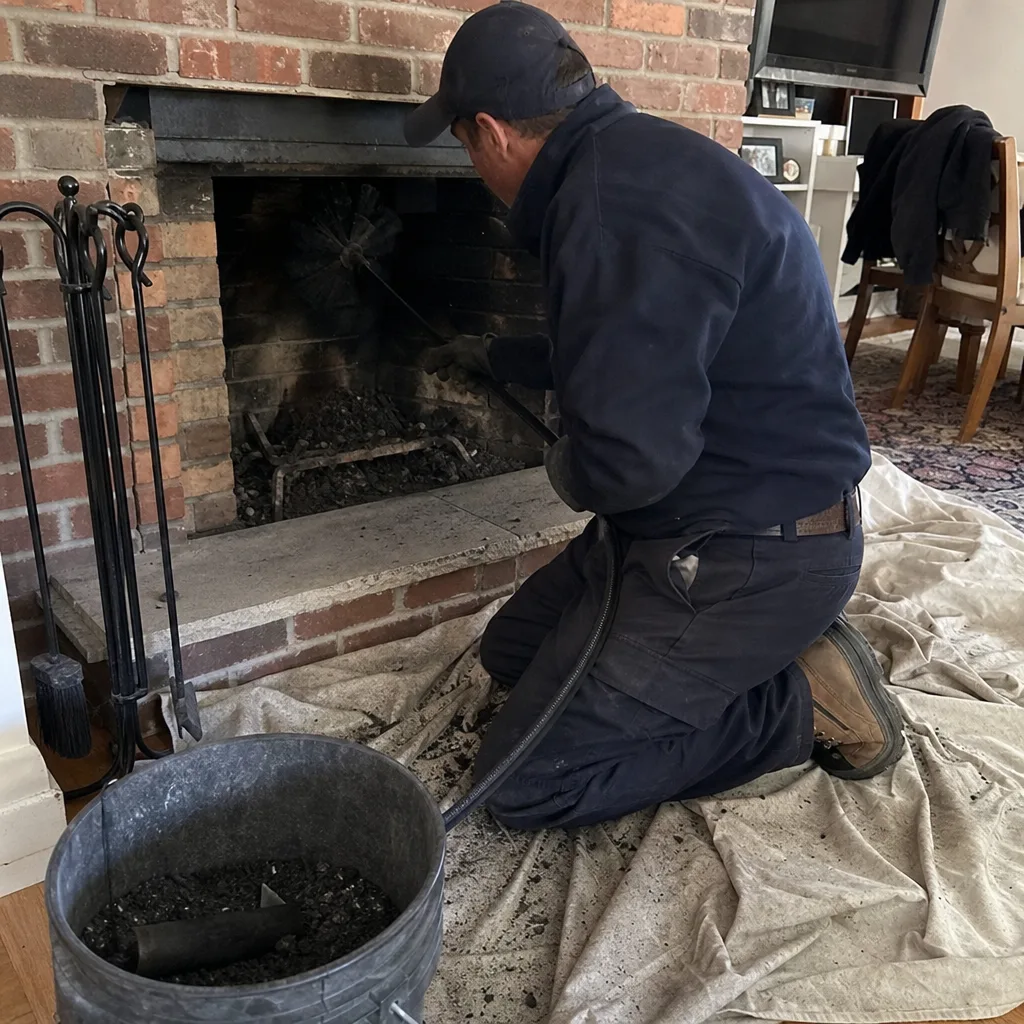
Level 1 sweep and inspection to the NFPA 211 annual standard - flue, crown, cap, and flashing checked and photographed
Chimney sweep logs do not sweep chimneys. They loosen some creosote - which then falls where a brush and vacuum still have to collect it.


 Before
 After
After Before
 After
After Before
 After
AfterWhite Staining on the Outside of the Chimney
What’s Happening
That white, chalky residue on your chimney’s exterior is called efflorescence – it’s mineral salt being pushed outward through the masonry by water moving through the brick or mortar. It almost always means moisture is getting into the chimney system somewhere it shouldn’t be. The staining itself isn’t dangerous, but what’s causing it often is.
Here’s what efflorescence is telling you: water has found a way in. That might be through cracked mortar joints, a failed chimney crown, a missing or damaged chimney cap, or a liner that’s allowing combustion gases and moisture to saturate the masonry from the inside out. The salts you see are just the evidence water leaves behind as it works its way to the surface and evaporates. Scrubbing the white stains off without fixing the underlying water intrusion does exactly nothing – they’ll be back by spring, and the masonry will be worse for it.
Why It Happens
Cracked or Deteriorated Mortar Joints
Mortar is softer than brick and weathers faster. When the joints between bricks crack or erode, they become the primary entry point for rainwater. You can usually spot this from the ground: look for mortar that appears recessed, crumbled at the edges, or missing in sections. If the efflorescence is concentrated in horizontal bands across the chimney’s face rather than running uniformly, deteriorating mortar joints are the most likely culprit.
A Damaged or Missing Chimney Crown
The chimney crown is the concrete or mortar cap that covers the top of the chimney structure, with an opening for the flue liner. Its entire job is to shed water away from the masonry. When it cracks – which happens routinely as it expands and contracts through freeze-thaw cycles – water pools directly at the top of the chimney and works down through the brick. If the white staining is heaviest near the top of the chimney and you can see visible cracking on the crown from the ground or a safe second-floor window, this is the likely cause.
A Failing Chimney Liner
Clay tile liners develop cracks over time, especially after a chimney fire (even a small one you may not have noticed). When the liner fails, combustion gases and the moisture they carry saturate the surrounding masonry from the inside. This produces efflorescence that appears more diffuse across the chimney face rather than localized at joints or the crown. It also means your fireplace or heating appliance may be venting combustion products into the surrounding structure rather than safely out the top – which is the serious problem here. A camera-scan inspection is the only reliable way to assess liner condition.
An Inadequate or Missing Chimney Cap
A chimney cap sits above the flue opening and keeps rain from falling directly into the flue. Without one, or with a cap that’s rusted through or blown loose, rain drops straight down the liner, saturates the smoke chamber and firebox, and begins working outward through the brick. Check for a cap from the ground – if you can see the open flue with nothing above it, or a cap that looks rusted and misshapen, this may be contributing to the water load even if another issue is the primary cause.
What to Do Right Now
- Stop using the fireplace or any appliance that vents through this chimney until the source of water intrusion has been identified. If the liner is compromised, continued use carries a real carbon monoxide and chimney fire risk. This is the one step that’s non-negotiable.
- Photograph the staining now. Include close-ups of the white residue and wider shots that show where on the chimney face it’s concentrated. These photos help a technician narrow the cause before they arrive and give you a baseline to compare against after repairs.
- Check the firebox and smoke chamber from inside. Open the damper and look up with a flashlight. Visible daylight around the liner tiles, rust staining, wet brick, or a smell of damp masonry all suggest active water intrusion. If you see any of those, add them to your notes and photos.
- Look at the crown from a safe vantage point – a window, not a ladder. Visible cracks across the crown surface are an easy visual confirm of one likely source. Do not go onto the roof to inspect this yourself; chimney crowns are at the highest point of the roof and a fall from that height is a serious injury risk. Leave any close-up crown or cap inspection to a technician with proper equipment.
- Note whether the staining is new or has been building for a while. Fresh white staining (bright, powdery) means active water movement. Old staining that has turned gray and hardened means the problem may have been present for more than one season. Either way, communicate what you know when you call – it speeds the diagnosis.
BeforeAfterHow We Fix It
When your local Emberly Chimney Cleaners team arrives, the first thing we do is run a camera-scan inspection – NFPA 211 Level 2 – to see exactly what’s happening inside the flue and at every joint and surface we can’t see from outside. That inspection produces a documented photo record of actual findings, not guesswork.
From there, the repair path depends on what the camera and external inspection show. Cracked mortar joints get tuck-pointed. A failed crown gets repaired or replaced using materials sourced through the Haven buying network – typically products from Gelco or Olympia Chimney, depending on the profile and application. A damaged liner may call for a relining with DuraFlex or a HeatShield resurfacing, depending on what the camera shows. A missing or deteriorated chimney cap gets replaced with a correctly fitted unit.
Before any of that work starts, you receive a written price, a written scope, and a written warranty – Haven Standard Clause 1. Nothing is added after the fact. The 365-Day Done Right Promise is stamped on every job: if it’s not done right, we make it right. Most cap and crown repairs are completed in a single visit. Liner work may take longer depending on scope, and we’ll tell you that in writing up front.
Frequently Asked Questions
The white staining itself isn’t dangerous – but what’s causing it may be. If water is getting into the chimney system through a cracked liner, it can compromise the flue’s ability to safely vent combustion gases, which creates a real carbon monoxide risk. If you’re still using a fireplace or heating appliance that vents through a chimney showing efflorescence, stop until you’ve had the liner checked with a camera inspection. The staining is a symptom worth taking seriously, not one worth ignoring because it looks minor. Call us at (980) 580-8641 and we’ll tell you exactly what we find.
Call (980) 580-8641 and a live person will answer – not a voicemail – and connect you with your local Emberly Chimney Cleaners team to schedule. We don’t promise same-day dispatch because a proper inspection shouldn’t be rushed, but your local team will give you a real appointment window with a named technician and a text when they’re on the way, not a four-hour guessing game.
We don’t recommend liner work without camera evidence you can see for yourself – that’s the whole point of running a Level 2 camera-scan inspection on every visit. If the liner is intact and the problem is the crown or cap, we’ll tell you that and price only what needs doing. If the liner is cracked or has sections that have shifted, the photos will show it and we’ll walk you through exactly what we found. Nothing gets added to your scope without your written agreement first, under Haven Standard Clause 1.
The honest answer is: it depends on what the inspection finds, and the range between a straightforward cap replacement and a full liner installation is significant. We don’t put a single number on this page because giving you a number before we’ve seen your chimney would be a guess, and guesses aren’t what we’re here to sell. What we can promise is a free written estimate before any work starts – the exact price for your specific job, in writing, with no changes after the fact. Call (980) 580-8641 to schedule, or book online and your local team will get the process started.
Get It Fixed
White staining means water is moving through your masonry. Your local Emberly Chimney Cleaners team will run a camera-scan inspection, document exactly what they find, and hand you a written price before touching anything. Call (980) 580-8641 – a live person answers around the clock – or book online to get scheduled.
Written by Corrine Halstead, Owner at Emberly Chimney Cleaners, serving communities nationwide since 2009.
What Our Customers Say
"Gas insert service done properly with the readings written down. The technician had the certification number printed on the paperwork."
- Bettina A."We were buying the house and needed a real inspection. The report had photographs, the standard it was done to, and a clear repair figure. The seller paid for the repair."
- Lorna D."They ran a camera down the flue and showed me the cracked tiles on a screen. The previous company had swept it twice and never mentioned it."
- Gregory F.