

Level 1 sweep and inspection to the NFPA 211 annual standard - flue, crown, cap, and flashing checked and photographed
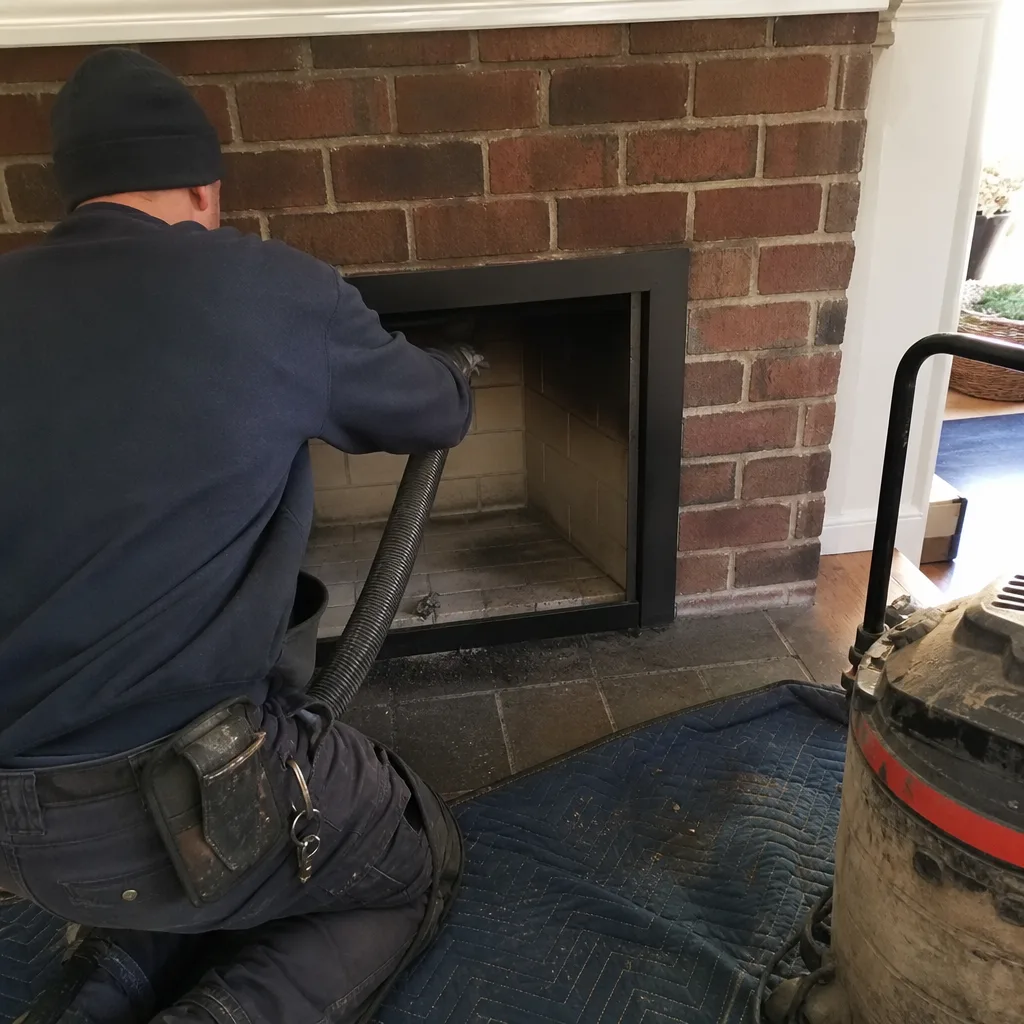
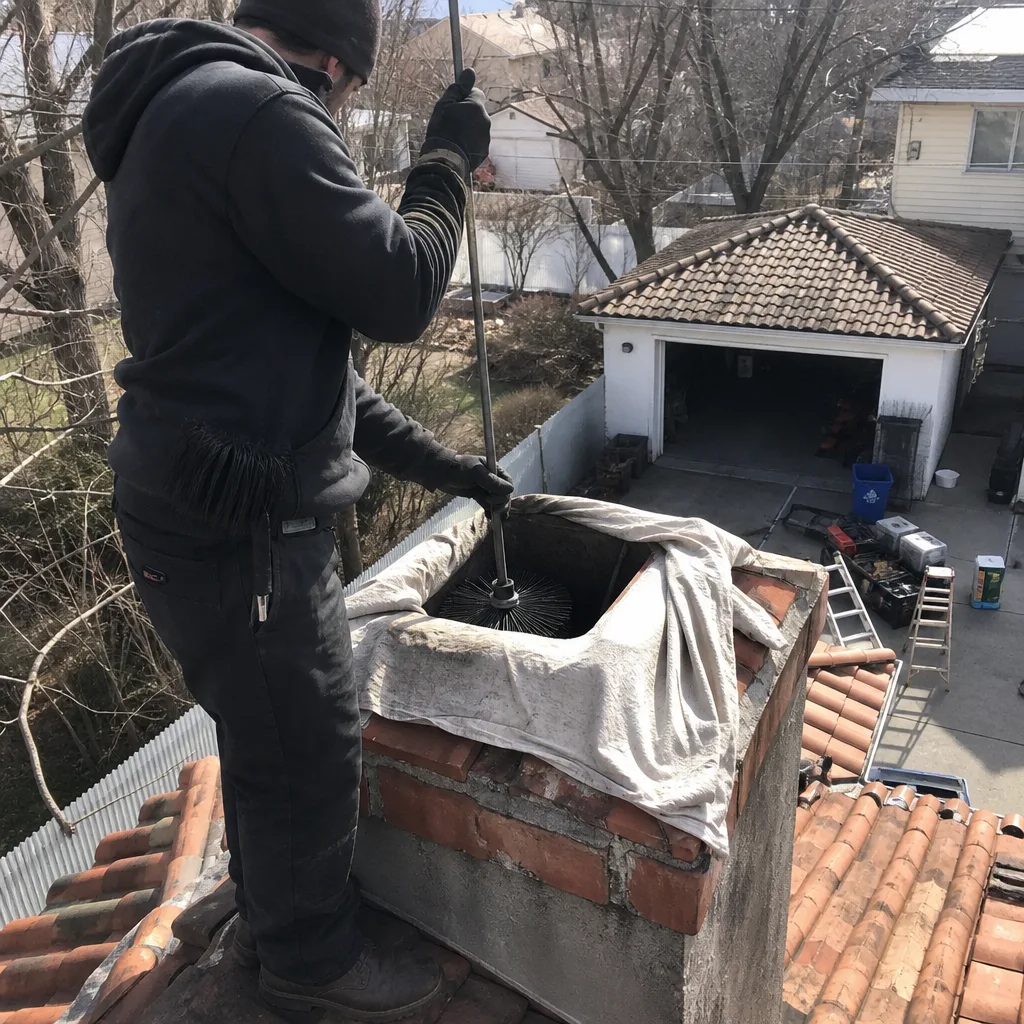
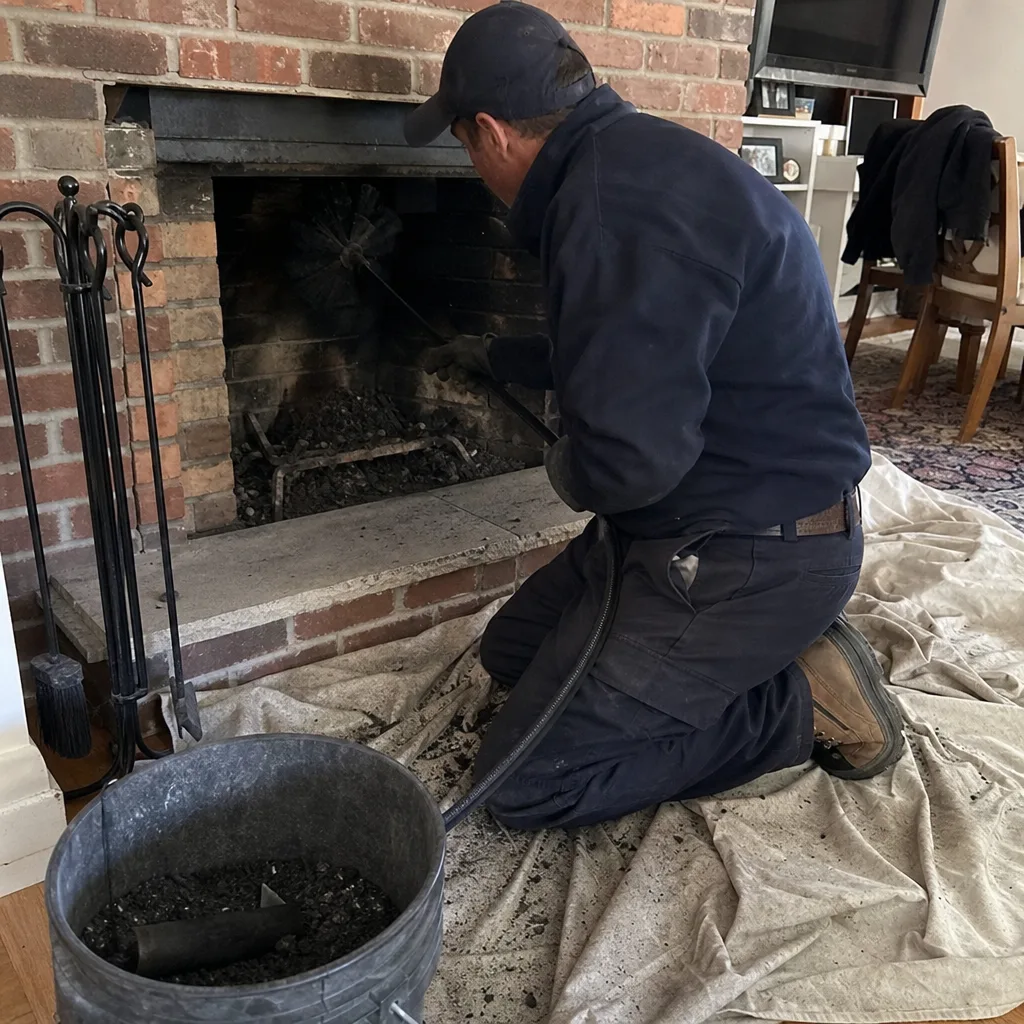
Chimney sweep logs do not sweep chimneys. They loosen some creosote - which then falls where a brush and vacuum still have to collect it.


 Before
 After
After Before
 After
After Before
 After
AfterStrong Campfire Smell Indoors: What It Means and What to Do
A campfire smell inside your home almost always means combustion byproducts – creosote, smoke, and carbon particles – are moving back down your flue and into your living space instead of going up and out. This is called negative draft or backdraft, and it is not a décor problem. It is a ventilation problem, and in most cases it points directly to a chimney that needs cleaning, a draft obstruction, or a structural issue in the flue.
The smell is real evidence. Creosote is a byproduct of wood combustion that coats the inside of your flue over time. When warm air pulls it back into the house – or when the flue is blocked and smoke has nowhere to go – that’s the odor you’re detecting. It can happen with a fire burning, and it can happen hours after the fire is out. If you’re smelling it right now, something is wrong with how air is moving through your chimney system.
Why It Happens
Creosote Buildup in the Flue
This is the most common cause by a wide margin. Creosote accumulates on flue walls every time you burn wood, and heavy buildup narrows the flue opening, slows the draft, and intensifies the smell – especially on warm or humid days when air pressure inside and outside the home equalizes. If you’ve burned regularly for a season or more without a sweep, buildup is the most likely suspect. A camera scan (the NFPA 211 Level 2 inspection we run as standard on every job) will show exactly how thick it is.
A Blocked or Damaged Chimney Cap
Chimney caps keep rain, debris, and animals out of the flue. When a cap is missing, bent, rusted through, or packed with a bird or squirrel nest, the flue can’t breathe properly. Debris also holds moisture against the flue walls, which intensifies creosote odor. You may be able to see the cap from the ground with binoculars – look for a bent or missing screen, obvious debris, or animal activity at the top of the stack. Don’t climb to check it yourself; that’s a job for a tech with the right equipment.
Negative Air Pressure in the House
Modern homes are tightly sealed, and exhaust fans – kitchen range hoods, bathroom fans, whole-house ventilation systems – can create a pressure differential that pulls air down the chimney rather than letting smoke rise out of it. If the smell is strongest when your range hood is running, or if you notice it mostly when doors and windows are closed, negative pressure is likely a contributing factor. This isn’t necessarily a structural chimney problem, but it does need to be diagnosed before any repair scope is written.
A Cracked or Deteriorated Flue Liner
Clay tile liners crack over time from thermal cycling – the repeated expansion and contraction of heating and cooling. A cracked liner can allow smoke and gases to seep into wall cavities or back into the firebox instead of venting cleanly upward. Cracks are rarely visible without a camera inside the flue; this is exactly why NFPA 211 Level 2 exists, and why we run it on every visit rather than treating it as an upsell. If your chimney is older than 20 years and you’re smelling smoke consistently, the liner deserves a close look.
What to Do Right Now
- Stop using the fireplace. Don’t light another fire until the cause is identified. If smoke and combustion gases are back-drafting, burning more wood makes the problem worse and adds carbon monoxide risk to a space that’s already not venting correctly.
- Open a window near the fireplace. This can help equalize pressure and reduce the smell in the short term. It’s a diagnostic step, not a fix – if the smell reduces noticeably when you crack a window, negative air pressure is probably a factor.
- Check the damper position. Make sure the damper is fully open. A partially closed damper is a surprisingly common cause of smoke smell, especially if someone closed it after the last fire and it wasn’t re-opened. Use a flashlight to confirm it’s open before calling anything a crisis.
- Photograph what you can see from ground level. If the chimney cap looks damaged, missing, or blocked with debris, take a photo from the yard with your phone. That image is useful context for the technician and becomes part of the documented job record we keep for every visit.
- Don’t attempt to inspect or clean the flue interior yourself. Creosote at certain concentrations is flammable, and disturbing it without the right equipment can create a fire hazard. A flue with a cracked liner is venting combustion gas into structural spaces – this is not a flashlight-and-brush job. Call and let a technician put a camera on it first.
BeforeAfterHow We Fix It
When your local Emberly Chimney Cleaners team arrives, the first thing the technician does is put a camera down the flue – a full NFPA 211 Level 2 inspection, included on every visit, not charged as an add-on. That scan shows the flue condition, the liner integrity, the cap, the damper, and the degree of creosote buildup. The tech narrates what the camera finds, and you see the same footage.
From there, the scope is specific to what the camera shows. For most campfire-smell calls, the resolution is a chimney sweep – removing creosote and debris to restore proper draft. If the cap is damaged, a chimney cap replacement is added. If the liner shows cracks or gaps, a chimney liner repair or full liner replacement is scoped separately, with materials sourced through our buying network – DuraFlex, HeatShield, Gelco, and Olympia Chimney among them.
Every job gets a written price before anyone starts – Haven Standard Clause 1. The 365-Day Done Right Promise covers the work when it’s complete. A standard sweep typically takes one to two hours. A liner repair or cap replacement adds time depending on scope. You’ll know the full picture – and the full price – before a single tool comes out of the truck.
Frequently Asked Questions
It can be dangerous, and waiting isn’t advised. A campfire smell indoors means combustion byproducts – including carbon monoxide – are entering your living space rather than venting out. Carbon monoxide is odorless, but the conditions that produce a smoke smell also produce CO. Stop using the fireplace, make sure your CO detectors are working, and get the chimney inspected before the next fire. Call us at (980) 580-8641 and we’ll get a technician scheduled.
Availability depends on your location and current scheduling, and we never promise same-day slots we may not be able to keep. What we can tell you is that calls to (980) 580-8641 are answered by a live person around the clock – not a voicemail, not a form. Tell them what you’re experiencing and your local Emberly Chimney Cleaners team will get the earliest available appointment on the calendar. Before the visit, close the damper and leave the fireplace unused.
There’s no single number because the cause drives the cost – a sweep alone is priced differently from a sweep plus a cap replacement or a liner repair. What we can tell you is that every job gets a written estimate before any work begins, under Haven Standard Clause 1. No dollar amount changes after the tech is in your home, and no work happens without your signature on that price. Call (980) 580-8641 to schedule the camera inspection that produces the actual number for your chimney.
It’s a fair question, and the camera is the answer to it. We run a full NFPA 211 Level 2 camera scan on every visit, and you see what we see – the footage is part of the documented photo record on every job under Haven Standard Clause 4. If the liner is cracked, the images show it. If it isn’t, we say so. Nothing is recommended without visual evidence, and if you have a written estimate from another company that says you need a liner, bring it – we offer a Free Second Opinion on any written estimate, at no charge.
Get It Fixed
Call (980) 580-8641 – live answer, any hour – or book online. Your local Emberly Chimney Cleaners team will schedule a camera-scan inspection, give you a written price before anything starts, and back the work with the 365-Day Done Right Promise. The smell tells you something is wrong; the camera tells you exactly what.
Written by Corrine Halstead, Owner at Emberly Chimney Cleaners, serving communities nationwide since 2009.
What Our Customers Say
"Gas insert service done properly with the readings written down. The technician had the certification number printed on the paperwork."
- Bettina A."We were buying the house and needed a real inspection. The report had photographs, the standard it was done to, and a clear repair figure. The seller paid for the repair."
- Lorna D."They ran a camera down the flue and showed me the cracked tiles on a screen. The previous company had swept it twice and never mentioned it."
- Gregory F.