

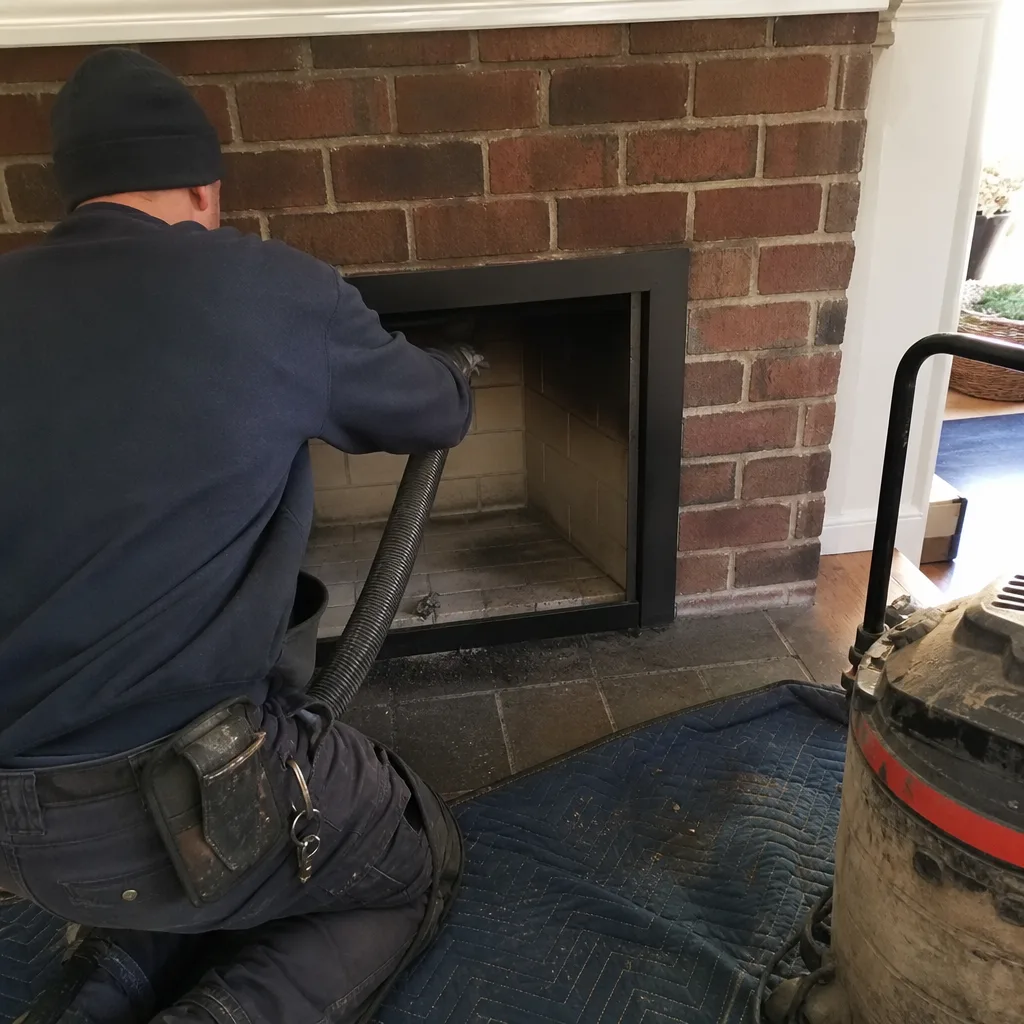
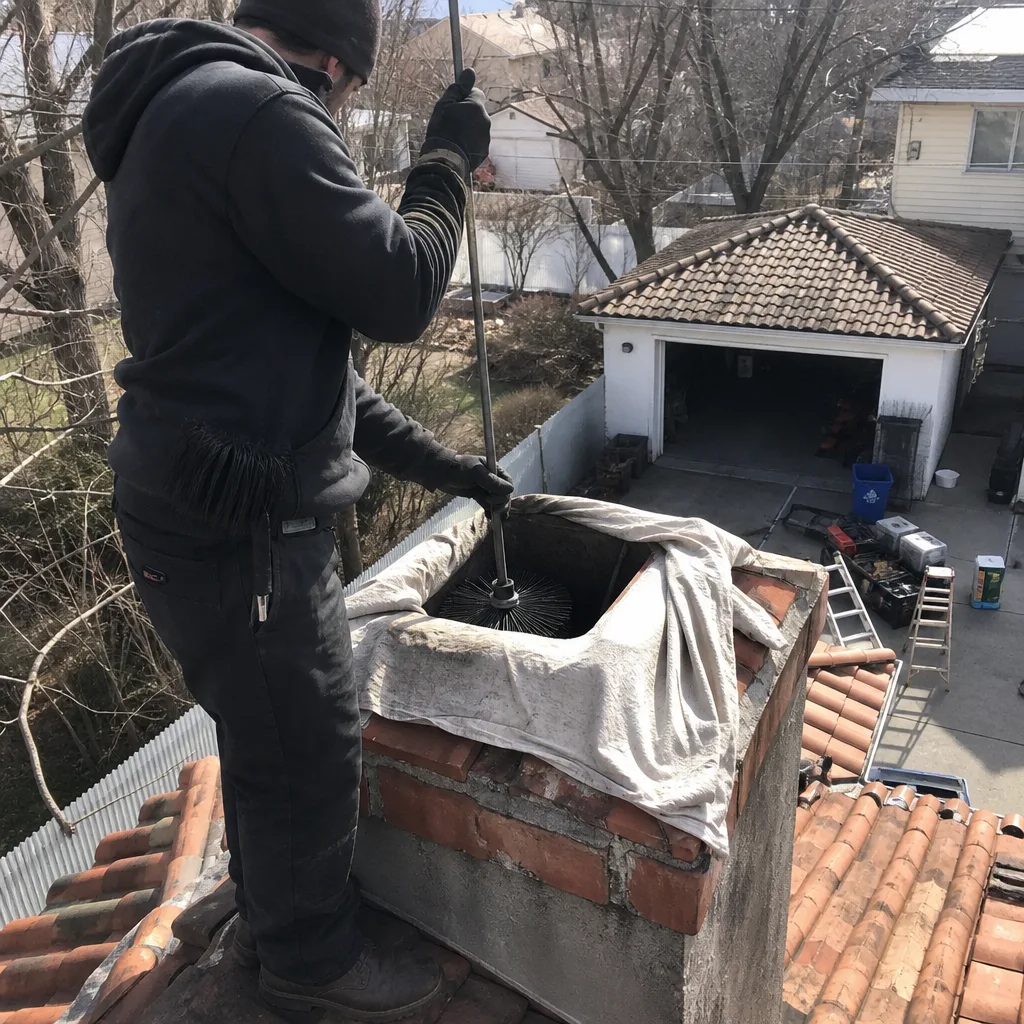
Level 1 sweep and inspection to the NFPA 211 annual standard - flue, crown, cap, and flashing checked and photographed
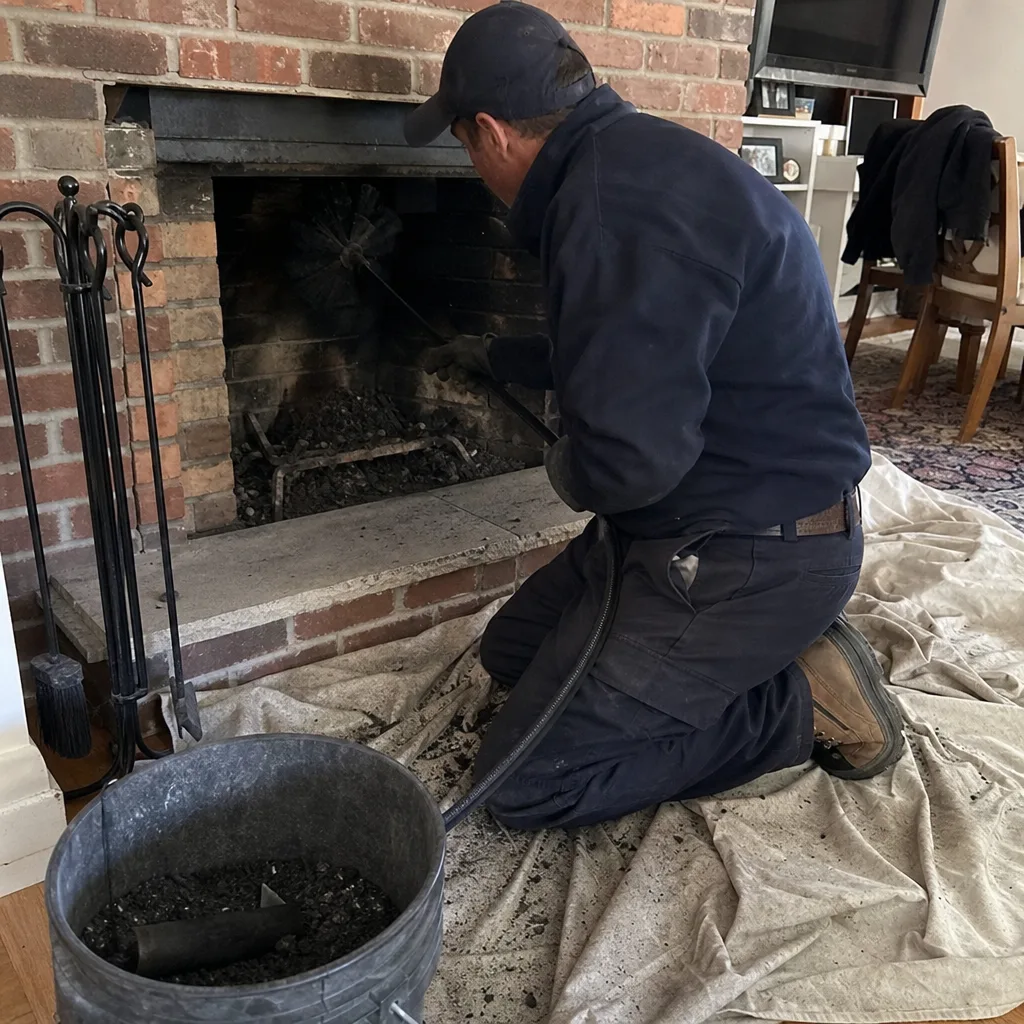
Chimney sweep logs do not sweep chimneys. They loosen some creosote - which then falls where a brush and vacuum still have to collect it.


 Before
 After
After Before
 After
After Before
 After
AfterSmoke Coming Back Into the Room
Smoke pushing back into your living space almost always means your chimney’s draft has failed – air that should be moving up and out is reversing direction, and the fire’s exhaust is taking the path of least resistance: straight into your home. This is a ventilation problem, not a fireplace problem, and it has a specific cause that a camera-scan inspection can identify.
The draft inside a chimney works because hot combustion gases are lighter than the surrounding air. When that physics breaks down – because of a blockage, a pressure imbalance, a cold flue, or structural damage – smoke has nowhere to go except back through the firebox opening. Most of the time, one of four things is responsible. The right fix depends on which one. Using the fireplace while smoke is backdrafting is not a neutral choice: carbon monoxide is in that smoke, and it doesn’t have a smell you’ll notice before it’s a problem.
Why It Happens
1. The Flue Is Blocked or Lined With Creosote
This is the most common cause by a significant margin. Creosote – the tar-like byproduct of wood combustion – builds up on the interior walls of the flue liner over time. Heavy buildup narrows the airway, and at stage three it can close it enough to cause visible backdrafting. A blocked flue can also mean a bird’s nest, a collapsed liner section, or debris from a chimney cap that’s failed. If the problem developed gradually over a season of use rather than appearing suddenly, buildup is the first suspect.
2. The Flue Is Cold (Negative Draft)
A cold flue column – especially in a masonry chimney on an exterior wall – is under negative pressure relative to the warm air inside your house. When you open the damper, that cold air column pushes down and inward. You’ll recognize this cause because the backdraft is worst at startup and improves once the fire has been burning for 10-15 minutes. Holding a lit match near the damper before lighting your fire tells you whether the draft is moving up or down: if the flame is pulled toward the flue, it’s working. If it blows back at you, it isn’t.
3. The Damper Is Damaged, Warped, or Stuck Partly Closed
The throat damper sits just above the firebox. Over years of heat cycling, the metal plate and frame can warp, corrode, or accumulate debris that prevents a full open position. A damper stuck at half-open cuts the effective flue area dramatically and creates turbulence that fights the draft. You can usually see the damper’s position by looking up into the firebox with a flashlight. If the plate appears to be sitting at an angle when it should be flat and fully open, that’s your answer – but don’t try to force a warped damper by hand.
4. Competing Air Pressure Inside the House
Modern homes are sealed tight. Exhaust fans, range hoods, dryer vents, and other combustion appliances all depressurize the interior. When your house is under negative pressure, it will pull makeup air from any available opening – including a lit fireplace. If smoke only backs up when a bathroom or kitchen fan runs, or when you open a window and the problem goes away immediately, the house itself is the cause. This isn’t a chimney defect, but it still needs a solution.
What to Do Right Now
- Stop using the fireplace until you know what you’re dealing with. Smoke in a living space contains carbon monoxide. If anyone in the home has a headache, feels nauseated, or seems confused, open windows, get everyone outside, and call 911 before you call us.
- Open a window in the same room as the fireplace – about two inches is enough – and see whether smoke movement changes. If it does, house depressurization is likely part of the picture. Note what happened so you can tell the technician.
- Check that the damper is fully open. Reach up carefully into the firebox, above the smoke shelf, and feel whether the handle moves the plate to a fully upright position. If it feels stuck or the plate is visibly warped, leave it alone – forced adjustment can loosen debris or damage the seal further.
- Photograph what you can see from the firebox opening – the damper position, any visible debris, and the condition of the smoke chamber walls above. Your local Emberly Chimney Cleaners team documents every visit with photos, but the images you take now give the technician a before-the-visit baseline that can matter if there’s damage.
- Do not attempt to inspect or clear the flue from the roof yourself. Working at height around an open flue opening is genuinely dangerous, and dislodging a blockage from above without knowing what’s below it can drive debris into the firebox. Leave that to the technician.
BeforeAfterHow We Fix It
When your local Emberly Chimney Cleaners team arrives, the first thing they do is a camera-scan inspection – a full NFPA 211 Level 2 look inside the flue, not a flashlight check from the firebox floor. That footage tells us exactly what’s there: creosote staging, a damaged liner section, a debris blockage, or a damper problem. You see what we found because the photo record is part of every visit, under Haven Standard Clause 4. Nothing is recommended without evidence you can look at yourself.
If the cause is buildup or a blockage, a chimney sweep resolves it the same day. If the inspection finds liner damage – cracks, separated joints, spalling clay – we’ll scope the repair and give you a written quote before anything starts. That’s Clause 1 of the Haven Standard: the price, the scope, and the warranty in writing, before the work begins. Chimney liner repair or a chimney repair to damaged masonry might be needed in more serious cases, and we’ll tell you plainly when something can safely wait versus when it can’t. Total visit time is typically under two hours for a cleaning. Liner or masonry work is scoped separately based on what the camera actually shows.
Frequently Asked Questions
It’s genuinely dangerous, and you shouldn’t use the fireplace again until the cause is identified. Smoke contains carbon monoxide, a colorless, odorless gas that causes poisoning before most people realize something is wrong. A backdrafting fireplace should be treated as a ventilation failure, not a minor nuisance. Call (980) 580-8641 – our live phone line is answered 24 hours a day, 7 days a week – and tell the team what you’re seeing.
Call us at (980) 580-8641 and we’ll tell you exactly what’s available in your area. Availability depends on your location and the current schedule for your local team. We don’t make same-day guarantees in writing, but we do pick up the phone every time and give you a real answer rather than a form submission and a callback window you have to guess at.
It gets oversold constantly, and we understand why that’s a reasonable concern – a liner replacement is a significant job and you have no way to verify the recommendation without seeing the camera footage yourself. Our answer to that is simple: we show you the footage. Nothing is recommended without photographic evidence of the specific defect, and if you have a written estimate from another company, we’ll give you a free second opinion on it. A liner in serviceable condition gets cleaned and documented. A liner that’s failing gets explained with images, in plain language, before we quote anything.
The standard recommendation from NFPA 211 is an inspection every year and a cleaning whenever the inspection shows it’s needed – which for a wood-burning fireplace used regularly is usually once per season. The homeowners we see with the worst buildup problems are almost always the ones who skipped one year and then two, often because nothing seemed wrong from the inside. Smoke coming back into the room is a late signal. Regular cleaning catches blockage and creosote staging long before draft fails. Call (980) 580-8641 to schedule before the next burning season starts.
Get It Fixed
Call (980) 580-8641 – a real person picks up, any hour – or book online. Your local Emberly Chimney Cleaners team will inspect the flue, show you what they found, and give you a written price before anything starts. The 365-Day Done Right Promise applies to every job.
Written by Corrine Halstead, Owner at Emberly Chimney Cleaners, serving communities nationwide since 2009.
What Our Customers Say
"Gas insert service done properly with the readings written down. The technician had the certification number printed on the paperwork."
- Bettina A."We were buying the house and needed a real inspection. The report had photographs, the standard it was done to, and a clear repair figure. The seller paid for the repair."
- Lorna D."They ran a camera down the flue and showed me the cracked tiles on a screen. The previous company had swept it twice and never mentioned it."
- Gregory F.