

Level 1 sweep and inspection to the NFPA 211 annual standard - flue, crown, cap, and flashing checked and photographed
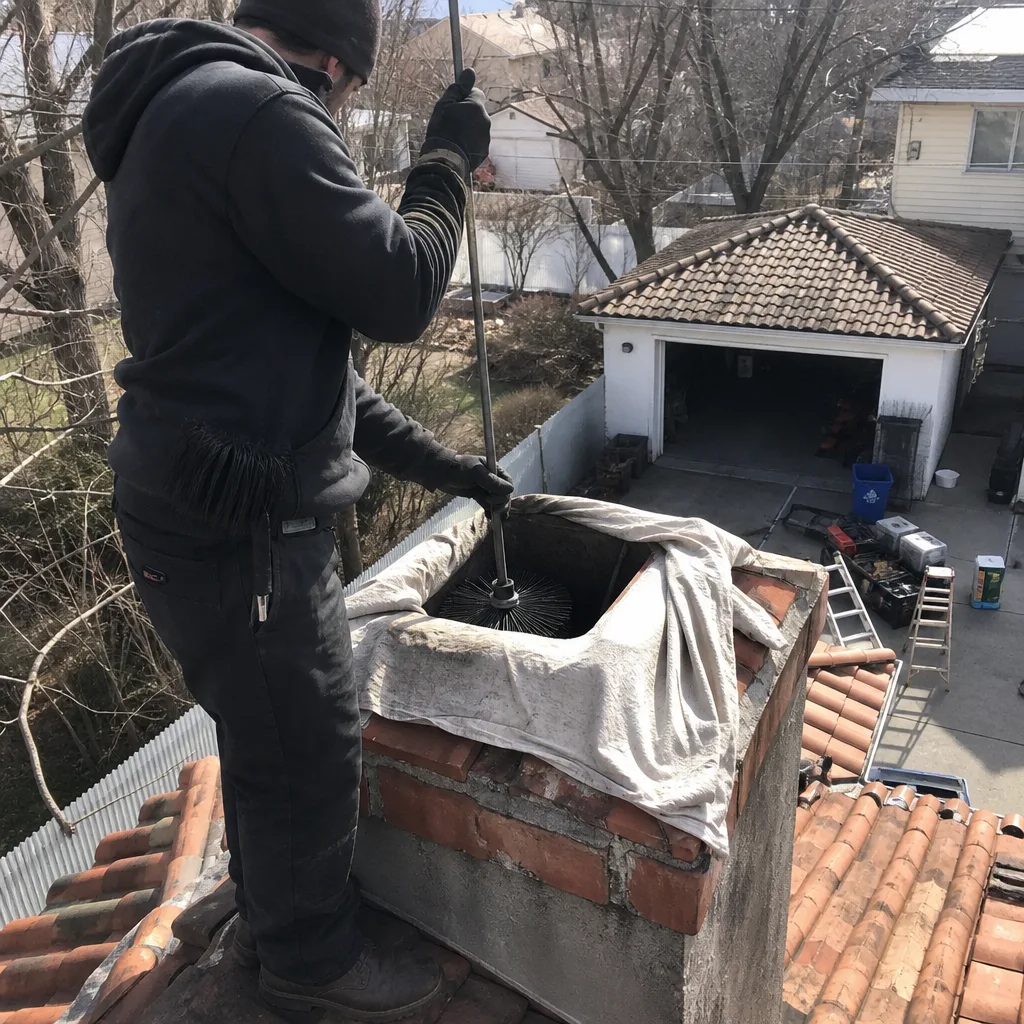
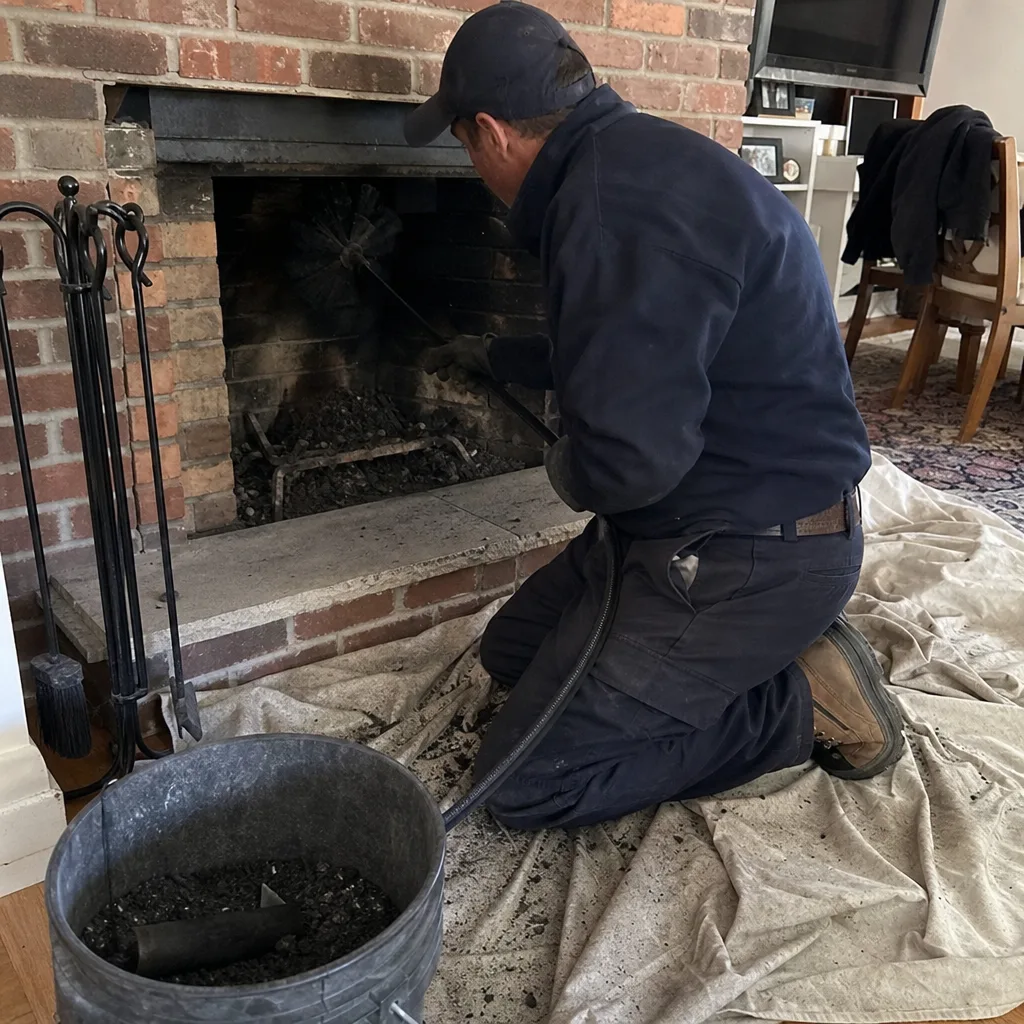
Chimney sweep logs do not sweep chimneys. They loosen some creosote - which then falls where a brush and vacuum still have to collect it.


 Before
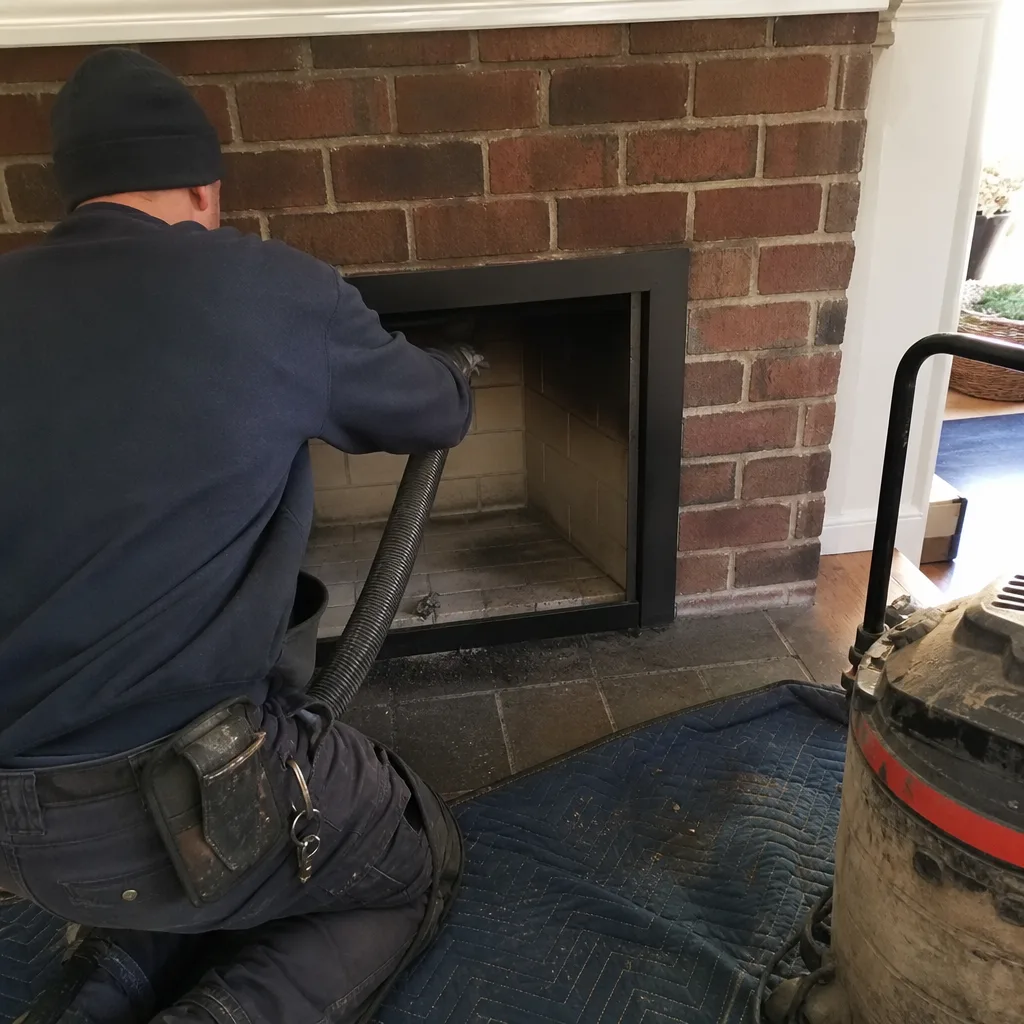 After
After Before
 After
After Before
 After
AfterCreosote Buildup Warning Signs
Creosote buildup warning signs, such as a tar-like smell, black oily residue around the firebox, or visible dark glazing inside the flue, almost always mean your chimney has accumulated enough combustible deposits to pose a real fire risk. This is not a cosmetic problem. Creosote is the leading cause of chimney fires in the United States, and the signs showing up inside your home mean the buildup has progressed past the earliest stage.
Here is what is happening: every fire you burn sends smoke up the flue. When that smoke cools against the flue walls, the unburned hydrocarbons in it condense and stick. Over time, those deposits harden and build up in layers. Stage one is light and brushable. Stage two is dark, tarry, and harder to remove. Stage three, the glazed black kind, requires chemical treatment before a brush can even touch it. The warning signs most homeowners notice, which is why you searched this, tend to show up when stage two is already established or stage three has begun.
Why It Happens
Smoldering, Low-Heat Fires
Creosote forms fastest when smoke moves slowly through a cool flue. That happens when fires are starved of air and burn at low temperatures for long periods. If you have been building small, slow-burning fires to stretch a cord of wood, or if your damper has been partially closed, the conditions for heavy creosote accumulation are almost exactly right. You can tell this is the cause if the smell is strongest when the fire is going and the smoke seems thick or lazy rather than drawing cleanly upward.
Unseasoned or Green Wood
Wood that has not dried for at least 12 months holds significant moisture. When it burns, the energy that should be generating heat goes into boiling off that moisture instead. The result is cooler, wetter smoke, which deposits creosote at a much faster rate than dry hardwood. A simple indicator: if the wood hisses when you put it on the fire, or if you can see water weeping from the cut ends, it was not ready to burn.
Oversized Flue or Undersized Firebox
A flue that is too large relative to the firebox opening cannot build the draft it needs to pull smoke quickly upward. Slow-moving, cooling smoke spends more time in contact with flue walls, which accelerates creosote deposit. This is a structural mismatch, not something you did wrong, and it will produce heavy buildup no matter how well you manage your fires. If the problem reappears within a season of a professional cleaning, an undersized firebox or oversized liner is worth asking about.
Restricted or Deteriorated Flue
A cracked clay tile, a collapsed section of liner, or a blocked flue cap slows airflow and traps smoke inside the system longer. Any of these failures creates a zone where creosote deposits concentrate rapidly. The visible sign at the firebox level is often a brownish or black oily stain running down from the smoke chamber, or a smell that does not go away even when the fireplace is not in use. This kind of restriction needs a camera inspection to locate, not just a brush sweep.
What to Do Right Now
- Stop using the fireplace. If you are seeing stage-two or stage-three signs, burning another fire before the flue is professionally cleaned and inspected raises the risk of a chimney fire. Set a hard stop until it is cleared.
- Open a window in the room and verify the damper is fully open. If any smell of smoke or sulfur is entering the living space with the fireplace cold, you may have a draft reversal or a restriction. Do not attempt to clear a blocked flue yourself from inside the firebox.
- Photograph what you can see from floor level. A clear photo of the firebox opening, the smoke shelf if visible, and any staining on the surround gives a technician useful context before they arrive. Keep your distance from the opening; do not reach in or use a mirror on a ladder inside the firebox.
- Do not use creosote-reducing chemical logs as a substitute for a professional cleaning. These products are sometimes useful as a supplement between cleanings, but they are not a replacement, particularly if the buildup is already in stage two or three. Using one on heavy glazed creosote without follow-up cleaning can loosen deposits that then fall and block the flue.
- Note when the chimney was last professionally cleaned and inspected. If it has been more than a year, or if you cannot remember, that information matters when you call. NFPA 211 recommends an annual inspection regardless of how often the fireplace is used.
BeforeAfterHow We Fix It
When your local Emberly Chimney Cleaners technician arrives, the first step is a camera-scan inspection of the full flue, which is what a Level 2 inspection under NFPA 211 requires and what we run as standard on every visit. The camera tells us which stage the creosote is at, whether there is any structural damage beneath it, and whether a standard rotary brush sweep is sufficient or whether a chemical treatment needs to go in first to break down glazed stage-three deposits before brushing. You see the footage. That is not optional, it is part of what we document under Haven Standard Clause 4.
Depending on what the camera finds, the resolution is a professional chimney sweep, a targeted chimney repair if there is liner or joint damage underneath, or both in sequence. Before any of that starts, you receive a written price and written scope. That is Clause 1 of the Haven Standard: have it in writing, before anyone starts. The 365-Day Done Right Promise covers the work when it is complete. For a straightforward sweep on stage-one or stage-two buildup, a single visit is typically enough. Stage-three glazed creosote may require a follow-up after chemical treatment has had time to work. Either way, you know what you are agreeing to before anything happens.
Frequently Asked Questions
Stage-two and stage-three creosote is genuinely dangerous: it ignites at around 451 degrees Fahrenheit, and a chimney fire burning inside the flue can reach temperatures above 2,000 degrees Fahrenheit, which is enough to crack clay liners, ignite surrounding framing, and spread to the rest of the house. The risk is not hypothetical. If you are seeing the warning signs described above, this is the right moment to stop using the fireplace and schedule an inspection. Call (980) 580-8641 and we will get a written quote in front of you before anything else happens.
It depends on the stage. Light stage-one buildup, meaning a thin sooty layer with no oily residue and no smell, can typically wait until the end of the burning season without significant added risk. But if you are seeing the oily black residue, the tar-like smell, or any visible glazing, waiting means burning additional fires on top of deposits that are already at or past the threshold where ignition risk is real. That is not a wait situation. Call (980) 580-8641 now, and we will give you a straight answer once we know what the camera shows.
For stage-one deposits, a homeowner with the right equipment, meaning a properly sized rotary brush, a vacuum rated for fine ash, and the ability to seal off the firebox opening before starting, can do a basic brush sweep. That said, working at height on a roof, working inside a flue without knowing the liner condition, and handling stage-two or stage-three deposits without the right chemical treatment all carry real risks. For anything past the lightest dusting, a professional sweep costs less than the damage from doing it wrong, and it comes with a documented record of what was actually found.
Every visit includes a camera-scan of the full flue, which is the standard NFPA 211 Level 2 inspection, plus a written photo record of conditions found, delivered to you. The name Emberly Chimney Cleaners refers specifically to this standard: NFPA 211 defines three inspection levels, and Level 2 is the one that puts a camera down the flue rather than just looking in with a flashlight. You receive the written price before the work starts, and the documented record when it is done. Both are standard, not add-ons.
Get It Fixed
If you are seeing creosote warning signs, the right move is a camera inspection before the next fire. Call (980) 580-8641 now or book online. Your local Emberly Chimney Cleaners team will give you a written price before anything starts, and a documented photo record when it is done.
Written by Corrine Halstead, Owner at Emberly Chimney Cleaners, serving communities nationwide since 2009.
What Our Customers Say
"Gas insert service done properly with the readings written down. The technician had the certification number printed on the paperwork."
- Bettina A."We were buying the house and needed a real inspection. The report had photographs, the standard it was done to, and a clear repair figure. The seller paid for the repair."
- Lorna D."They ran a camera down the flue and showed me the cracked tiles on a screen. The previous company had swept it twice and never mentioned it."
- Gregory F.