

Level 1 sweep and inspection to the NFPA 211 annual standard - flue, crown, cap, and flashing checked and photographed
Chimney sweep logs do not sweep chimneys. They loosen some creosote - which then falls where a brush and vacuum still have to collect it.


 Before
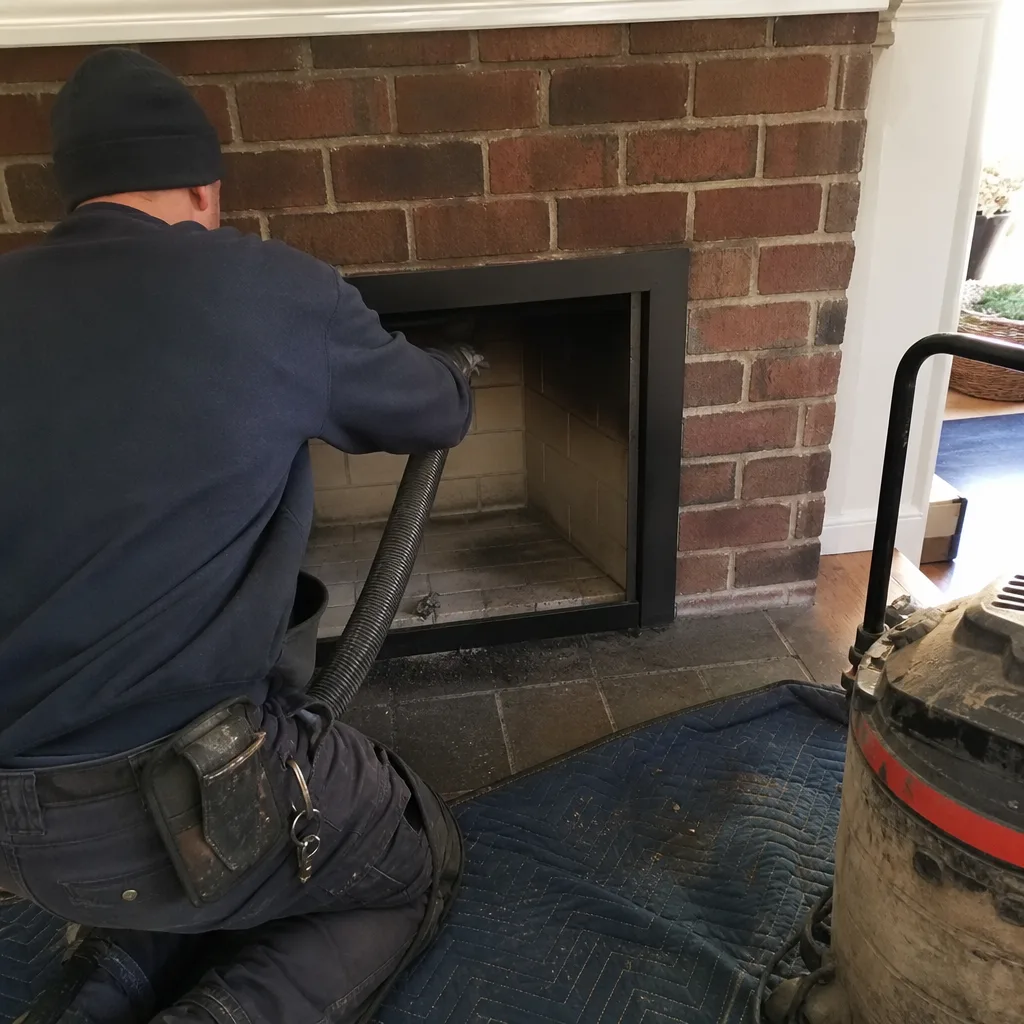 After
After Before
 After
After Before
 After
AfterCarbon Monoxide Alarm Going Off Near the Fireplace
A carbon monoxide alarm sounding near your fireplace almost always means combustion gases are not venting out of your home the way they should. The most common cause is a blocked or partially blocked flue – creosote buildup, a collapsed liner section, or a sealed damper – forcing CO back into the room instead of up and out. Stop using the fireplace immediately, get everyone out, and call 911 if anyone feels unwell.
Carbon monoxide is colorless and odorless, so the alarm is the only warning you get. Once you are sure the space is safe to re-enter, the next step is finding out exactly why the gas came back into the room. That requires a camera inside the flue, not a guess from street level. Until that inspection happens, the fireplace stays off.
What’s Happening
When your fireplace is running, combustion gases – primarily carbon monoxide and carbon dioxide – need a clear path up the flue and out the top of the chimney. If anything interrupts that path, pressure in the system reverses. Gases that should be moving upward start moving downward and sideways instead, into the room where the alarm picks them up. The alarm is working correctly. The flue is not.
This kind of backdraft can happen quickly or slowly, during a fire or hours after one. The fact that the alarm tripped means CO reached a measurable concentration near floor or counter height. That is not a glitch worth dismissing. It is a data point about a venting failure somewhere in the system.
Why It Happens
Heavy Creosote Buildup in the Flue
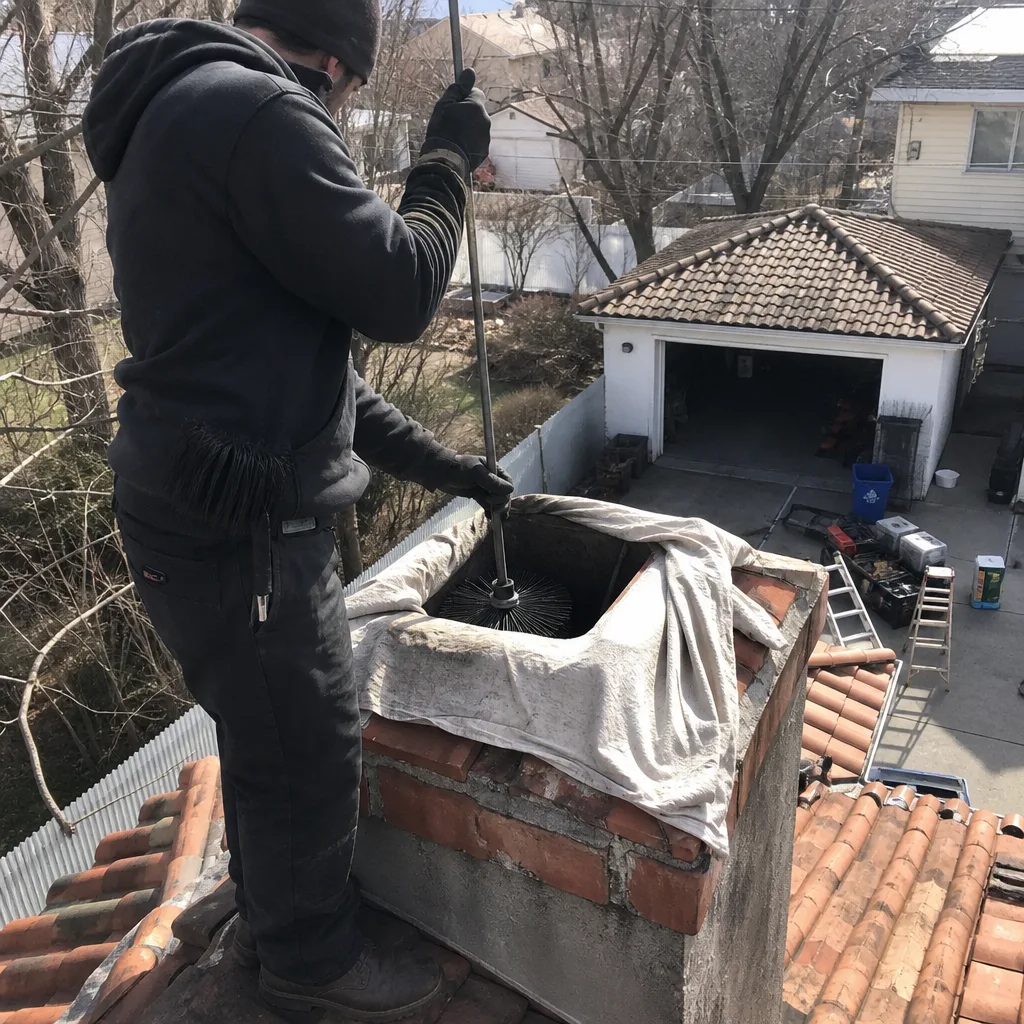
Creosote – the dark, resinous byproduct of burning wood – accumulates on the inner walls of the flue every season. A light coating is normal. A heavy buildup narrows the flue’s usable diameter and can restrict airflow enough to reverse the draft entirely. If you have been burning regularly for more than a year without a cleaning, this is the most probable cause. You may also notice a sharp, tar-like smell near the firebox when the fireplace is cold.
A Damaged or Collapsed Flue Liner
Most flue liners are terra cotta clay tile, and clay tiles crack. They crack from thermal cycling, from moisture that freezes and expands, and – in older homes – from a chimney fire that ran hot enough to fracture them without being reported. A cracked or collapsed section can block the flue partially or fully, and it can also let CO seep through the masonry wall into the living space. You cannot see liner damage without a camera; a flashlight inspection from the firebox misses most of it. This is the reason Emberly’s name refers to a Level 2 inspection – NFPA 211’s standard that actually puts a camera down the flue.
A Closed or Malfunctioning Damper
The damper sits just above the firebox and should be fully open whenever the fireplace is in use. A damper that is stuck partway closed, warped from heat, or accidentally left shut is a direct cause of backdraft. You can usually check this yourself by standing in front of the open firebox and looking up with a flashlight – you should see sky or at minimum a clear opening. If you see a flat metal plate, the damper is closed or stuck. Do not light a fire to test it.
A Bird’s Nest, Debris, or Animal Obstruction at the Top of the Chimney
Chimney swifts, starlings, and squirrels build nests in uncapped flues, and nesting material can block the top entirely while still allowing a fire to draw for a while – until it doesn’t. A sudden CO alarm after a period of normal use is sometimes traced to a nest that has shifted and sealed the opening. You may hear rustling or see debris in the firebox. Do not attempt to remove a nest at the top of the chimney yourself; that is height work with a real fall risk, and some nesting birds are federally protected.
BeforeAfterWhat to Do Right Now
- Get everyone out of the room and into fresh air, including pets. If anyone has a headache, nausea, or feels confused, leave the house entirely and call 911. Carbon monoxide poisoning can escalate fast.
- Do not use the fireplace again until the cause is identified. Even if the alarm stops and everyone feels fine, the venting failure that triggered it is still there.
- Open a window near the fireplace if you can do so quickly on your way out. Ventilating the space dilutes any CO that has already built up. Do not stay in the room to manage it.
- Take a photo of the alarm display and note the time. The CO level reading (in parts per million, if your alarm shows it) and the time of the event are useful information for the technician. Most alarms display peak readings in a review mode.
- Check whether the damper handle is in the open or closed position, but do not reach into a warm firebox. If the fireplace was recently used, give it time to cool. A damper position check is a reasonable thing to photograph and report; the rest of the diagnosis belongs to a camera on a cable, not a homeowner with a phone light.
How We Fix It
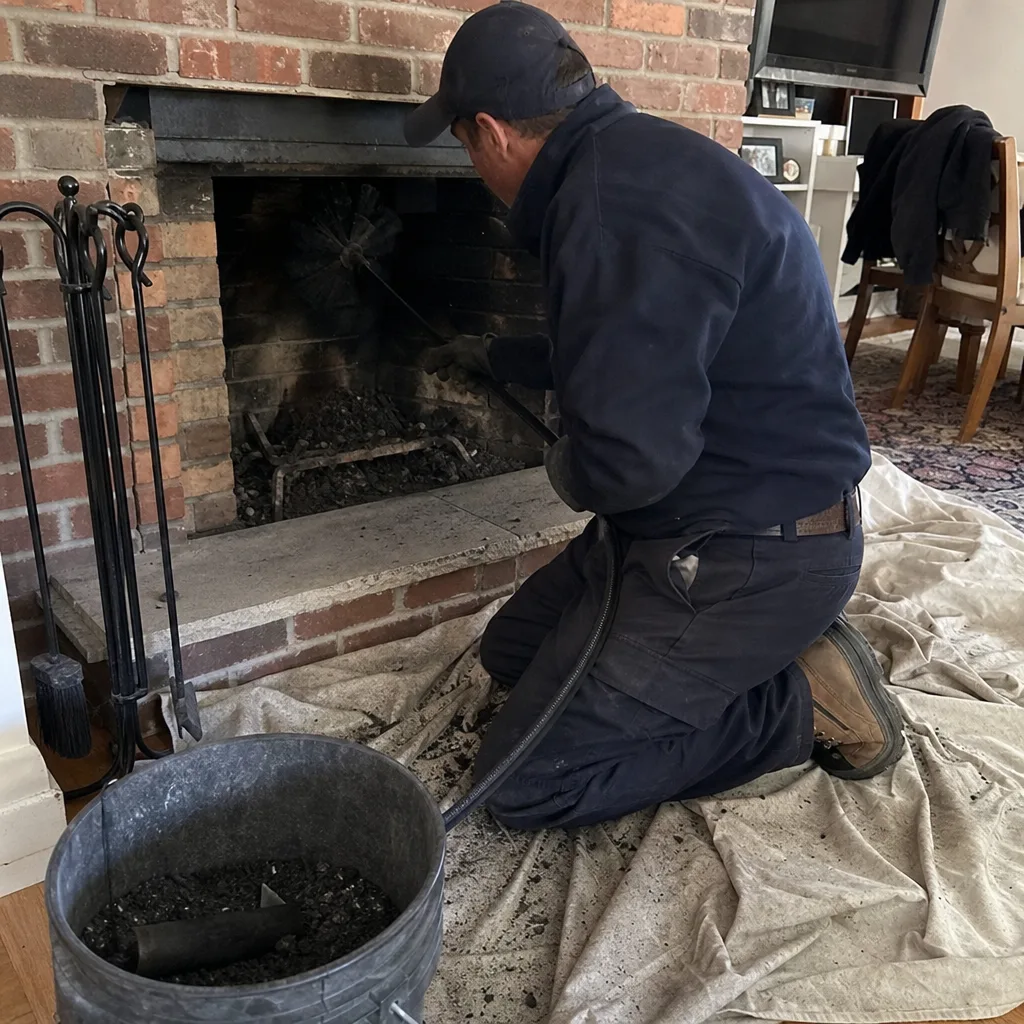
When your local Emberly Chimney Cleaners team arrives, the first thing that goes into the flue is the camera. This is a NFPA 211 Level 2 scan – the same documented inspection we have been running as standard since 2009, long before anyone required it. The tech reads the footage in real time and photographs every finding: creosote grade, liner condition, damper function, cap and crown status, and any obstruction at the top.
Before anything is cleaned or repaired, you receive a written scope and a written price. That is Haven Standard Clause 1 – Have it in writing – and it applies on every job without exception.
Depending on what the camera shows, the resolution is usually chimney sweep to clear the obstruction or buildup, or chimney liner repair and rebuild if the liner has failed. In some cases it is both. Work typically takes a few hours for a standard cleaning and half a day or more if liner work is needed.
The 365-Day Done Right Promise covers every job: if it is not done right, we make it right. A documented photo record is included when we leave, under Haven Standard Clause 4.
Frequently Asked Questions
This is genuinely dangerous. Modern CO alarms are designed to alert at concentrations well below immediately harmful levels, but that also means the alarm is reliable – it does not sound randomly. A CO alarm tripping near a fireplace is a specific, actionable warning that combustion gases are entering the living space instead of venting out. Do not reset it and resume using the fireplace. The cause needs to be found first. Call (980) 580-8641 and we will get a camera in the flue.
It should not wait. Every time the fireplace is used before the venting failure is identified, you risk another CO event – and CO exposure at moderate levels can cause harm before anyone connects the symptoms to the fireplace. Treating this as urgent is not overreacting. Call (980) 580-8641 and your local Emberly team will get the inspection scheduled as quickly as possible.
Call us at (980) 580-8641 and a live person will answer – not a voicemail, not a web form – to find out what your local team’s current availability looks like. We do not make blanket promises about same-day dispatch because scheduling depends on the team’s existing work, but we take CO complaints seriously and will tell you exactly what we can do and when.
There is no single number that covers every situation, because the repair depends entirely on what the camera finds – and we will not know that until we look. What we can tell you is that every job at Emberly starts with a free written estimate: the exact scope, the exact price, and the written warranty, before anyone picks up a tool. No dollar figure appears on your paperwork without your approval first. Call (980) 580-8641 to schedule, and we will put the number in front of you before anything starts.
Get It Fixed

Call (980) 580-8641 – a live person answers around the clock – or book online. Your local Emberly Chimney Cleaners team will put a camera in the flue, put a written price in your hand before work starts, and leave a documented photo record when the job is done.
Written by Corrine Halstead, Owner at Emberly Chimney Cleaners, serving communities nationwide since 2009.
What Our Customers Say
"Gas insert service done properly with the readings written down. The technician had the certification number printed on the paperwork."
- Bettina A."We were buying the house and needed a real inspection. The report had photographs, the standard it was done to, and a clear repair figure. The seller paid for the repair."
- Lorna D."They ran a camera down the flue and showed me the cracked tiles on a screen. The previous company had swept it twice and never mentioned it."
- Gregory F.