
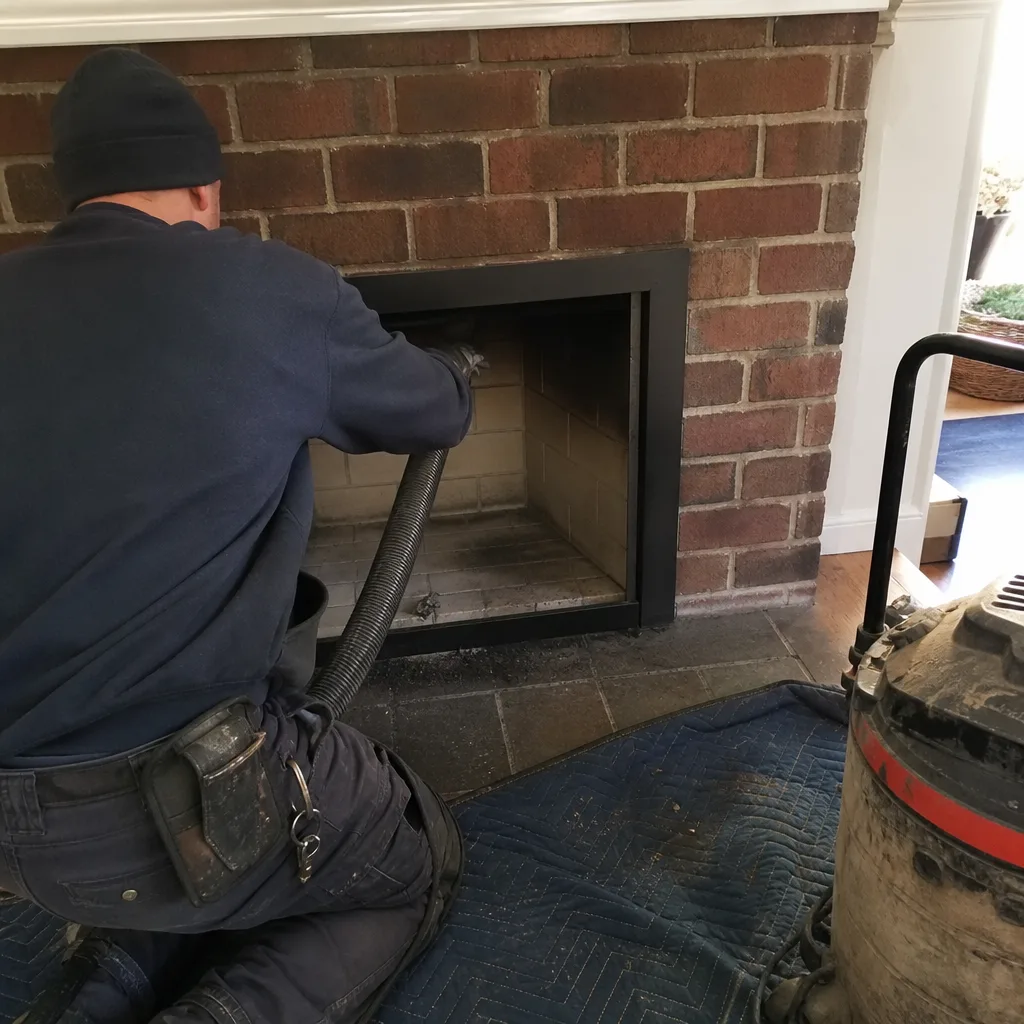
Level 1 sweep and inspection to the NFPA 211 annual standard - flue, crown, cap, and flashing checked and photographed
Chimney sweep logs do not sweep chimneys. They loosen some creosote - which then falls where a brush and vacuum still have to collect it.


 Before
 After
 Before
 After
 Before
 After
DuraFlex Chimney Cleaning in Philadelphia, NY | Emberly Chimney Cleaners
We provide independent DuraFlex chimney cleaning and inspection across Philadelphia, and we do it with a camera down every flue before we touch a brush. The thing that makes our DuraFlex work different here is simple: Philadelphia’s rowhouses share chimney stacks, and a liner problem in one unit can become a carbon monoxide problem in the house next door. That changes how we clean, how we inspect, and what we tell you before we quote a price. Call (980) 580-8641 for a written estimate from our Philadelphia Fireplace Services team, or read on to understand exactly how DuraFlex liners behave in this city’s chimneys.
Why Philadelphia Residents Choose Us for DuraFlex Service
We’ve spent years inside Philadelphia’s shared party-wall flues, and we know what a DuraFlex 316L liner looks like after a decade of freeze-thaw cycles in a South Philly chase. Corrine Halstead runs our crew, and she grew up around the brick-and-mortar chimneys of northern Manhattan before spending years on inspection and cleaning work across all five boroughs. When she talks about DuraFlex service, she’s talking about liners that got kinked during a rushed install through a narrow rowhouse flue, or AL29-4C corrosion pitting that started in a humid summer and never stopped. That’s the difference: we don’t sell DuraFlex, we service it after it’s been living in your chimney for ten or fifteen years. We’re an independent DuraFlex service provider, not manufacturer-affiliated or authorized. No factory tie, just hands-on field experience with the exact liner systems installed in Philadelphia homes. If you’re researching before you call, that’s the kind of expertise you actually want: someone who can show you camera footage of your flue walls and explain what it means before any price gets mentioned.
Common DuraFlex Chimney Cleaning Problems We Solve in Philadelphia
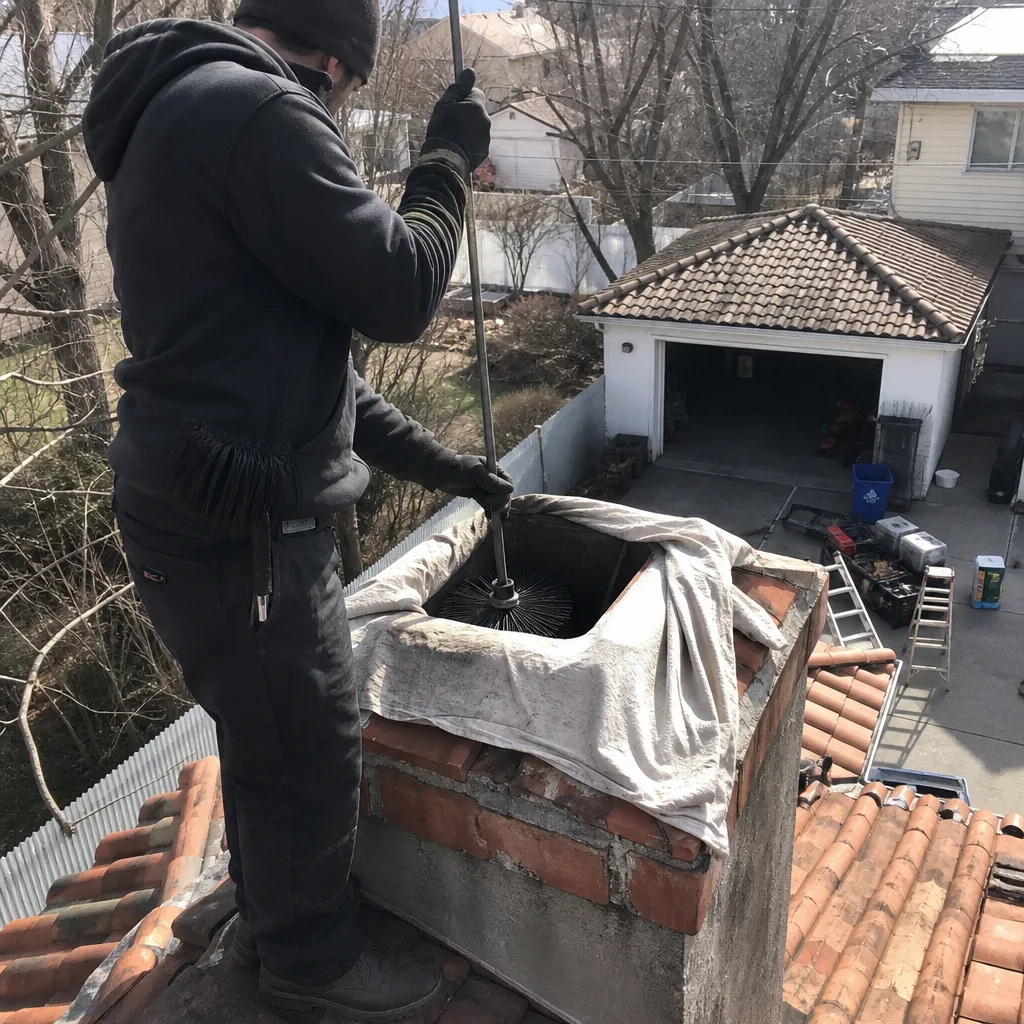
DuraFlex liners are solid products, but Philadelphia’s housing stock punishes them in specific, repeatable ways. Here’s what we find most often when we run a camera down a rowhouse flue:
- Kinked or flattened 316L liners from tight, offset rowhouse flues. Philadelphia’s rowhouse chimneys were built for coal heat, not stainless liners. The flue runs are narrow, sometimes offset, and a DuraFlex 316L liner pulled through without care can kink or flatten at the bend. That reduces draft, traps creosote, and in a shared stack, it starts pushing fumes sideways instead of up.
- Corrosion pitting on AL29-4C liners in humid, idle summers. Philadelphia’s summers are damp, and a gas appliance chimney that sits unused from April through September collects acidic condensation along the liner walls. We see pitting on AL29-4C liners in Fishtown and Kensington that started exactly that way. It’s not a liner defect; it’s what this climate does when a flue sits cold for months.
- Seam separation at the convergence point in shared party-wall stacks. When multiple flues run through one masonry column, years of frost-jacked brick movement flex the whole stack. The point where those flues converge is a stress riser, and we’ve found DuraFlex seams opened right at that junction. One rowhouse’s liner failure becomes a neighbor’s smoke problem.
- Creosote packed into the corrugated profile of a DuraFlex liner. The ridges inside a standard DuraFlex liner catch creosote in a way smooth terra cotta doesn’t. Wood-burning rowhouses in West Philadelphia and South Philly need a more aggressive cleaning approach, because a routine sweep often leaves residue behind in those corrugations.
- Ghost flues backdrafting alongside a newly installed DuraFlex liner. We’ve pulled liners through condemned rowhouse chimneys that looked sound from the outside, only to find an open, uncapped flue one brick over. When someone on the block renovates and starts using their fireplace again, that ghost flue can push gases back through the shared masonry into a sealed unit. We find this constantly in pre-1940 Philadelphia housing stock.
BeforeAfterDuraFlex Service in Philadelphia: What Local Conditions Mean for Your Equipment
Philadelphia has one of the highest concentrations of brick rowhouses in the United States, and most of them went up between 1880 and 1940. Those homes share party-wall chimney stacks, meaning multiple flues from adjacent attached units run through the same masonry column. A cracked or deteriorated flue in one rowhouse can channel carbon monoxide or smoke directly into a neighbor’s home, and that cross-contamination risk is real in a way it simply isn’t for detached suburban houses. Now layer in Philadelphia’s specific climate: winter temperatures that oscillate around freezing, driving moisture into mortar joints and flue tiles that then expand, crack, and push against whatever liner is inside. We’ve pulled DuraFlex liners out of South Philly stacks that were flattened by frost-jacked brick movement, not by any failure of the liner itself. The takeaway for DuraFlex owners is that cleaning alone isn’t enough here. You need an inspection that looks at the whole stack, including what’s happening in the flue next to yours, because that’s where Philadelphia’s problems start.
We were called to a 1920s rowhouse on South Iseminger Street in South Philly where the homeowner smelled gas exhaust in an upstairs bedroom. Our Level 2 inspection showed a DuraFlex 316L liner that had been flattened by years of frost-jacked brick movement in the shared party-wall chase. And a second, unlined ghost flue from a sealed fireplace was backdrafting into the same cavity. We pulled the compromised liner, ran a new DuraFlex 316Ti smooth-wall liner with a proper top plate, and sealed the ghost flue with a Philadelphia Chimney Cap & Crown repair. The neighbor’s fireplace draws clean now, and the bedroom stays clear.
DuraFlex Models & Products We Service in Philadelphia
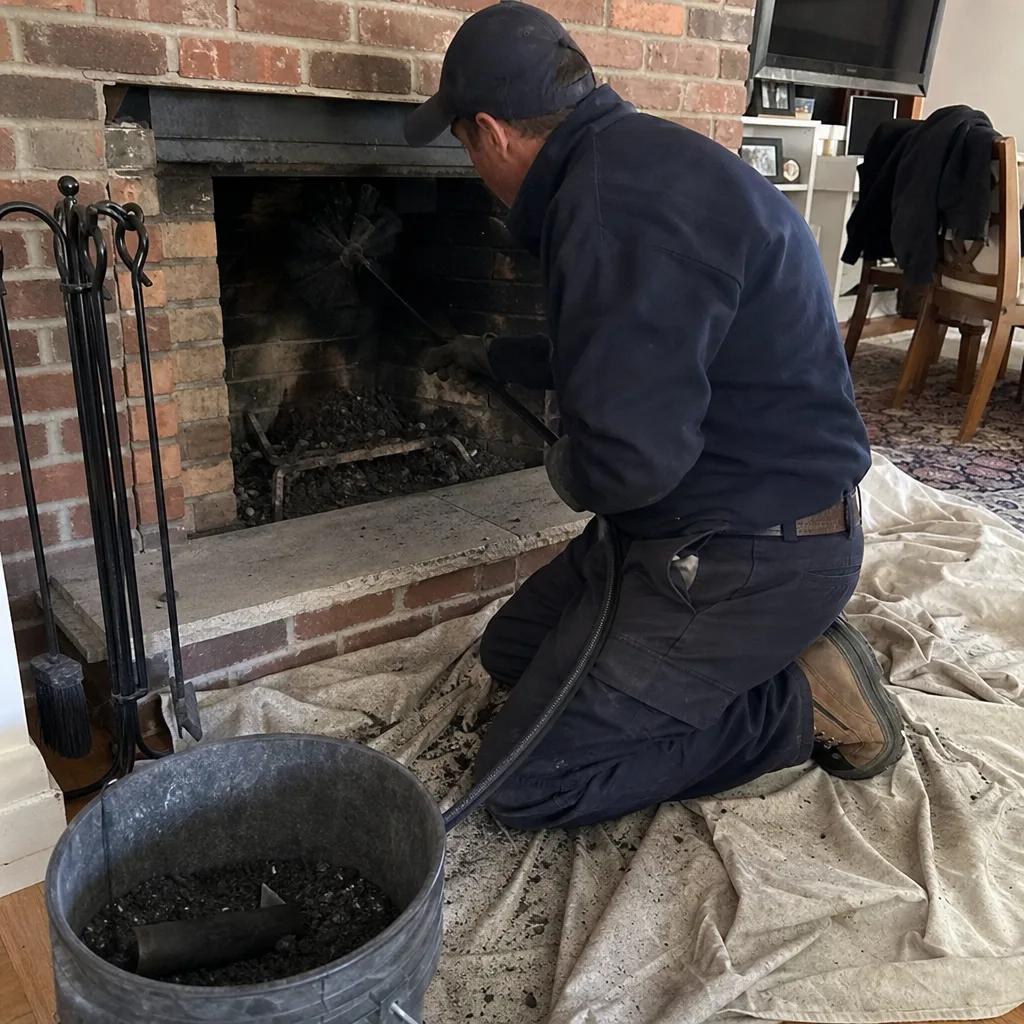
We work on the full DuraFlex flexible liner range, and we stock genuine components for fast turnaround in Philadelphia. That includes the DuraFlex 316L flexible stainless steel liner, the standard workhorse for wood-burning and gas fireplaces; the DuraFlex AL29-4C liner built for high-efficiency gas appliances where condensation resistance matters; the DuraFlex Pro 316Ti liner, which holds up better in Philadelphia’s acidic, high-moisture flues; and the DuraFlex Smooth Wall liner, which collects far less creosote than the corrugated original. We use the exact same alloy specified by the original installation to avoid galvanic mismatch, and we’ll tell you straight when a liner can be cleaned and reused versus when corrosion or kinking means a full reline is the only safe fix. For details on our broader DuraFlex sales & service, that page covers the full scope of what we stock and install.
DuraFlex Service Pricing in Philadelphia
| Service | Price Range |
|---|---|
| Chimney sweep (standard, with Level 1 visual check) | $179-$249 |
| Chimney sweep with camera-scan Level 2 inspection | $299-$379 |
| Level 2 camera inspection only (documented photo report) | $189-$249 |
| DuraFlex creosote removal, heavy buildup (Class II-III) | $349-$479 |
| DuraFlex liner repair (minor seam fix, top plate reseal) | $250-$450 |
| Full DuraFlex liner replacement (316L or AL29-4C, rowhouse install) | $2,800-$4,900 |
What drives cost in Philadelphia is what the camera shows. A straightforward sweep on a clean liner is quick. A DuraFlex liner packed with hardened creosote inside a narrow rowhouse flue takes longer and costs more, because we’re not leaving residue in the corrugations. A liner that’s kinked or corroding isn’t a cleaning job at all; it’s a reline, and we’ll show you the footage before we quote it. Every estimate is written, with scope and warranty spelled out before anyone starts. No surprises, no pressure, and a free second opinion on any competitor’s written quote. Call (980) 580-8641 for an exact number on your chimney, and we’ll put it on paper before you decide anything.
Serving Philadelphia, PA - Our Local Coverage Area

We’re based in the Philadelphia area and know this community well. Use the map below to see our service coverage - if you’re nearby, we can almost certainly help.
FAQs - DuraFlex Chimney Cleaning in Philadelphia
Because Philadelphia’s shared party-wall stacks mean your liner is affected by what your neighbors do, not just what you do. Even occasional wood fires produce creosote that settles into the corrugated profile of a DuraFlex liner, and in a shared stack, moisture from adjacent flues and the city’s humid summers keeps that creosote damp and sticky. Give it a year of Philadelphia weather and it hardens into a fire hazard. An annual sweep with a camera check tells you what’s actually in there. Call (980) 580-8641 and we’ll put eyes on it before we quote anything.
It depends on how badly the liner is deformed. A minor kink with no seam separation can sometimes be corrected, but a flattened DuraFlex liner in a frost-jacked South Philly chase is usually a replacement, because the structural integrity of the liner wall is gone. We’ll show you the camera footage and tell you straight which situation you’re in. If you’re not sure whether a repair quote you’ve received is honest, bring it to us. A free second opinion on any written estimate is always available.
Yes. High-efficiency gas appliances produce acidic condensation, and a standard 316L liner will corrode prematurely under that load. You need a DuraFlex AL29-4C liner, which is engineered for exactly that condensing environment. In Fishtown, where chimneys are old, damp, and shared, this matters more, because the condensation lingers longer in a flue that sits idle through humid Philadelphia summers. We stock AL29-4C in Philadelphia and quote it properly, in writing, before any work starts.
It affects it more than most people realize. An unused neighbor’s flue in a shared stack can harbor a ghost flue, an open, uncapped passage from a fireplace that was bricked up decades ago. When we clean your DuraFlex liner, we also need to verify that the adjacent flues in the stack aren’t backdrafting into your cavity. That’s standard practice for us in Philadelphia rowhouses, and it’s why our inspections are Level 2 camera scans, not quick visual checks. If we find a ghost flue one brick over, we’ll tell you and quote the fix at the same time.
A Level 2 inspection means we run a camera through the full length of your DuraFlex liner and document what we find with photos you can see. We check for kinks, seam separation, corrosion pitting, creosote loading, and we also look at what’s happening in the surrounding masonry and adjacent flues in a shared stack. You walk away with a written condition report and camera images, not just our summary. Clause 4 of the Haven Standard requires a photo record on every job, and that’s been our practice since 2009. Call (980) 580-8641 to schedule one, and we’ll show you exactly what’s inside your flue.
Service Areas Near Philadelphia

We service Philadelphia and the surrounding metro, including Bucks County and the Main Line. If you’re in New York City, we also provide DuraFlex service in Manhattan, where Corrine’s chimney work began. Out west, look at DuraFlex service in Phoenix for that market’s specific conditions. For the full list of neighborhoods we cover across the region, see our Philadelphia service area page.
Book Your DuraFlex Service in Philadelphia Today
We’re booking DuraFlex cleanings and Level 2 inspections across Philadelphia right now, and fall fills up fast. Call (980) 580-8641 for a written estimate, or to schedule a camera scan before burning season starts. Live phone support runs 24/7, and every job gets a written price, a written scope, and a documented photo record when it’s done. The camera doesn’t soften what it finds. Neither do I.
Written by Corrine Halstead, Owner at Emberly Chimney Cleaners, serving Philadelphia since 2009.