
Level 1 sweep and inspection to the NFPA 211 annual standard - flue, crown, cap, and flashing checked and photographed
Chimney sweep logs do not sweep chimneys. They loosen some creosote - which then falls where a brush and vacuum still have to collect it.


 Before
 After
After Before
 After
After Before
 After
AfterDuraFlex Chimney Sweep in New York City: What to Know First
DuraFlex chimney sweep in New York City typically costs between $189 and $389 for a standard cleaning with a camera-scan inspection, with most jobs completed in a single visit. We’re an independent DuraFlex service provider, not a manufacturer-authorized shop, which means we tell you plainly when a liner can be cleaned and when it actually needs replacement. Homeowners with DuraFlex liners in the five boroughs call us because we document every flue with photos before and after the sweep. If you own a home with a DuraFlex liner system in New York City, call (980) 580-8641 and we’ll quote a written price before anyone steps foot in your house.
Key Takeaways:
- A camera scan is included on every DuraFlex job we do, no exceptions
- We service all DuraFlex liner systems, including 316L and 304 stainless, smooth-wall and corrugated
- Written price before work starts, always
- We also work with HeatShield and Gelco systems when a chimney has mixed components
How DuraFlex Products Fail - and How We Find It
DuraFlex makes a solid liner. But “solid” doesn’t mean “maintenance-free,” and in New York City’s climate, we see the same failure patterns repeat across thousands of chimneys. Here’s what we actually find when we put the camera down a DuraFlex flue in New York City.
- Corrugated liner creosote packing in the valleys. DuraFlex’s corrugated 316L liner (the ProFlex and DuraFlex 316 series) has ridges that trap creosote faster than smooth-wall systems. In New York City rowhouses with short, cold exteriors, creosote condenses quickly. We’ve pulled Class II and Class III creosote out of corrugated DuraFlex liners that had been swept less than 18 months prior. The fix is a mechanical sweep with a poly brush sized to the liner diameter, not the chimney’s original clay dimension.
- Improperly terminated caps on DuraFlex liner kits. The DuraFlex cap-and-flashing kit ships with a standard rain cap, but many New York City installs were done by roofers who didn’t seal the liner top plate correctly. We find water intrusion at the crown-to-liner junction on nearly a third of the DuraFlex chimneys we inspect. The symptom is spalling brick at the crown or rust streaks inside the flue. We remove the cap, re-seal the plate with high-temp silicone, and document it with photos.
- Crushed or kinked liners from aggressive snaking. Smooth-wall DuraFlex (the DuraFlex SS series) can kink if a less experienced sweep runs a steel cable snake through it too hard. You can’t see the kink from the fireplace. The camera shows it. We use poly brushes and only run a snake when the camera shows blockages that justify the risk, and we tell you before we do it.
- Galvanic corrosion at the liner connection. DuraFlex connectors and tee bodies are stainless, but we’ve seen corrosion at the appliance connector when the original furnace or boiler flue collar is a dissimilar metal. In New York City basements with high humidity, that junction corrodes faster than the liner itself. We inspect the entire run, not just the visible section, and photograph the connector every time.
- Oversized liners causing draft problems. A DuraFlex liner that’s too large for the appliance it serves cools exhaust gases too quickly. That means more creosote, more often, especially in a New York City winter. We check the liner diameter against the appliance BTU rating and the original flue opening. If it’s oversized, we’ll tell you and suggest options, including resizing or an insulated wrap system.
Our DuraFlex Chimney Sweep Process
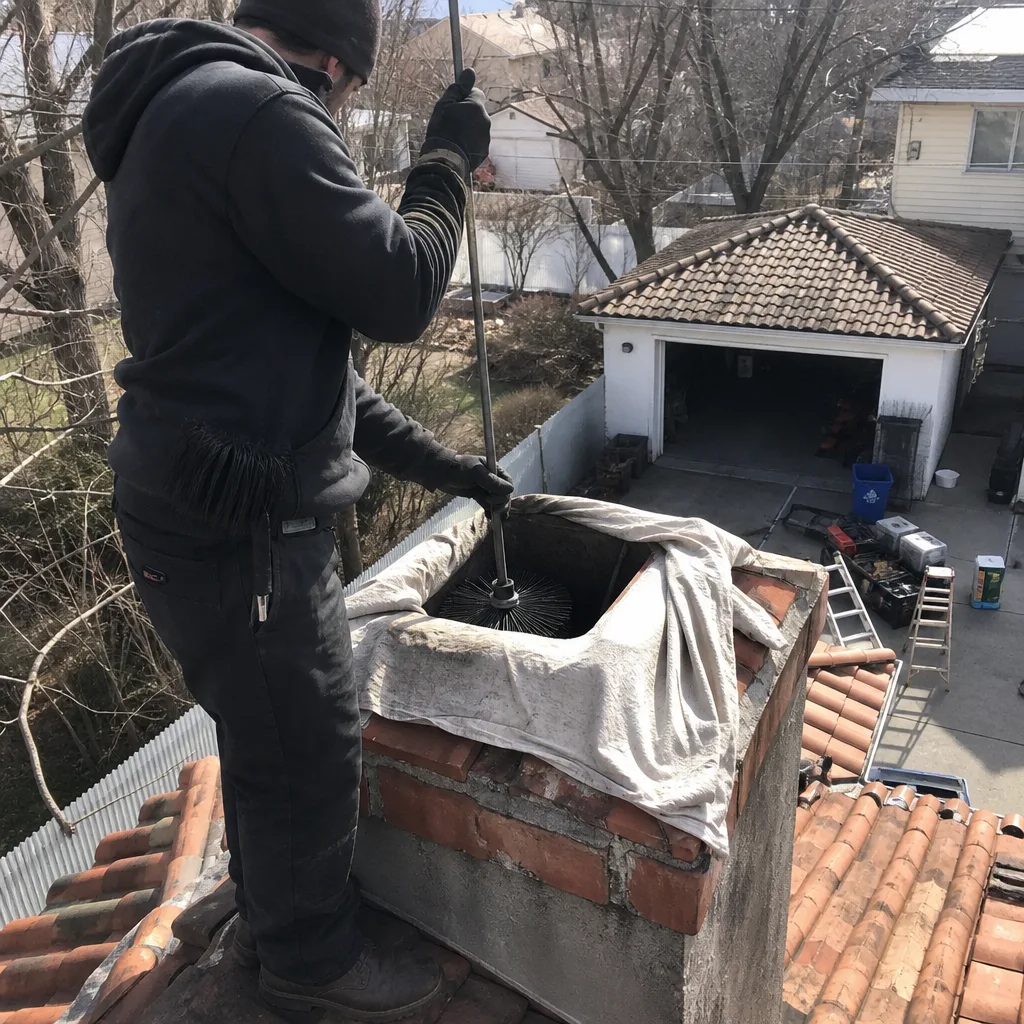
Every DuraFlex job follows the same sequence, whether it’s a standard sweep or a deeper investigation. We don’t skip steps and we don’t charge you for looking around.
- 1
Call and written scope. You call (980) 580-8641, a live person answers, and we give you a written price range for the work before we schedule. Clause 1 of the Haven Standard. If the technician finds something outside that scope, you get a written price before that new work starts.
- 2
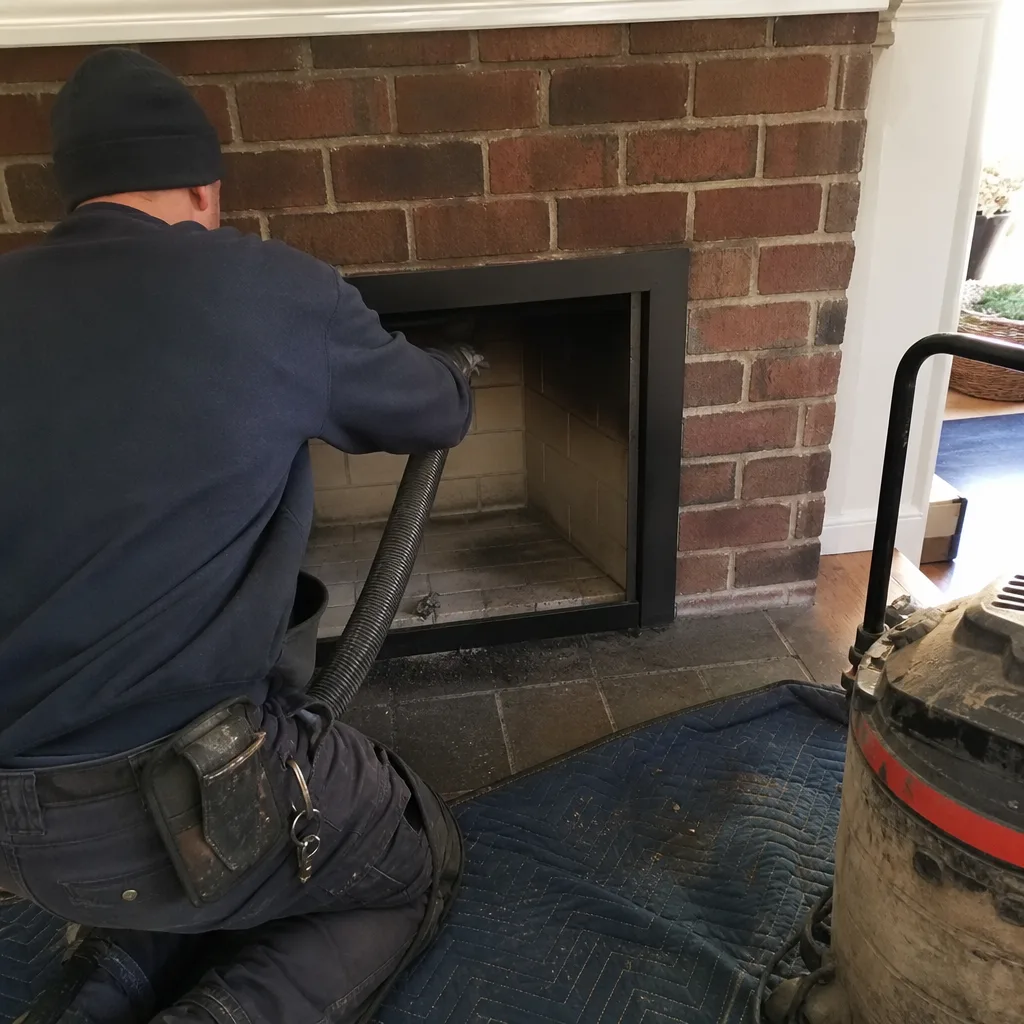
Arrival and setup. A background-checked, uniformed technician arrives with drop cloths, a HEPA vacuum, and our camera equipment. You get a text when we’re on the way.
- 3
Camera scan first. We run the camera the full length of the DuraFlex liner before we touch a brush. We’re looking for the failure patterns above, plus the condition of the cap, the connector, and the termination. You see the footage.
- 4
Cleaning and removal. We sweep with a brush sized to the liner, remove creosote and soot from the flue, smoke chamber, and firebox, and collect the debris. For Class III creosote we use a rotary loop system and take our time. It’s harder on the equipment, but it’s the only way to get it out without damaging a stainless liner.
- 5
Post-sweep camera and photo record. We run the camera again. You see the before and after side by side. Every photo goes into a documented record we leave with you, per Clause 4 of the Haven Standard, which we’ve done on every job since 2009.
BeforeAfterWhat DuraFlex Chimney Sweep Costs in New York City
Here are honest numbers for common DuraFlex scenarios in New York City. The exact price depends on the condition of the flue, the height of the chimney, and whether we’re adding any repair work.
- Standard sweep with camera scan: $189 to $289
- Sweep with heavy creosote removal (Class II or III): $289 to $389
- Cap, flashing, or top plate re-seal: $120 to $320 depending on roof access and condition
- Liner connector replacement or inspection: $80 to $180
- Full liner replacement (if needed): $2,200 to $4,800 depending on height, diameter, and access
What moves the price in New York City: roof access from brownstone parapets, liner height above four stories, and whether the flue has been neglected long enough to need rotary cleaning. A heavy creosote job on a five-story DuraFlex liner in Manhattan will run higher than a standard sweep on a two-story in Queens. Call (980) 580-8641 for a written estimate. It costs nothing and you’ll have the number before we schedule.
Why New York City Homeowners Call Emberly Chimney Cleaners for DuraFlex Work
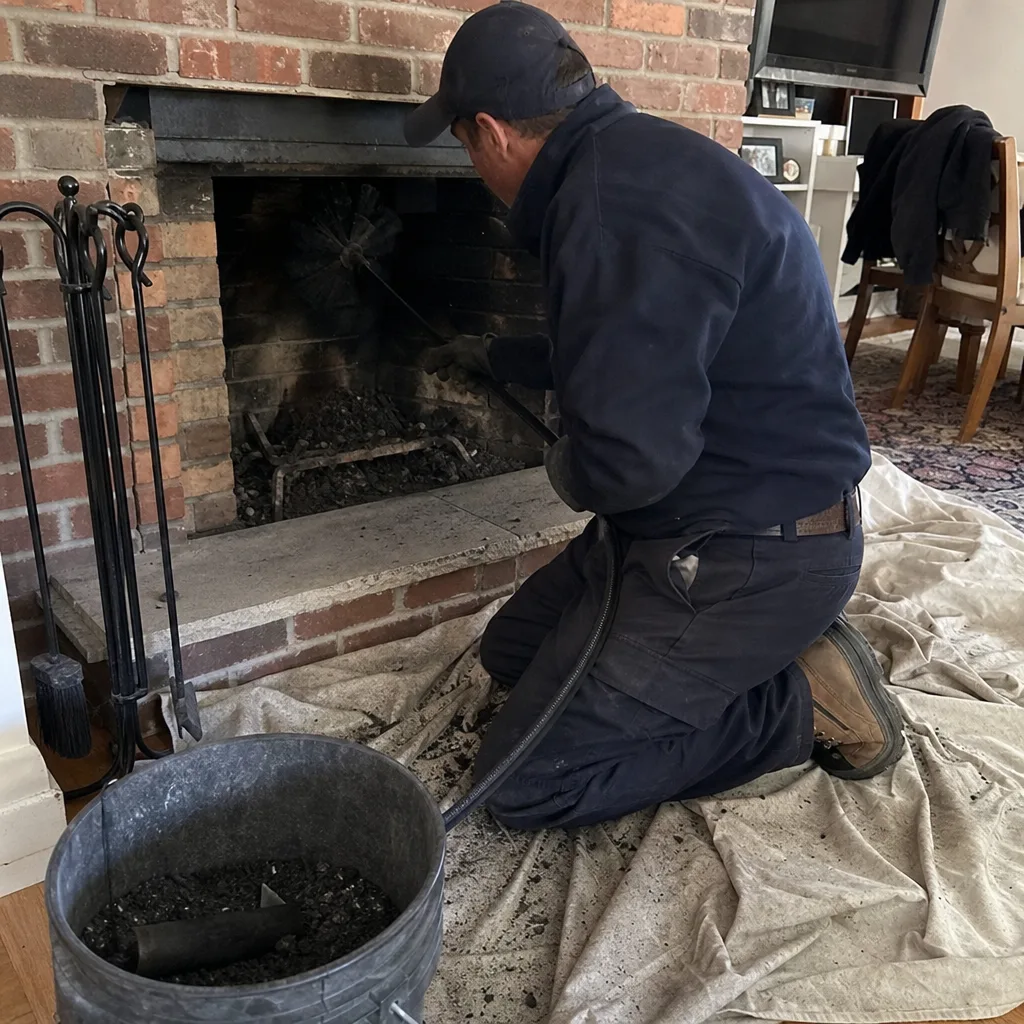
We’ve inspected and cleaned more than 38,000 chimneys since 2009, and every one of them had a written price before work started and a documented photo record when it was done. That’s not a slogan. It’s the Haven Standard, and it’s how we’ve always operated. On a DuraFlex liner, we know where these systems fail, what the camera should show, and what it should not. When a chimney has mixed components, a HeatShield patch here, a Gelco sealant there, our techs know how those materials interact with a DuraFlex liner because we work with all of them. And if we tell you a liner needs replacement, you’ll see the footage that says so. The 365-Day Done Right Promise backs the work: if it’s not done right, we make it right.
Corrine Halstead, our owner, spent years inspecting and cleaning chimneys across all five boroughs before founding Emberly. She grew up in Inwood, where old apartment buildings and attached brownstones meant chimneys were everywhere and mostly ignored. When a DuraFlex liner comes back on camera with a problem, she’ll show you exactly what she sees. The camera doesn’t soften what it finds. Neither do we.
FAQs
No. Regular cleaning with the correct brush type and size does not void a DuraFlex warranty. What we’ve seen void warranties is aggressive snaking that kinks the liner or chemical cleaners not rated for stainless. We use poly brushes sized to the liner diameter and never run steel tools through a DuraFlex flue unless the camera shows a blockage we’ve discussed with you first. Call (980) 580-8641 if you want us to check your liner before touching it.
Once a year if you burn wood regularly, and every two years at minimum for oil or gas appliances. New York City’s climate, short cold exteriors and long heating seasons, creates more condensation than most owners expect. That condensation turns into creosote faster. If you’re burning unseasoned wood from a Queens firewood lot, expect to need a sweep more often.
Yes, in most cases. Class III creosote is the hardened, tar-like glaze that forms when creosote bakes on. It requires a rotary loop system with steel or carbide chains, and it’s slow work. We’ll inspect first, tell you what we’re dealing with, and give you a written price for the heavier clean. If the liner is compromised underneath the creosote, we’ll show you the footage before recommending anything.
We do both, plus inspection and repair. When a DuraFlex liner is beyond cleaning, we replace it using materials sourced through the Haven buying network, which keeps pricing honest. We also work with HeatShield and Gelco when a chimney has mixed components and a full-liner replacement isn’t warranted. Call (980) 580-8641 and we’ll tell you straight if you need a sweep or a new liner.
Written by Corrine Halstead, Owner, Emberly Chimney Cleaners at Emberly Chimney Cleaners, serving New York City and nearby areas.