
Level 1 sweep and inspection to the NFPA 211 annual standard - flue, crown, cap, and flashing checked and photographed
Chimney sweep logs do not sweep chimneys. They loosen some creosote - which then falls where a brush and vacuum still have to collect it.


 Before
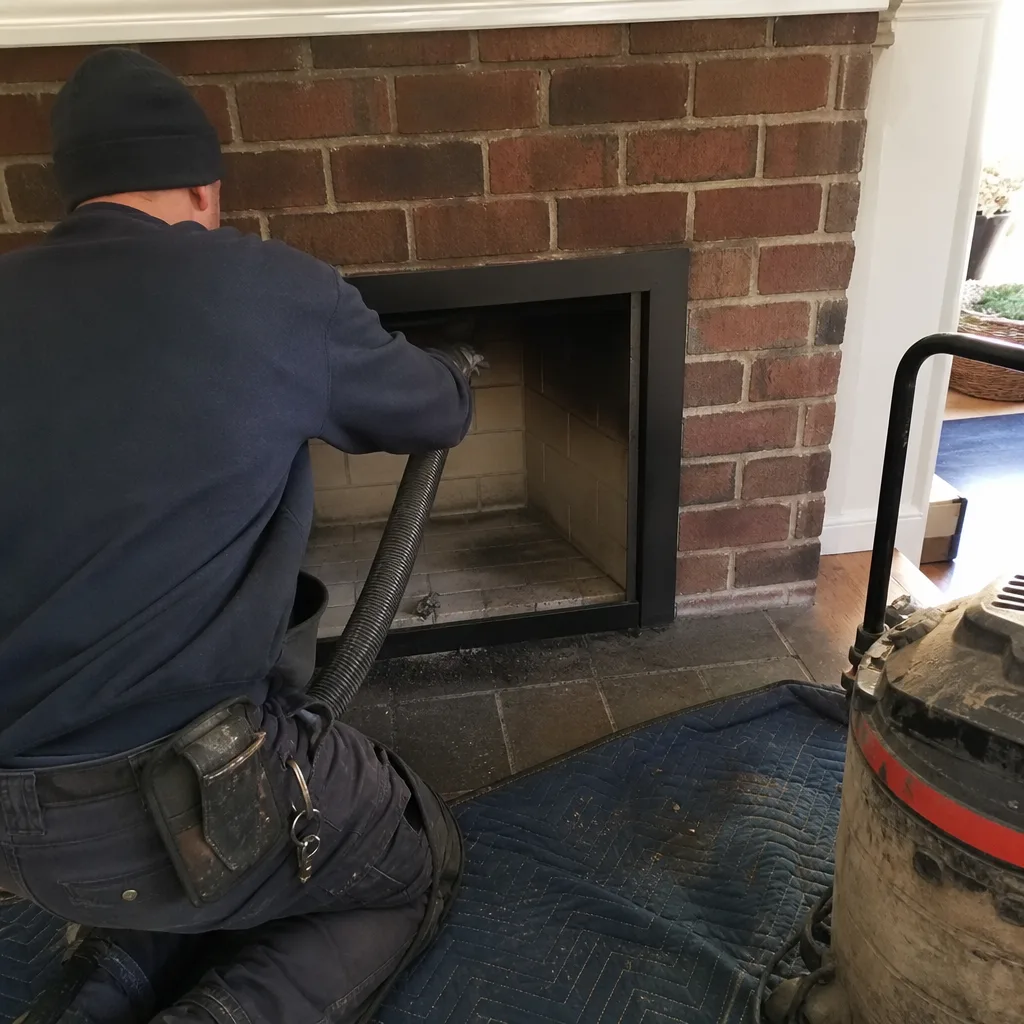 After
After Before
 After
After Before
 After
AfterCopperfield Chimney Sweep in New York City: What to Know First
We clean and sweep Copperfield fireplaces and chimneys throughout New York City, typically completing a standard cleaning and Level 2 camera inspection in a single visit of 90 minutes to two hours. A Copperfield chimney sweep in New York City runs $229-$389 for a standard open-flue system, with a written price handed to you before anyone touches a brush. We’re an independent Copperfield service provider, not an authorized dealer, which means our only interest is what the camera shows us. If you own a Copperfield in Manhattan, Brooklyn, Queens, the Bronx, or Staten Island, call (980) 580-8641 and we’ll tell you exactly what a sweep costs for your setup.
How Copperfield Products Fail - and How We Fix Them
Copperfield builds a lot of fireplaces across several lines, and in New York City we see the same patterns repeat across neighborhoods, from prewar co-ops in Washington Heights to new construction in Long Island City. Here’s what tends to go wrong and what we do about it.
- Copperfield Builder-Series open hearths: shallow firebox and accelerated creosote. These units went into a lot of 1990s and early-2000s New York City renovations because they fit tight brownstone parlor dimensions. The firebox is shallower than most, which pushes smoke up the flue at a slower draft, and that gives creosote more time to condense on the liner walls. We see Class II creosote buildup, that’s the flaky, crusty kind, far earlier in these units than in comparable Heatilator or Majestic models. Our fix: a mechanical sweep with a camera pass after to confirm the flue walls are clean, because on a shallow Copperfield, a visual look up the pipe tells you almost nothing.
- Copperfield gas direct-vent models: soot accumulation from imbalanced air shutters. This is the one we see most often in newer apartments around Midtown and the Financial District. Copperfield’s direct-vent gas lines tend to run rich, meaning the air-to-gas ratio drifts off spec, and the result is fine black soot building on the glass and in the venting. A homeowner might think the chimney doesn’t need service because it’s gas. That’s wrong. Soot in a direct-vent Copperfield is often a signal that combustion is incomplete, and incomplete combustion is a carbon monoxide concern. Our fix: remove the glass, clean the burner and log set, sweep the vent run, and check the shutter settings against the Copperfield installation manual, not against whatever the last handyman did.
- Copperfield wood-burning inserts: refractory panel cracking at the back wall. We see this on Copperfield inserts that have run hot for a few winters, particularly older units in Queens and Brooklyn homes with exterior chimneys. The rear refractory panel takes the brunt of thermal cycling, and when it cracks, it opens a path for heat to reach the steel shell. Most New York City homeowners never notice it because the panel is hidden behind the grate. Our fix: we document the crack with the camera, measure it, and give you a written recommendation on whether it’s a panel replacement now or something to watch. We replace Copperfield refractory with OEM-matched panels when available, and a quality aftermarket equivalent when OEM is backordered. We tell you which one we’re quoting, in writing, before the work starts.
- Copperfield flue dampers: warped cast-iron clappers that never fully seal. Most Copperfield fireplaces ship with a cast-iron damper assembly. After five to ten New York City winters, we regularly see the clapper warp and the pivot rust out, which means two things: cold air drops through the flue all winter, and smoke drafts poorly on startup. This is often misdiagnosed as a chimney-height or cap problem. Our fix: we’ll inspect the damper seat and clapper with the camera, show you the footage, and if it’s warped beyond adjustment, we quote a direct replacement with a quality aftermarket damper that fits the Copperfield throat dimensions. We won’t tell you a new cap fixes a bad damper.
- Copperfield chimney caps and terminations: New York City pigeons and failing wire mesh. Copperfield’s standard cap mesh is adequate, not exceptional. In a city with this many pigeons, mesh gets clogged, rusted, or pried open, and then the flue becomes a nesting site or a debris catch. We clean, repair, or replace Copperfield terminations, and when the cap is beyond saving, we quote a stainless cap that matches the flue tile dimensions, not a generic universal that leaves gaps. The camera goes down after every cap job to prove the flue is clear from top to firebox.
Our Copperfield Chimney Sweep Process
- 1
Scheduled call, confirmed by text. You’ll get a named technician and a text when we’re on the way. The call ahead means we don’t arrive unannounced in a New York City walk-up.
- 2
On-site visual check and floor protection. We lay drop cloths from the entry to the hearth because a chimney sweep in a prewar building should not leave soot on the hallway runner.
- 3
Copperfield-specific disassembly. Doors, glass, logs, grates, and refractory panels come out in the order the Copperfield manual specifies, not the order that’s fastest. We’ve seen enough cracked panels from improper removal to know the difference.
- 4
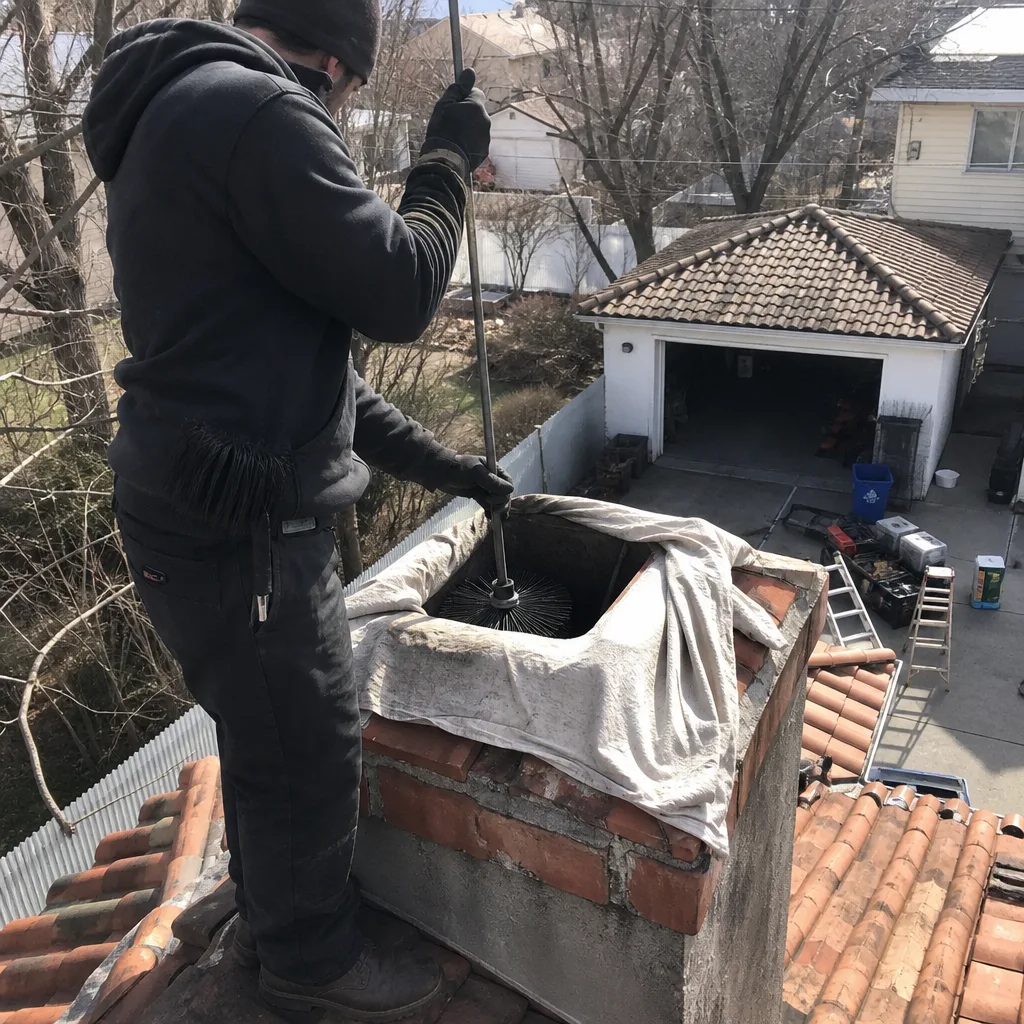
Mechanical sweep and camera pass. We run brushes sized to the flue tile, then send the camera down. This is the step most New York City chimney companies skip, and it’s the one that tells us whether the flue is actually clean or just looks clean from the firebox floor.
- 5
Documented record and written recommendation. You get a photo report, the camera footage, and a written summary. If we recommend a repair, you get a written price before we do any of it. If nothing needs repair, we tell you that too.
BeforeAfterWhat Copperfield Chimney Sweep Costs in New York City
Here’s what we charge for Copperfield work in New York City. The price you get on the phone is the price on the written estimate, and the written estimate is what the job costs. No additions after we start.
| Service | Typical Price Range |
|---|---|
| Copperfield standard chimney sweep (Level 1) | $229-$289 |
| Copperfield cleaning with Level 2 camera inspection | $329-$389 |
| Fireplace glass and burner cleaning (gas Copperfield units) | $129-$189 |
| Damper replacement (aftermarket match) | $340-$560 |
| Refractory panel replacement (per panel) | $280-$460 |
| Chimney cap replacement (stainless, sized to flue) | $410-$680 |
What moves the price: the height of the flue, the amount of creosote present, roof access difficulty, and whether the firebox needs extra disassembly. A straight sweep on a two-story brownstone is at the low end. A four-story flue with heavy buildup and a roof deck access is at the high end. You’ll know your exact number before the appointment, in writing. Call (980) 580-8641 for a free estimate.
Why New York City Homeowners Call Emberly Chimney Cleaners for Copperfield Work
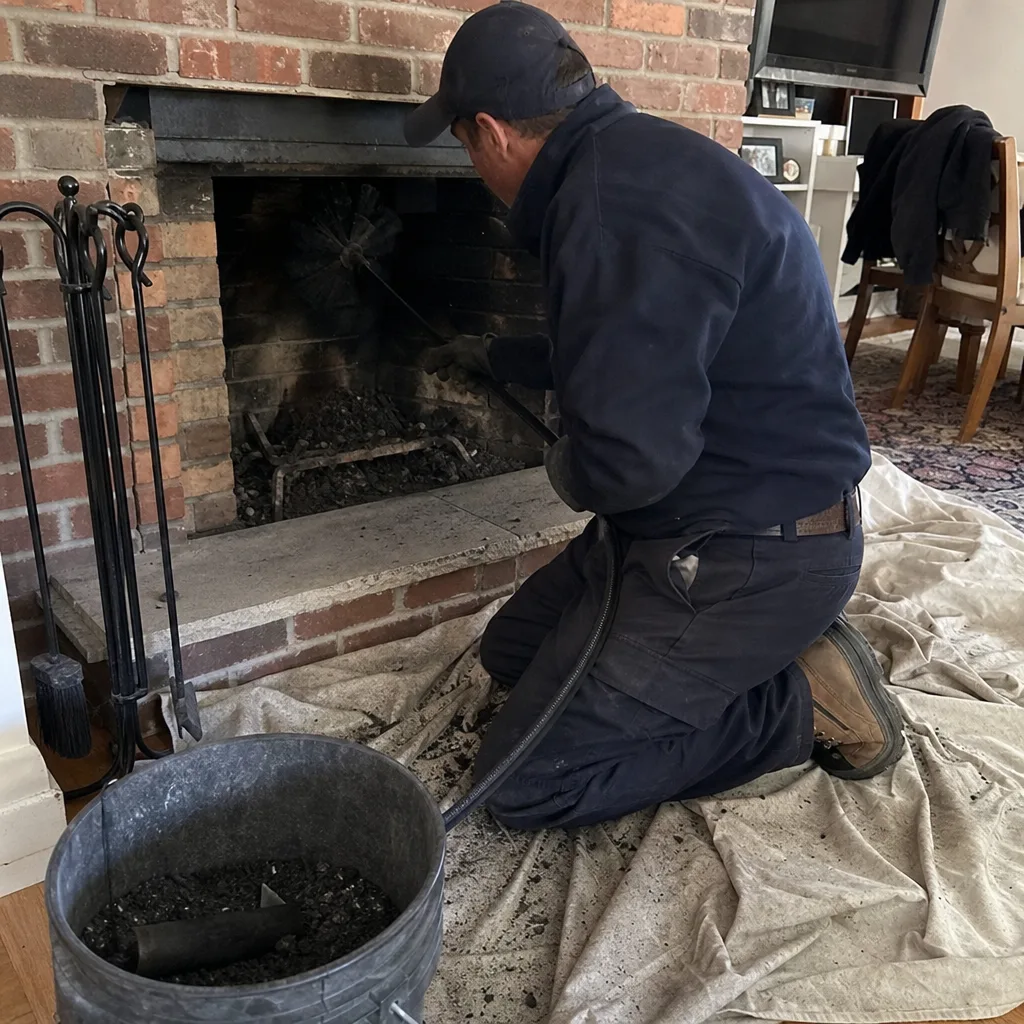
Since 2009, we’ve completed more than 38,000 chimney inspections and cleanings, and every single one included a written price before work started and a documented photo record when it was done. Clause 4 of the Haven Standard requires a camera pass and photo archive on every job, and we’ve run it that way since the company was founded. The 365-Day Done Right Promise means if the job isn’t right, we return and make it right. We work on Copperfield fireplaces every week in New York City, and when a Copperfield needs a liner or component from another manufacturer, we source through our network from DuraFlex, HeatShield, and Gelco so you’re never waiting on a single supplier. Corrine Halstead, our owner, will show you the camera footage herself if she’s on the job, and she’ll tell you exactly what the flue walls look like before any conversation about price begins.
FAQs
Cleaning your Copperfield chimney or fireplace by a licensed professional does not void a warranty, and in most cases, Copperfield warranty terms actually require the unit to be maintained and inspected regularly. Keep your cleaning records, the photos, and the written report we provide on every job. That documentation satisfies any reasonable warranty claim.
Wood-burning Copperfield fireplaces should be swept annually, and gas Copperfield units should at minimum have a visual inspection and burner cleaning every year. New York City homes burn more often in older buildings with exterior chimneys, and exterior flues run colder, which means creosote forms faster. Annual is not a sales line. It’s what the physics of a New York City flue requires.
When OEM Copperfield parts are available, we quote OEM. When they’re not, we quote a quality aftermarket equivalent and tell you which one we’re pricing, in writing, before you approve anything. We don’t substitute parts silently. We’re an independent Copperfield service provider, so we’re not locked into any single supply path.
Creosote builds up in stages. Class I is a light soot layer. Class II is flaky and combustible. Class III is a sticky, glossy glaze that can ignite, and a chimney fire inside a New York City rowhouse or attached building is not a small event. Skipping a cleaning also lets small issues, like a cracking refractory panel on a Copperfield, go unnoticed until they become steel-shell damage. The sweep is cheaper than the rebuild. Call (980) 580-8641 for an exact quote, the estimate is free.
Written by Corrine Halstead, Owner, Emberly Chimney Cleaners at Emberly Chimney Cleaners, serving New York City and nearby areas.