
Level 1 sweep and inspection to the NFPA 211 annual standard - flue, crown, cap, and flashing checked and photographed
Chimney sweep logs do not sweep chimneys. They loosen some creosote - which then falls where a brush and vacuum still have to collect it.


 Before
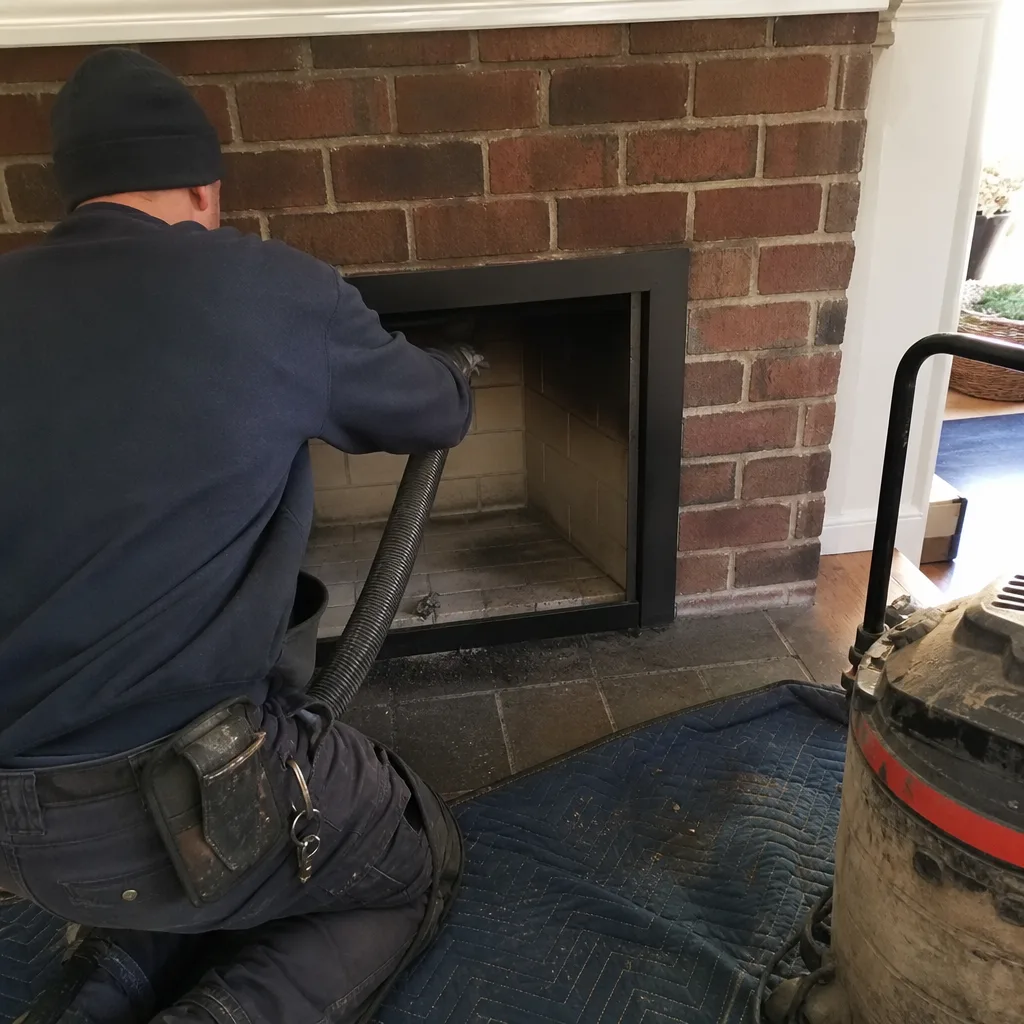 After
After Before
 After
After Before
 After
AfterHeatShield Chimney Liner & Rebuild in New York City: What to Know First
HeatShield chimney liner repair and rebuild in New York City typically runs $1,800 to $6,500 depending on flue height, access difficulty, and whether we’re relining one flue or rebuilding the chimney crown and top courses at the same time. We complete most HeatShield liner replacements in one to two days, and every job gets a camera scan before and after with photos you keep. We’re an independent HeatShield service provider, not a manufacturer-authorized dealer, which means we recommend the fix that’s actually right for your flue, not the one that satisfies a warranty department.
This page is for New York City homeowners who already have a HeatShield liner or coating system and need to know if it can be repaired or if it’s time for a full replacement. If you’ve been told your liner is failing and you want evidence before spending money, call (980) 580-8641 and we’ll put a camera down the flue and show you exactly what we see.
How HeatShield Products Fail, and How We Fix Them
HeatShield’s product line includes two main systems: the HeatShield Refractory Flue Sealant (a sprayed or troweled coating applied over existing clay liners) and the HeatShield Ultimate Liner (a complete cast-in-place replacement). Each fails differently, and knowing which one you have changes the repair path.
- Refractory sealant delamination on older clay liners. We see this constantly in prewar buildings across Manhattan and brownstone Brooklyn. The original HeatShield sealant was applied over clay tile joints that had already shifted, and when the building settles further, the coating cracks away from the tile in sheets. The fix is rarely another coat. We remove the loose material, camera-scan the full flue length, and if the underlying clay is intact, we reline with a stainless steel liner sized to the actual flue dimensions rather than the nominal size stamped on the old tile.
- HeatShield Ultimate Liner shrinkage cracks at the flue cap interface. The cast-in-place material expands and contracts at a different rate than the clay or masonry around it. In New York City, where a January night can drop to 5°F and an August afternoon hits 95°F, that thermal cycling is brutal on any rigid liner system. We typically see hairline cracks forming within three to five years at the top two feet of the flue, right where the liner meets the crown. If caught early, we can grind and patch those cracks and install a proper expansion joint at the cap. If it’s gone too far, we pull the section and recast it.
- Improper original installation of the HeatShield Coating System. HeatShield’s own installation spec requires a specific surface profile and moisture content before application. When the original installer skipped surface prep, usually because the flue was hard to access, the coating bubbles and slumps within the first heating season. We’ve documented this with before-photos on jobs from the Lower East Side to Riverdale. The homeowner paid for a 20-year liner and got five. Our fix is a full reline with a flexible stainless liner rather than attempting a second coating over a compromised substrate.
- Condensation corrosion on HeatShield liners serving gas appliances. This one is less about HeatShield’s material and more about application mismatch. When a HeatShield liner was installed for an oil-fired boiler and later the building converted to high-efficiency gas, the flue gas temperature drops dramatically. The liner never gets hot enough to dry out, condensation soaks into the refractory, and the liner deteriorates from the inside. The correct fix is a properly sized stainless liner rated for Category IV gas appliances. We see this pattern repeatedly in converted co-ops and condos that switched heating systems in the 2010s without addressing the flue.
- Joint failure on HeatShield Ultimate Liner at the smoke chamber transition. The smoke chamber is the funnel-shaped section between the firebox and the flue. Cast-in-place liners sometimes leave a cold joint here, especially on chimneys with offset fireboxes. When that joint opens, you get smoke backing into the room on startup and creosote accumulating in a spot you can’t see from the top or bottom. We find it with a 360° camera scan, then open the chamber face and parge the transition with a refractory mortar that bonds well to HeatShield’s material. This is one of the most common HeatShield-specific failures we repair in New York City homes with older fireplaces.
Our HeatShield Chimney Liner & Rebuild Process
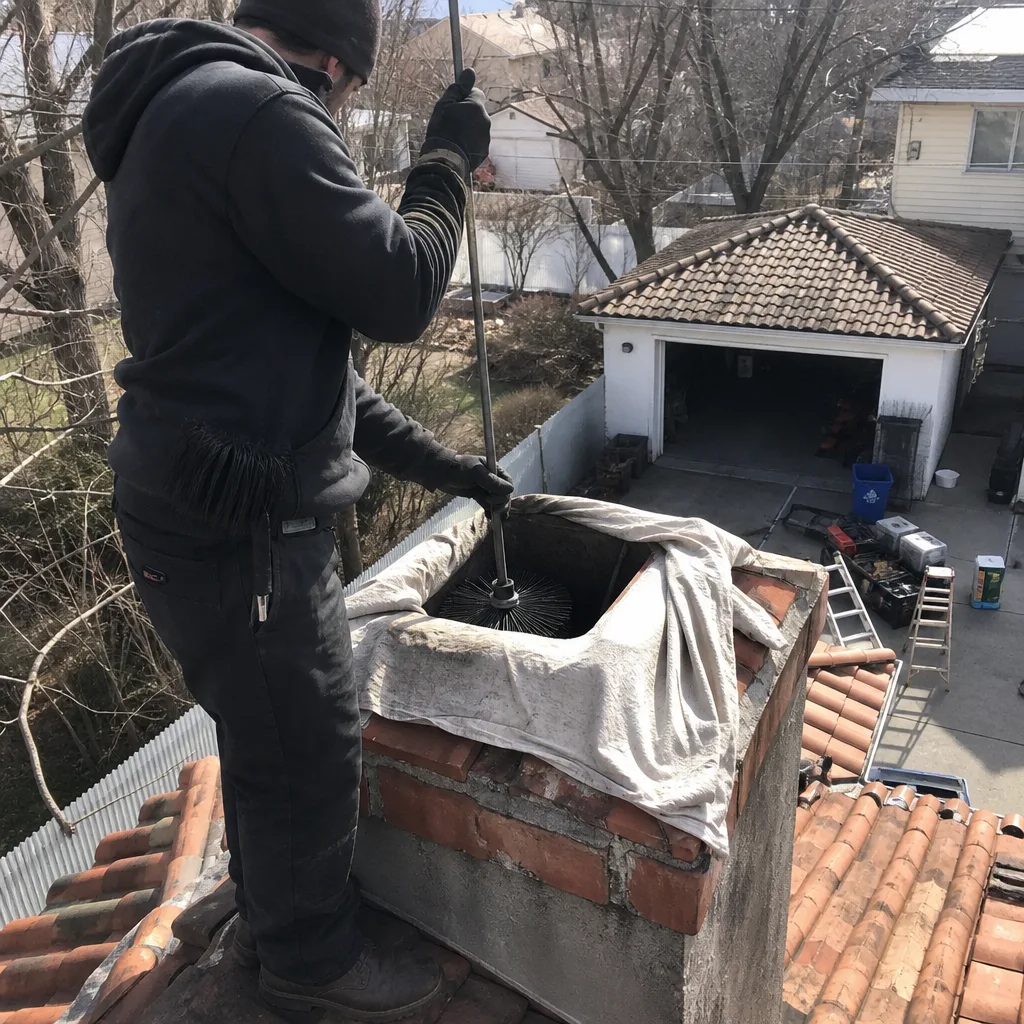
Here’s what a HeatShield repair or rebuild looks like from your first call to the final walkthrough.
- 1
You call, a person answers. You get a live dispatcher at (980) 580-8641, not a voicemail. We ask about your chimney’s age, what fuel you burn, and any symptoms you’ve noticed. Then we schedule a camera-scan inspection.
- 2
Camera down the flue. Our technician runs a full NFPA 211 Level 2 scan from top to bottom, including the smoke chamber. You watch the screen with us, and we point out exactly what we’re seeing: delamination, cracks, joint separation, creosote class. Corrine Halstead has been showing customers this footage herself for over a decade, and we don’t start a price conversation until you’ve seen what we’ve seen.
- 3
Written scope and written price. If your HeatShield liner needs repair or replacement, we give you a written scope of work, a written dollar figure, and a written warranty before anything starts. Clause 1 of the Haven Standard: nothing happens until it’s in writing.
- 4
Parts decision: OEM vs. quality aftermarket. We source materials from HeatShield, DuraFlex, and Gelco through the Haven buying network. For a HeatShield Ultimate Liner repair, we use HeatShield’s repair mortar when the warranty requires OEM material. When the warranty has expired or the failure mode makes OEM the wrong choice, we’ll tell you plainly and spec DuraFlex or Gelco stainless instead. Our loyalty is to the flue, not a brand label.
- 5
The repair or rebuild. We protect the work area, pull the damaged liner or scaffold the rebuild, and complete the work in one to two days in most cases. Full masonry rebuilds of the crown and upper courses take longer, and we’ll tell you that before we start.
- 6
Post-work camera scan and photo record. After the liner is in or the rebuild is done, we run the camera again and hand you a documented photo record of the finished work. Clause 4 of the Haven Standard requires this on every job, and we’ve done it on all 38,000-plus inspections since 2009. You leave with evidence, not a receipt and a handshake.
BeforeAfterWhat HeatShield Chimney Liner & Rebuild Costs in New York City
We name the price on the page because that’s how we operate. Here are the ranges we quote most often for HeatShield work in New York City.
- HeatShield coating repair (localized cracks, single flue): $1,800 - $2,800
- HeatShield Ultimate Liner section recast (top 2-3 feet, includes crown reset): $2,400 - $3,900
- Full stainless steel reline to replace failed HeatShield liner (single flue, typical 3-story townhouse): $3,200 - $5,200
- Full chimney rebuild from roofline up (crown, top courses, flue liner, cap): $5,000 - $8,500
- HeatShield liner plus smoke chamber parging and firebox repair: $4,000 - $6,500
What moves the price: roof access (are we on a 4th-floor walkup in the West Village or a detached house in Riverdale with a ladder path?), flue height (a six-story prewar flue is a different job than a two-story brownstone), and whether the existing liner needs full removal or can be left as substrate. Our estimate is free, it’s written, and it holds for 30 days. Call (980) 580-8641 for an exact number on your chimney.
Why New York City Homeowners Call Emberly Chimney Cleaners for HeatShield Work
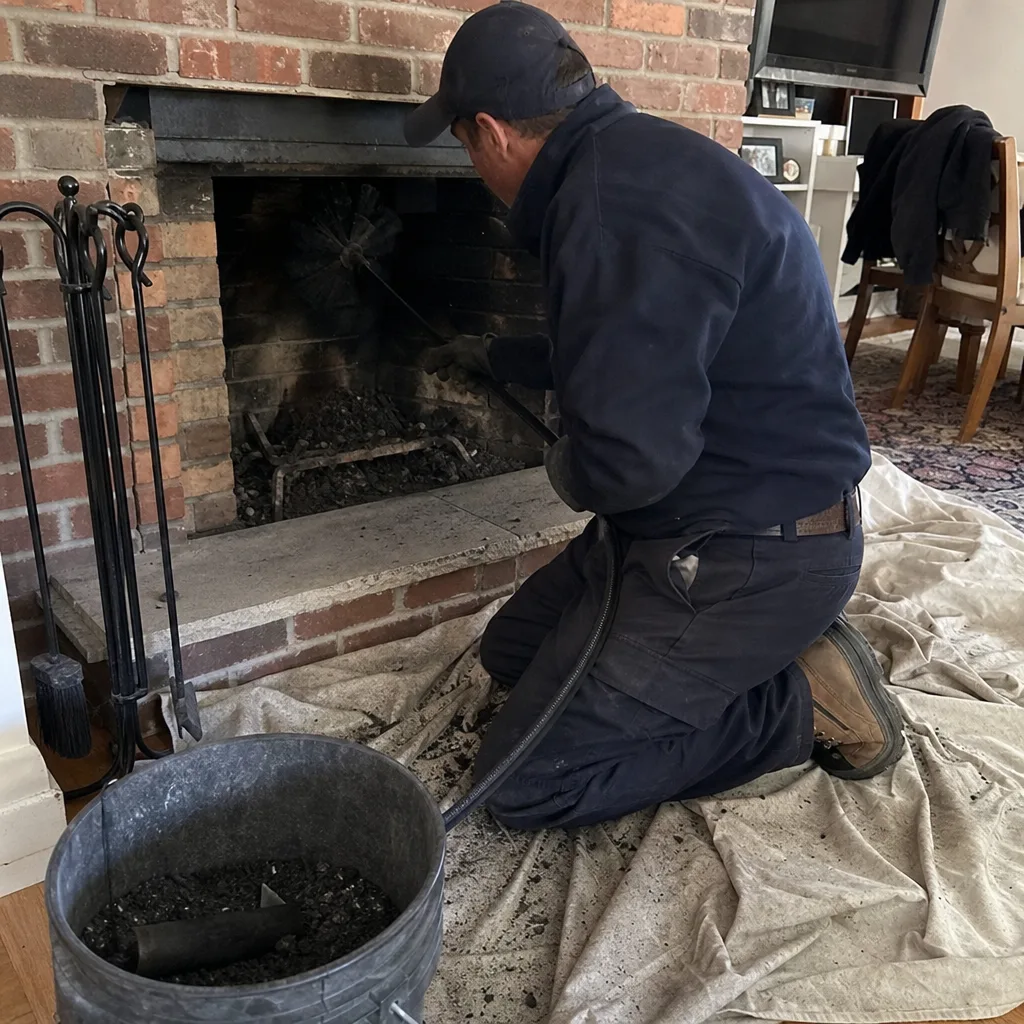
You can find plenty of New York City chimney companies that will look at your HeatShield liner and tell you it needs replacing. We’ll show you the footage first. That’s the difference. Every HeatShield job we do starts with a camera scan you watch with us, and every job ends with a photo record you keep. The camera doesn’t soften what it finds. Neither do we.
We’ve inspected and cleaned more than 38,000 chimneys since 2009, and every single one got a written price before work started. The 365-Day Done Right Promise means if the liner work isn’t right, we make it right, no invoice. When HeatShield OEM material is the correct call, we use it. When a DuraFlex or Gelco stainless liner is the better fix, we tell you that too. We answer the phone 24/7, our technicians arrive in uniform with background checks, and we text you when we’re on the way. If you have a written quote from another New York City chimney company, bring it to us and we’ll give you a free second opinion on the scope and the price.
FAQs
HeatShield’s warranty covers material defects when installation was done by an authorized applicator, but most New York City HeatShield failures we see are installation or application issues, not material defects, and those typically fall outside the original warranty after the first few years. Our repair work carries our own 365-Day Done Right Promise in writing, and if your HeatShield warranty is still active, we’ll advise you on the correct OEM repair path so you don’t void it accidentally. Call (980) 580-8641 and we’ll walk you through what your specific warranty likely covers.
Repair is possible when the damage is localized: hairline cracks at the flue cap interface, a failed joint at the smoke chamber transition, or a section of delamination less than three feet long. If the camera scan shows cracking through more than about 40% of the flue length, or the underlying clay tiles have shifted, a full stainless steel reline is the honest fix, and it’s usually cheaper than trying to salvage a failing cast-in-place liner. We’ll show you the footage and explain which category yours falls into before we quote anything.
Most single-flue HeatShield relines in New York City take one to two working days from start to finish, including the post-work camera scan and photo record. Full chimney rebuilds that include the crown and upper masonry run three to five days depending on weather and roof access. We’ll give you a written timeline alongside the written scope before we start, and if it changes, you’ll know the same day we do.
The most common cause we document in New York City is improper original installation: surface prep that didn’t meet HeatShield’s spec, application over clay tiles that had already shifted, or a liner that was never sized for the heating system it serves. New York City’s freeze-thaw cycling accelerates any existing weakness, especially at the flue cap and the upper courses. We find failures in year three or four that should not have happened for another decade, and the camera footage from the original job usually tells the story. Call (980) 580-8641 to schedule a scan and see what’s actually happening inside your flue.
Ready to find out what’s really going on inside your chimney? Call (980) 580-8641 for a free camera-scan inspection and a written estimate. We serve all five boroughs of New York City, and we answer the phone around the clock.
Written by Corrine Halstead, Owner, Emberly Chimney Cleaners at Emberly Chimney Cleaners, serving New York City and nearby areas.