
Level 1 sweep and inspection to the NFPA 211 annual standard - flue, crown, cap, and flashing checked and photographed
Chimney sweep logs do not sweep chimneys. They loosen some creosote - which then falls where a brush and vacuum still have to collect it.


 Before
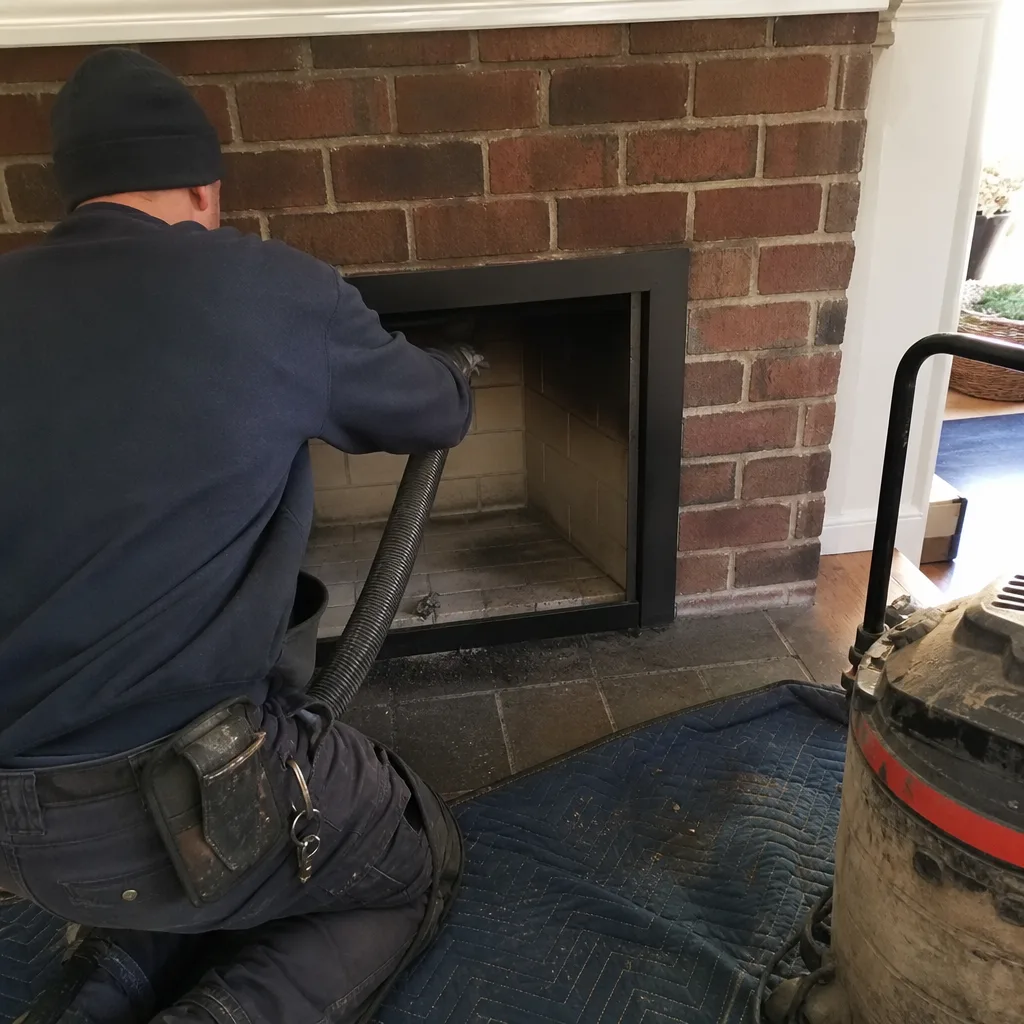 After
After Before
 After
After Before
 After
AfterWhy New York City Homeowners Choose DuraFlex Chimney Cleaning
We provide independent DuraFlex chimney cleaning and repair service across all five boroughs of New York City, with camera-documented inspections on every visit. If you need Duraflex repair in Los Angeles, we can refer you to trusted partners there. Our crews work on DuraFlex SS 316Ti, AL 29-4C, Pro, and SW liner systems in pre-war brownstones, co-op buildings, and high-rise retrofits throughout the city. We are not a DuraFlex-authorized dealer or manufacturer affiliate. We’re an independent service provider, which means our recommendations are based on what the camera shows us, not on moving product.
What separates our DuraFlex work in New York City is the documentation. Clause 4 of the Haven Standard requires a photo record on every job, and that’s non-negotiable whether we’re cleaning a 30-foot liner in a Park Slope brownstone or inspecting a six-flue stack above a Yorkville co-op. Corrine Halstead, our owner, has been looking at flue walls through a camera since before most New Yorkers knew what a chimney scan was. Call (980) 580-8641 and we’ll put a written price in front of you before anyone touches your chimney.
Why Trust Emberly Chimney Cleaners for Your DuraFlex Chimney Cleaning?
DuraFlex liners fail in specific, predictable ways. Our techs know those failure points because we’ve pulled thousands of feet of liner through New York City flues since 2009. When a 316Ti liner shows pinhole corrosion from acidic condensate, we don’t guess at it. We run a camera down, photograph the damage, and show you the image before we talk about repair. Corrine started in this trade working through inspection and cleaning jobs across all five boroughs, and her habit of showing customers the footage herself stuck with the whole company.
Every DuraFlex job gets the same treatment. We use OEM-compatible components when repairing or extending an existing liner because mixing brands creates fitment problems and can void whatever warranty remains. Our techs are background-checked and uniformed, with license information on every page. We answer the phone with a live person, 24/7. And you get a written scope, written price, and written warranty before work starts, not after the tech is already standing in your living room. That’s Haven Standard Clause 1. The camera doesn’t soften what it finds. Neither do we.
Common DuraFlex Chimney Cleaning Problems We Fix in New York City
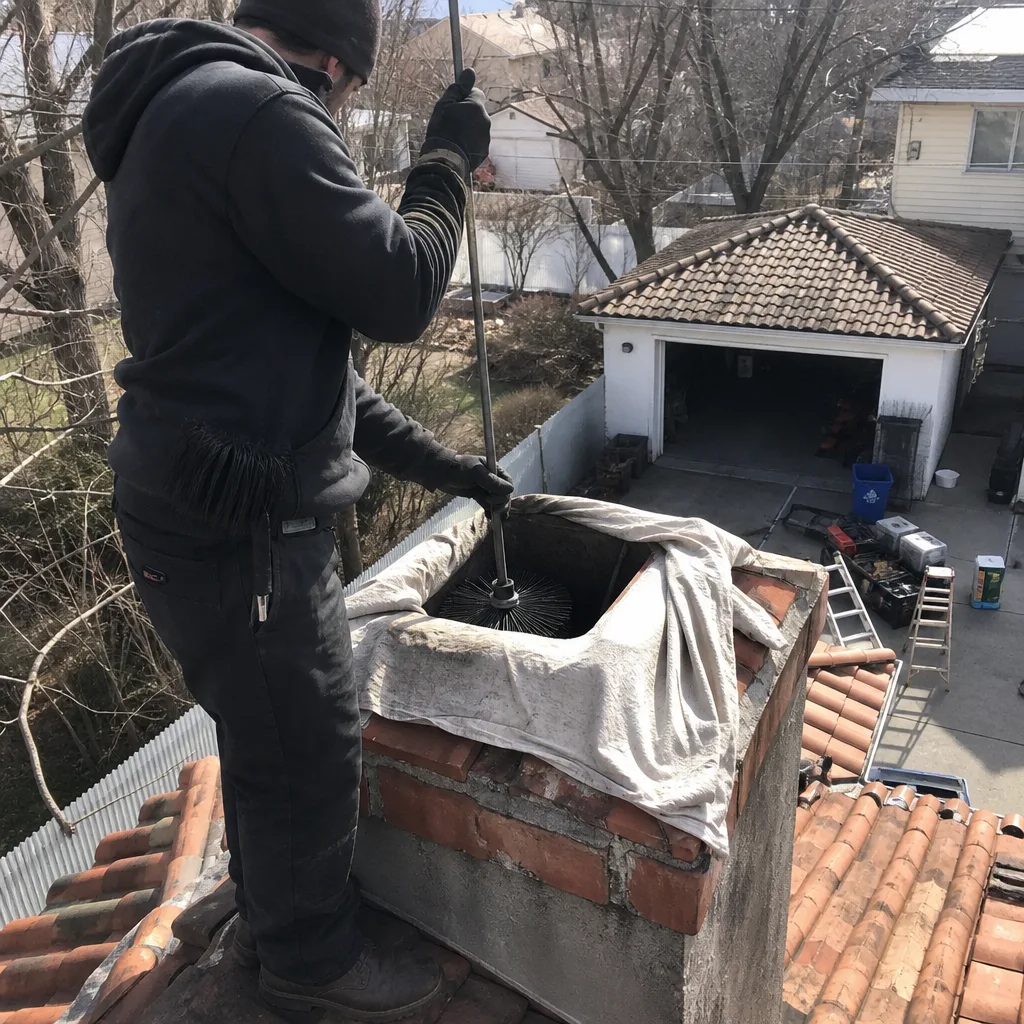
- Pinhole corrosion in DuraFlex SS 316Ti liners from acidic condensate. High-efficiency gas appliances produce flue gas that condenses into sulfuric acid when it hits a cold liner. Over 8 to 12 New York City winters, that acid eats pinholes through even 316Ti stainless. We see this constantly in converted brownstones where an old chimney was relined for gas without an insulation wrap. The fix is a camera scan to locate every perforation, then either a section patch with OEM 316Ti or a full reline if the corrosion runs the length of the flue.
- Split seams and tears at DuraFlex connection points from thermal cycling. New York City’s 70 to 80 freeze-thaw cycles per winter don’t just attack mortar. They also stress liner couplers and seams as the metal expands and contracts. A liner that wasn’t properly supported during installation will pull apart at a coupler, sometimes 30 feet up where nobody can see it. That’s exactly the failure that can vent carbon monoxide into a wall cavity. If your building has a shared chimney stack serving multiple units, one split seam affects every tenant on that flue.
- Aluminum liner degradation (DuraFlex AL 29-4C) from over-temperature exposure. AL 29-4C is rated for specific flue gas temperatures, and when a boiler or water heater runs hotter than the liner’s rating, the aluminum breaks down fast. We find this in Queens attached row houses where an old oil burner was swapped for a high-output gas unit without checking whether the existing liner could handle the new appliance. The liner looks fine from the top. The camera shows the story inside.
- Sagging vertical runs creating creosote traps in wood-burning applications. DuraFlex liners installed without proper standoff brackets or with too few supports will sag between connection points. In a wood-burning flue, every sag becomes a creosote collection point. Class III creosote, the hard, glazed kind, builds up in those dips and becomes a chimney fire waiting to happen. We see this in Manhattan and Brooklyn brownstones where the original fireplace was relined years ago on a budget and hasn’t been inspected since.
- Improper insulation that causes condensation and flue gas cooling in New York City roofline exposures. A DuraFlex liner running 20 to 40 feet above a flat tar roof with no shelter gets cold fast in February. Without the right insulation wrap, flue gases cool before they exit, condense, and run back down the liner walls. In coastal areas like Bay Ridge, Red Hook, and the Rockaways, salt air accelerates the corrosion on uninsulated stainless. We check insulation condition on every DuraFlex inspection, because that’s the difference between a liner that lasts 15 years and one that fails in 6.
BeforeAfterDuraFlex Parts & Our Repair-vs-Replace Approach
When we repair a DuraFlex liner, we use OEM DuraFlex components. That’s not a sales pitch; it’s a fitment decision. A coupler, tee, or connector made by another manufacturer will not seat correctly in a DuraFlex run, and forcing it creates the exact failure point you’re trying to fix. For full relines, we look at the whole picture. Sometimes a quality aftermarket system like HeatShield is a better value than pulling the entire DuraFlex liner and starting over. We’ll tell you that plainly. If a section repair can safely extend the liner’s life by five years or more, we’ll recommend the repair and write the price. The 365-Day Done Right Promise backs every repair we do. If it’s not done right, we make it right. Call (980) 580-8641 for an exact quote on your DuraFlex repair.
Our DuraFlex Service Process - Step by Step
- 1
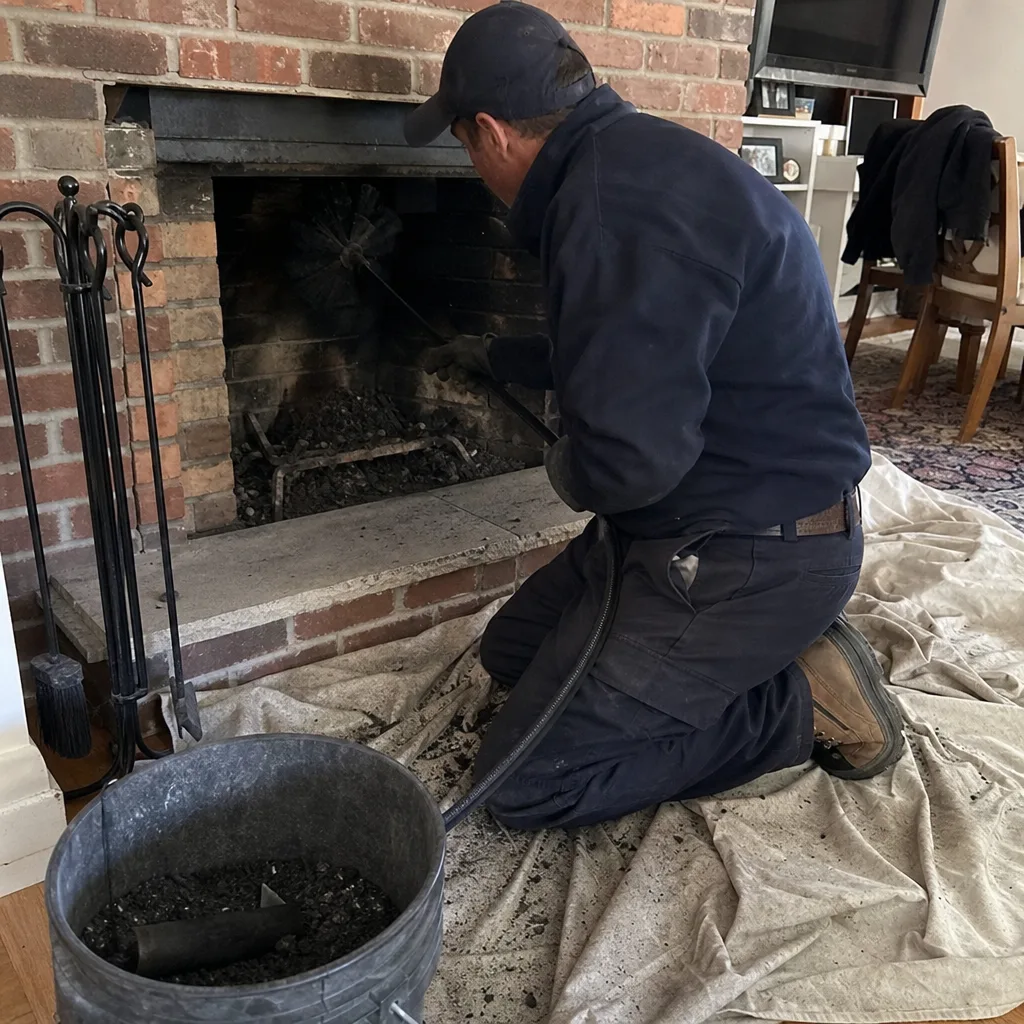
Diagnosis. We run a camera down the flue and document every foot of your DuraFlex liner in photos. You see the footage. We point out the condition in plain terms: where the corrosion is, what class of creosote is present, whether the couplers are intact. This is a Level 2 inspection under NFPA 211, and the photo record is yours to keep.
- 2
Written scope and price. Before anything gets repaired or replaced, you get a written scope of work, a written price, and a written warranty. No verbal estimates. No phone-call pricing games. This is Haven Standard Clause 1.
- 3
Repair or reline. For a section repair, we pull the new OEM DuraFlex component through with a winch, secure it with stainless bands, and verify every connection point. For a full reline, we size the new liner to the appliance’s BTU rating and the flue’s actual dimensions, then install with proper insulation and support brackets.
- 4
Testing. We run a pressure test or smoke test to confirm the flue is sealed and drawing correctly. For gas-vent systems, we verify that combustion gases are exiting the chimney, not leaking into any wall cavity or living space.
- 5
Documentation. You walk away with photos, camera footage, the written scope, and the written warranty. That record is yours. It’s also your proof of maintenance for the next inspection.
DuraFlex Products We Service & Install in New York City
Our crews service and install the full DuraFlex residential lineup: DuraFlex SS 316Ti, the standard stainless liner for gas and oil applications; DuraFlex AL 29-4C, the aluminum liner used for lower-temperature gas appliances; DuraFlex Pro, the heavy-wall stainless system for wood-burning and higher-temperature environments; and DuraFlex SW, the smooth-wall liner that reduces creosote accumulation. We stock common OEM couplers, tees, caps, and insulation wraps locally to keep turnaround fast on repairs. For full relines, we source through Haven’s buying network to keep material costs honest. Whether your building needs a single-flue repair in a Bed-Stuy brownstone or a six-flue inspection above a Harlem tenement, we handle both with the same camera-first standard.
We Also Service These Brands

We’re not tied to one manufacturer. Beyond DuraFlex, our techs regularly service and install HeatShield and Gelco systems across New York City. When a full reline is the right call, we’ll evaluate whether a HeatShield resurfacing is a better value than a brand-new DuraFlex pull. When insulation is the issue, Gelco’s wrap system is part of the decision. Being multi-brand means our recommendation is based on your flue’s condition, not on what’s on our truck.
FAQs - DuraFlex Chimney Cleaning Service in New York City
No. We’re an independent DuraFlex service provider - not an authorized dealer, installer, or manufacturer representative. That independence matters. We recommend replacement only when your existing liner fails inspection, and we show you the camera evidence to prove it. Call (980) 580-8641 if you want that kind of straight answer about your chimney.
Yes, when repairing or extending an existing DuraFlex liner we use OEM DuraFlex components. Mixing liner brands at connection points creates fitment issues and voids any remaining manufacturer warranty. For full relines, we evaluate whether an aftermarket system like HeatShield is a better value, and we’ll give you both prices in writing before you decide.
A standard cleaning and Level 2 inspection of a DuraFlex liner takes 90 minutes to 2 hours for a single flue. A section repair typically runs half a day. A full reline in a multi-story New York City building can take one to two days depending on roof access, scaffolding requirements, and how many flues are in the shared stack. We’ll put the timeline in the written scope before work starts.
We service and install DuraFlex SS 316Ti, AL 29-4C, DuraFlex Pro, and DuraFlex SW. That covers gas, oil, and wood-burning applications in single-family homes, brownstones, co-ops, and high-rise retrofits across all five boroughs. If you’re not sure which liner you have, we’ll identify it during the camera scan and document it in the photo record.
Using a non-OEM component to repair your DuraFlex liner can void what’s left of the manufacturer’s warranty on that section. We use OEM DuraFlex parts on repairs for exactly that reason. If your liner is still under warranty, we’ll tell you and recommend you contact the manufacturer before we touch it. If the warranty’s expired, we’ll give you a written price for whatever the camera says is needed.
A DuraFlex chimney cleaning with Level 2 camera inspection in New York City typically runs $229 to $389 for a single flue in a single-family home or brownstone. Multi-flue inspections in co-op and rental buildings are priced per flue, with a written itemized scope before work begins. A liner section repair starts around $600 and a full reline runs $3,800 to $9,500 depending on flue height, access, and whether scaffolding is required. Call (980) 580-8641 for an exact written quote, and bring us any competitor’s written estimate for a free second opinion.
Book Your DuraFlex Service in New York City, NY

We’re scheduling DuraFlex inspections, cleanings, and repairs across all five boroughs now. You’ll get a written price before work starts, a photo record when it’s done, and the 365-Day Done Right Promise on every job. Call (980) 580-8641 to book your DuraFlex service.
Written by Corrine Halstead, Owner at Emberly Chimney Cleaners, serving New York City since 2009.