

Level 1 sweep and inspection to the NFPA 211 annual standard - flue, crown, cap, and flashing checked and photographed
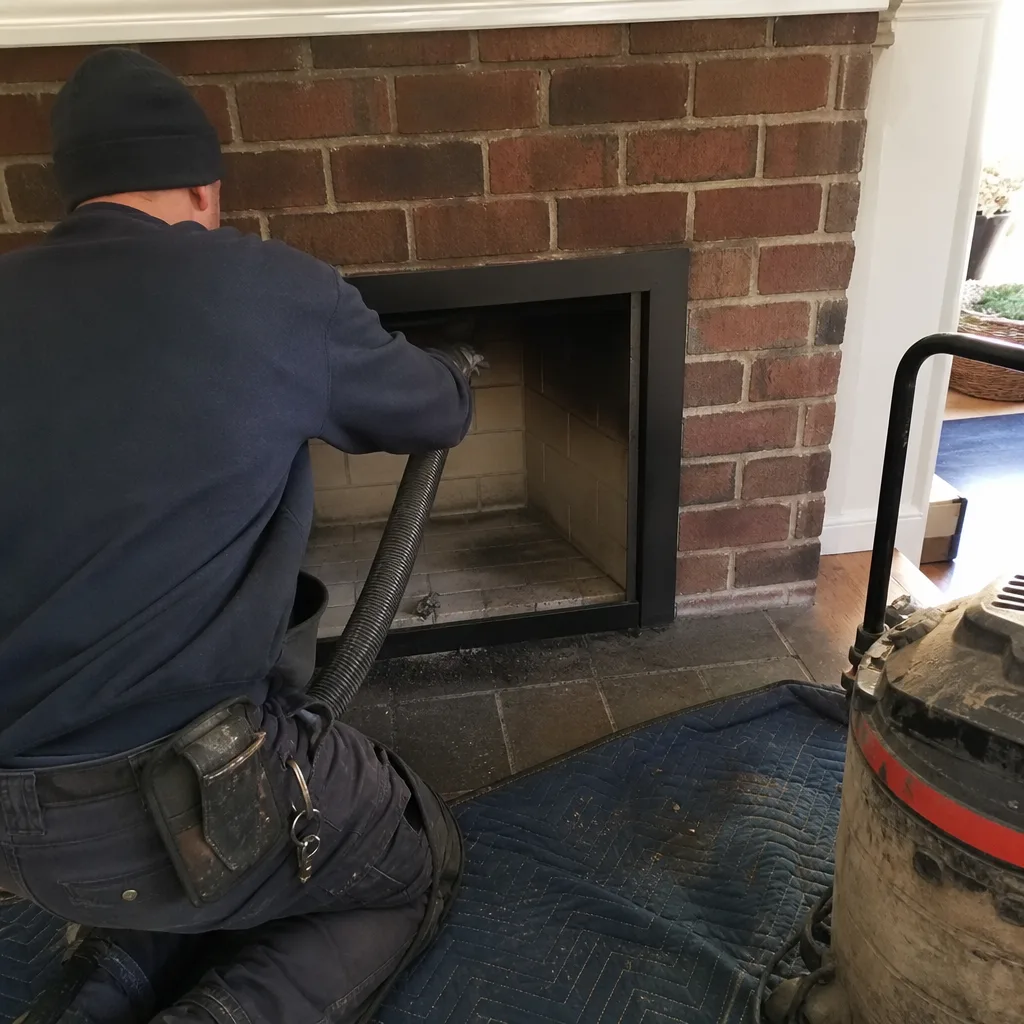
Chimney sweep logs do not sweep chimneys. They loosen some creosote - which then falls where a brush and vacuum still have to collect it.


 Before
 After
After Before
 After
After Before
 After
AfterDamper Stuck Open or Closed
A damper that won’t move is almost always the result of one of three things: rust and corrosion locking the plate, a buildup of creosote or debris jamming the mechanism, or a bent or warped frame from years of heat cycling. In most cases a trained technician can diagnose the cause during a standard inspection and resolve it the same visit.
The damper sits at the throat of your firebox, just above the opening, and it controls everything – airflow when you’re burning, and the seal between your living space and the outside when you’re not. When it stops moving freely, your home either loses conditioned air through an open flue twenty-four hours a day, or combustion gases back up into the room because a stuck-closed damper gives them nowhere to go. Neither situation is one you want to leave unattended. Understanding what’s causing it is the first step to fixing it.
Why It Happens
Rust and corrosion on the hinge or pivot
Cast iron and steel dampers are designed to tolerate heat, but they’re not designed to tolerate moisture – and flues see a lot of it. Rain, condensation, and inadequate capping let water sit on the metal season after season. The hinge point or rotating pivot corrodes until the plate locks in place. If your damper looks orange or flaky around the pivot and feels like it’s fighting you rather than moving smoothly, rust is almost certainly what you’re dealing with.
Creosote or debris packed into the mechanism
Every fire produces creosote – a tar-like byproduct that clings to flue surfaces and eventually migrates down to the damper plate and its frame. Leaves, nest material, and broken pieces of clay flue tile can do the same thing. If the damper will move a small amount but then stops hard, and you can see or smell a tarry buildup around the damper ledge, a mechanical blockage is the most likely cause. This is also the most common thing we find on chimneys that haven’t been swept in a few years.
Warped or bent frame from heat cycling
A firebox that has run hot, or one that has experienced even a small flue fire at some point, often shows a damper plate or frame that has bent out of true. The plate no longer seats flat, so it either binds in the closed position or won’t seat fully when you try to close it. Look at the damper frame straight-on with a flashlight: if the gap between the plate and the frame is uneven – wide on one side, tight on the other – warping is the likely explanation.
A broken or disconnected control handle or cable
Some older throat dampers use a poker-style handle that passes through the firebox; others, particularly top-mounted dampers, use a stainless cable that runs down the flue. If the handle spins without resistance, or the cable pulls without any corresponding movement at the top, the control linkage has either broken or come free of its attachment point. This is usually visible and audible – you’ll feel no resistance at all rather than the usual stiff resistance of a stuck plate.
What to Do Right Now
- Stop using the fireplace. If the damper is stuck closed and you light a fire, combustion gases including carbon monoxide have nowhere to go except back into the room. Don’t use it until the problem is diagnosed and fixed.
- If it’s stuck open, block the opening loosely with a fireplace screen or cardboard. This won’t seal the flue, but it will slow the draft pulling your heated or cooled air straight up and out of the house while you wait for a technician.
- Take a few photos with your phone flashlight. Shoot the damper plate, the pivot or hinge area, and the damper ledge from below. Your technician will appreciate the context, and it gives you a before-record of your own before anyone does anything.
- Don’t attempt to force the damper. A corroded or warped damper plate under tension can drop suddenly. And if there is a top-mounted damper with a cable, the cable hardware at the chimney top is working at height – not a safe DIY situation.
- Check whether you have a carbon monoxide detector with a fresh battery. If the damper is stuck in any position and you’ve been running the fireplace recently, confirm the detector is functional. If it alarms, leave the house and call 911 before calling anyone else.
BeforeAfterHow We Fix It
When your local Emberly Chimney Cleaners team arrives, the first thing they do is a camera-scan inspection – a NFPA 211 Level 2 look inside the flue, not a flashlight pass. That’s how we know whether a stuck damper is the only problem or whether there’s secondary damage behind it. The distinction matters, because a warped damper frame sometimes indicates heat the firebox shouldn’t have seen.
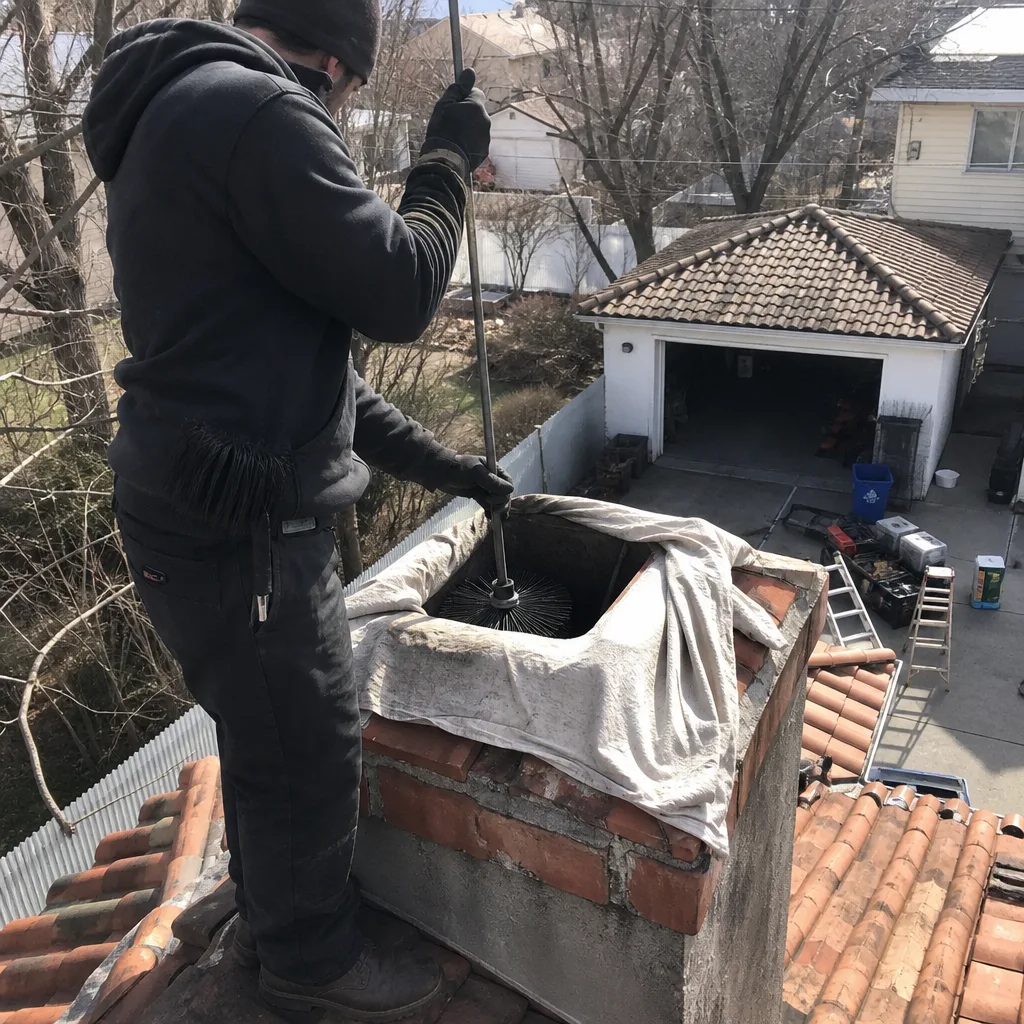
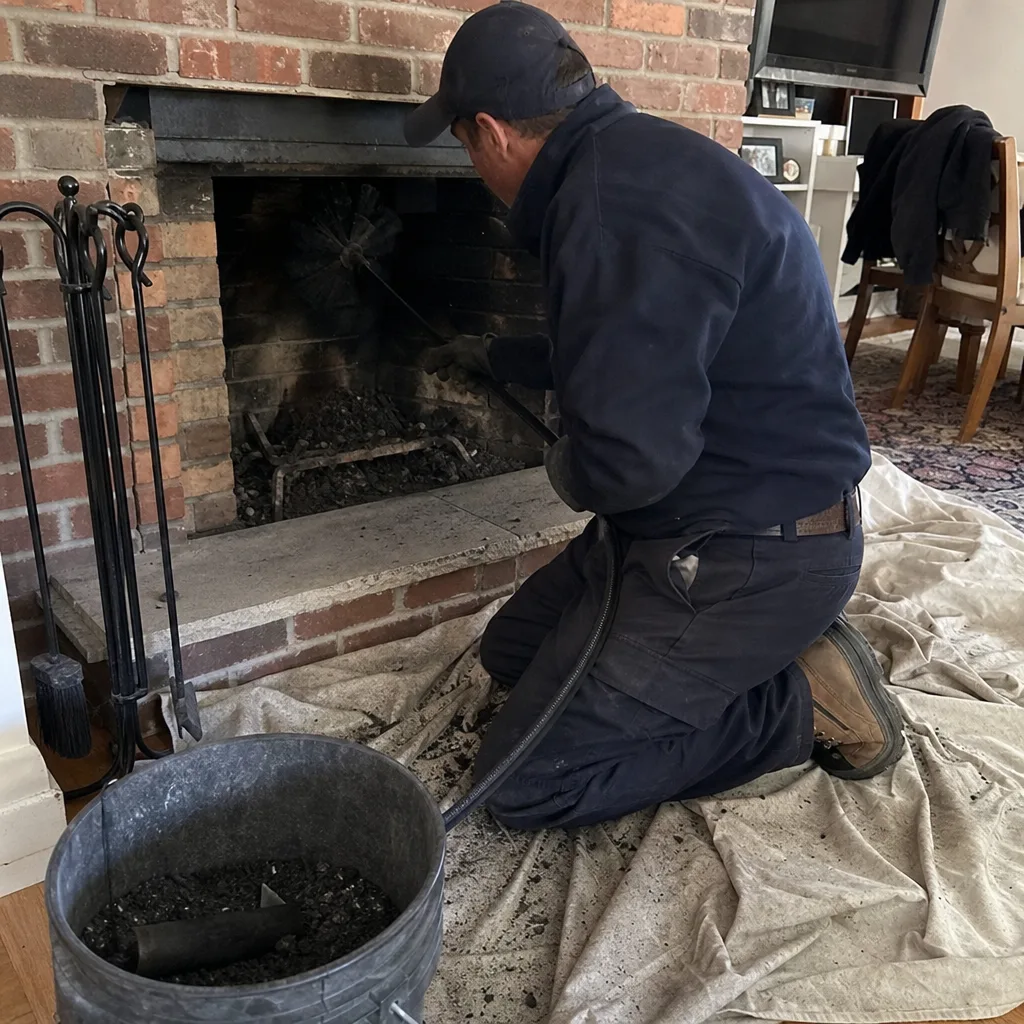
For most stuck dampers, the repair path runs through our chimney sweep service: the flue is cleared, the damper plate and pivot are cleaned and evaluated, and the control mechanism is tested. If the plate or frame is corroded beyond adjustment, we replace the damper assembly – a straightforward fireplace service that most technicians complete in a single visit. If a top-mounted damper cap is involved, that falls under chimney cap work and is quoted the same way.
Every repair is quoted in writing under Haven Standard Clause 1 before a single tool comes out – flat price, written scope, written warranty. No number goes on the table until we’ve looked inside. The job is also backed by the 365-Day Done Right Promise: if it’s not done right, we make it right. A documented photo record of what we found and what we did is included as standard under Clause 4, not an option you have to ask for.
Frequently Asked Questions
It depends on which direction it’s stuck. A damper locked open is a comfort and energy problem – not an immediate safety emergency, though you’re heating or cooling your neighborhood until it’s fixed. A damper stuck closed is a genuine safety hazard if you use the fireplace: combustion gases, including carbon monoxide, will back-draft into the living space. If you’ve been burning with a stuck damper and you feel headaches, dizziness, or nausea, leave the house immediately and call 911. Otherwise, treat a stuck-closed damper as something to address before the next fire, not the next season. Call us at (980) 580-8641 and we’ll get a written estimate to you before anything starts.
Contact your local Emberly Chimney Cleaners team directly at (980) 580-8641 – calls are answered by a live person around the clock, not a voicemail. Scheduling depends on your local team’s availability and your location, and we’ll be straight with you about the window. What we can tell you is that a named technician is assigned before the visit, and you’ll get a text when they’re on the way – no guessing whether someone actually showed up.
Many stuck dampers – especially those jammed by creosote or light rust – can be freed, cleaned, and returned to service without replacement. A damper with a warped or cracked frame, or one where the pivot has corroded through, usually needs to be replaced because no amount of cleaning restores a frame that no longer closes flat. The camera inspection tells us which situation you have, and the written estimate tells you the price before we touch anything.
The honest answer is: it varies by what the camera finds. A damper that’s stuck due to creosote buildup is resolved as part of a standard chimney cleaning. A full damper replacement – plate, frame, or a top-mounted unit – costs more, and the exact number depends on the damper type and what’s accessible. Under Haven Standard Clause 1, you get the price in writing before work starts – not after the technician is already in the firebox. Call (980) 580-8641 to schedule a free written estimate.
Get It Fixed
Call (980) 580-8641 – a live person picks up, any hour. Your local Emberly Chimney Cleaners team will schedule a camera inspection, put the diagnosis in writing before any work starts, and back the repair with the 365-Day Done Right Promise. Book online or call now.
Written by Corrine Halstead, Owner at Emberly Chimney Cleaners, serving communities nationwide since 2009.
What Our Customers Say
"Found a bird nest and a blocked flue we had no idea about. Photographed everything, cleared it, and explained what the smell had been."
- Curtis V."They told me the flue was fine and I did not need a liner. Charged me for the inspection and nothing else. That is why I have called them twice since."
- Hal M."Cap and crown replaced after water was getting in. Price was quoted in writing, and they showed me the mortar failure first."
- Neil O.