

Level 1 sweep and inspection to the NFPA 211 annual standard - flue, crown, cap, and flashing checked and photographed
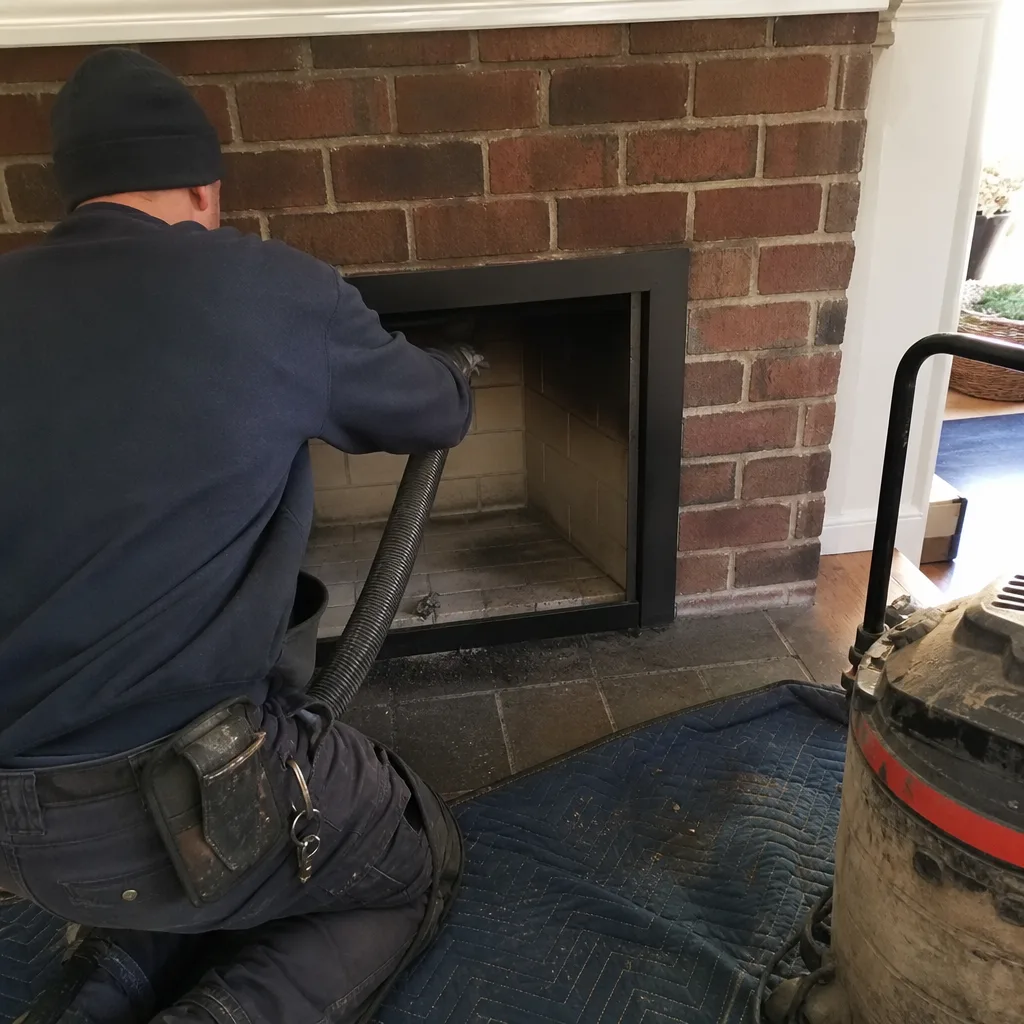
Chimney sweep logs do not sweep chimneys. They loosen some creosote - which then falls where a brush and vacuum still have to collect it.


 Before
 After
After Before
 After
After Before
 After
AfterAnimals or Birds Nesting in the Chimney
If you’re hearing scratching, chirping, rustling, or flapping from the fireplace – or if a live or dead animal has shown up in the firebox – something is almost certainly living in your flue. This happens when the chimney cap is missing, damaged, or never installed to begin with, and the flue becomes the most sheltered cavity available to whatever is nesting nearby. It’s a fixable problem, and the fix protects your chimney from the next visitor too.
The flue is warm, dark, and protected from wind and rain. For birds like chimney swifts, European starlings, and house sparrows – and for squirrels, raccoons, and occasionally bats – it looks like exactly what they want. Once they’re in, the concern isn’t just the noise. Nesting material is combustible. Animal waste is corrosive. And a decomposing carcass lodged in the flue can block draft in ways that push carbon monoxide back into the living space. That’s the part that matters most, and it’s the part that doesn’t fix itself.
Why It Happens
Missing or Failed Chimney Cap
This is the cause on the majority of calls we get. A cap that has corroded, blown off in a storm, or was simply never installed leaves the flue wide open. If you can safely look up at the chimney from ground level and see bare masonry at the top with no metal cover, that’s your answer. Caps are the first and most cost-effective line of defense – without one, the flue is an open invitation.
Damaged or Deteriorated Cap Screen
Even when a cap is present, the mesh screen around it can rust through, pull away from the frame, or get bent wide enough for a bird to slip through. Sparrows in particular are small enough to fit gaps that look too narrow to matter. If you can hear birds but you can see a cap from the ground, a damaged screen is likely the point of entry – it just requires getting closer to confirm.
No Rain Cover or Decorative Cap with Gaps Too Wide
Some older homes have a basic concrete or mortar crown at the top of the chimney stack but no actual cap or screen. Others have decorative covers with wide ornamental openings that exclude rain but do nothing about wildlife. Both situations are functionally the same as no cap at all. If a bird can see daylight through the opening, it can get in.
Nesting from Prior Years Left in Place
Animals return. If a bird or squirrel nested in the flue last season and that nesting material was never cleared, the scent alone can draw the same species back – sometimes the same animal. Compacted nesting material also restricts airflow, and dry leaves and twigs pressed against a hot flue wall create a real ignition hazard. If you’re hearing noise in a chimney that had activity before, assume there’s material in there until a camera scan says otherwise.
What to Do Right Now
- Stop using the fireplace. Don’t light a fire while there is any possibility of nesting material in the flue. Leaves, twigs, and animal fur are dry and flammable, and a blocked flue can push smoke and carbon monoxide back into the home. Keep the damper closed if it’s operational, and leave it closed until the flue has been inspected and cleared.
- Close the damper if you haven’t already. If an animal is in the flue and the damper is open, it can enter the firebox and then the room. If a live animal is already in the firebox, do not open the damper into the home – call first.
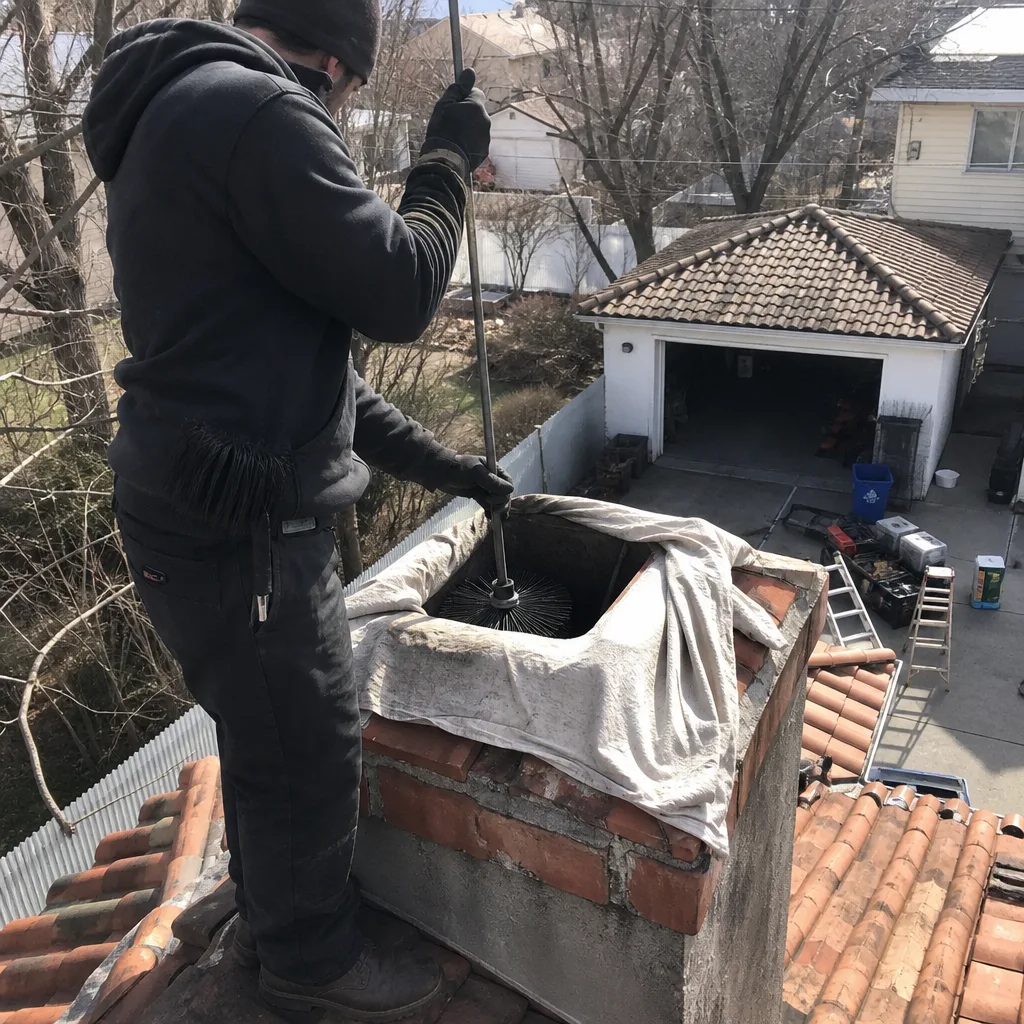
- Check for signs of entry from ground level only. Look up at the chimney top from the yard. If you can see that the cap is missing, damaged, or visibly askew, that’s useful information to report when you call. Do not climb onto the roof to inspect it yourself – cap and crown work is done at height and belongs to a technician with the right equipment.
- Photograph what you can see and hear. A photo of the chimney top from the ground, a short video of the sound coming from the firebox, and any visible animal or nest material in the firebox itself – all of it is useful. Your local Emberly Chimney Cleaners team documents every visit with its own camera scan, but the more context you can provide before we arrive, the faster the assessment goes.
- Note whether you’ve had chimney swifts. Chimney swifts are a federally protected migratory species. If small, cigar-shaped birds have been circling the chimney at dusk and you’re hearing a chattering sound from inside, let us know before we arrive. Active swift nests cannot be removed during nesting season under federal law, and we’ll tell you exactly where that leaves the timeline.
BeforeAfterHow We Fix It
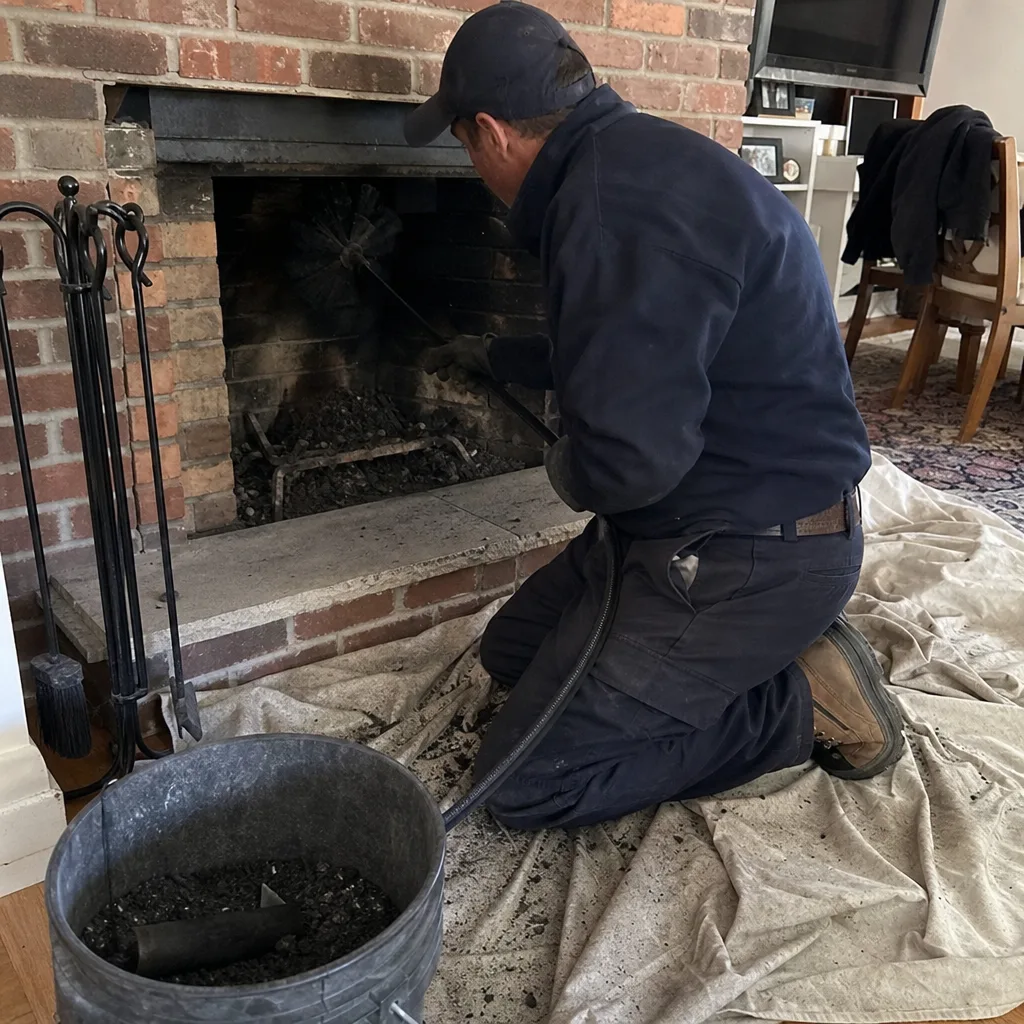
When your local Emberly Chimney Cleaners technician arrives, the first step is a camera-scan inspection – a full NFPA 211 Level 2 look inside the flue to document what’s there. That means nesting material, carcasses, waste deposits, any damage to the liner caused by corrosive animal debris, and the condition of the chimney cap and crown. You get a photo record of what we found. Every visit comes with that documentation as standard, under Haven Standard Clause 4.
From there, the path is usually chimney cleaning to clear the flue, followed by chimney cap installation or replacement to close the point of entry. If the liner shows corrosion damage from prolonged animal activity, we’ll say so and show you the evidence before recommending anything further.
A written price for the full scope is in front of you before any work starts – no changes after the van is in the driveway, no add-ons while the camera is already in the flue. That’s Haven Standard Clause 1 and it doesn’t move. Most visits are resolved in a single appointment. If wildlife removal is needed before sweep access is safe, we’ll tell you what’s needed and help coordinate the sequence.
Frequently Asked Questions
Yes, depending on what’s in there. Nesting material is a fire hazard if you light the fireplace, and a carcass or large nest blocking the flue can redirect carbon monoxide back into the home even from a furnace or water heater that shares the same chimney. “Wait until next season” is a reasonable answer when the flue is clear and capped – it’s not a reasonable answer when there’s active nesting material and an open flue. Call (980) 580-8641 and we’ll tell you exactly what you’re dealing with before anything starts.
Contact your local Emberly Chimney Cleaners team directly at (980) 580-8641 – live phone support is answered 24 hours a day, 7 days a week, not a voicemail. Scheduling depends on your local team’s current availability, and we’ll give you a real window, a named technician, and a text when they’re on the way. If the situation is urgent – animal in the firebox, blocked flue, smoke backing up – say so when you call.
There’s no honest single number for this because the cost depends on what’s in the flue, the condition of the liner, the height and configuration of the chimney, and which cap is right for your specific flue opening. What we can tell you is that the price is written down before anything starts – no estimates that turn into invoices after the fact. Call (980) 580-8641 for your free written estimate – it covers the full scope, and you’ll have it in hand before the work begins.
Not necessarily – but you need a camera scan to know. Animal waste, particularly from raccoons, is highly corrosive to clay tile and certain metal liners, and prolonged exposure can accelerate cracking and joint separation. If that’s what the camera shows, we’ll document it and tell you plainly what needs to happen and what can wait. If the liner is in serviceable condition, we’ll say that too – nothing gets recommended without camera evidence you can see yourself.
Get It Fixed
Your local Emberly Chimney Cleaners team handles animal and bird removal from chimneys, full flue cleaning, and chimney cap installation – all quoted in writing before work starts, and backed by the 365-Day Done Right Promise. Call (980) 580-8641 right now – someone picks up, every time – or book online. The flue gets inspected, documented, and cleared.
Written by Corrine Halstead, Owner at Emberly Chimney Cleaners, serving communities across the country since 2009.
What Our Customers Say
"Cap and crown replaced after water was getting in. Price was quoted in writing, and they showed me the mortar failure first."
- Neil O."Gas insert service done properly with the readings written down. The technician had the certification number printed on the paperwork."
- Bettina A."We were buying the house and needed a real inspection. The report had photographs, the standard it was done to, and a clear repair figure. The seller paid for the repair."
- Lorna D.