

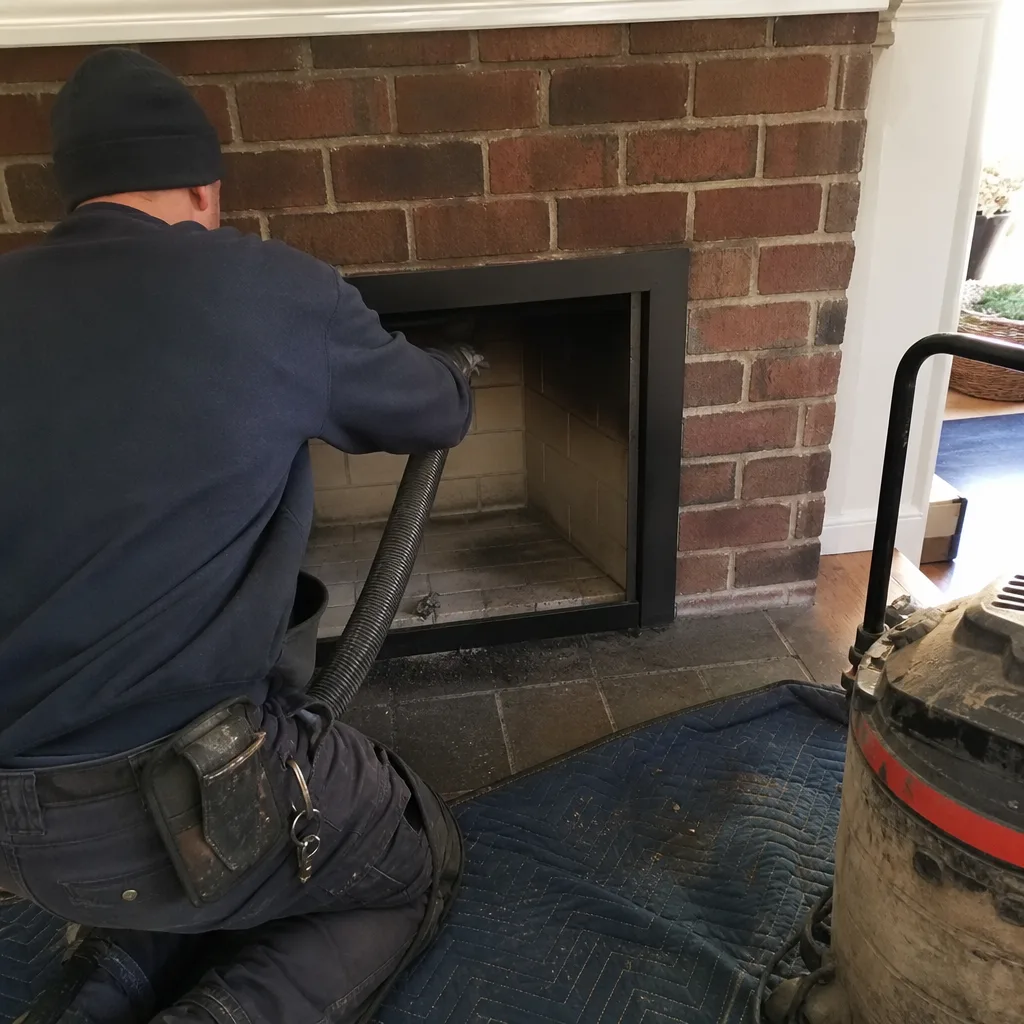
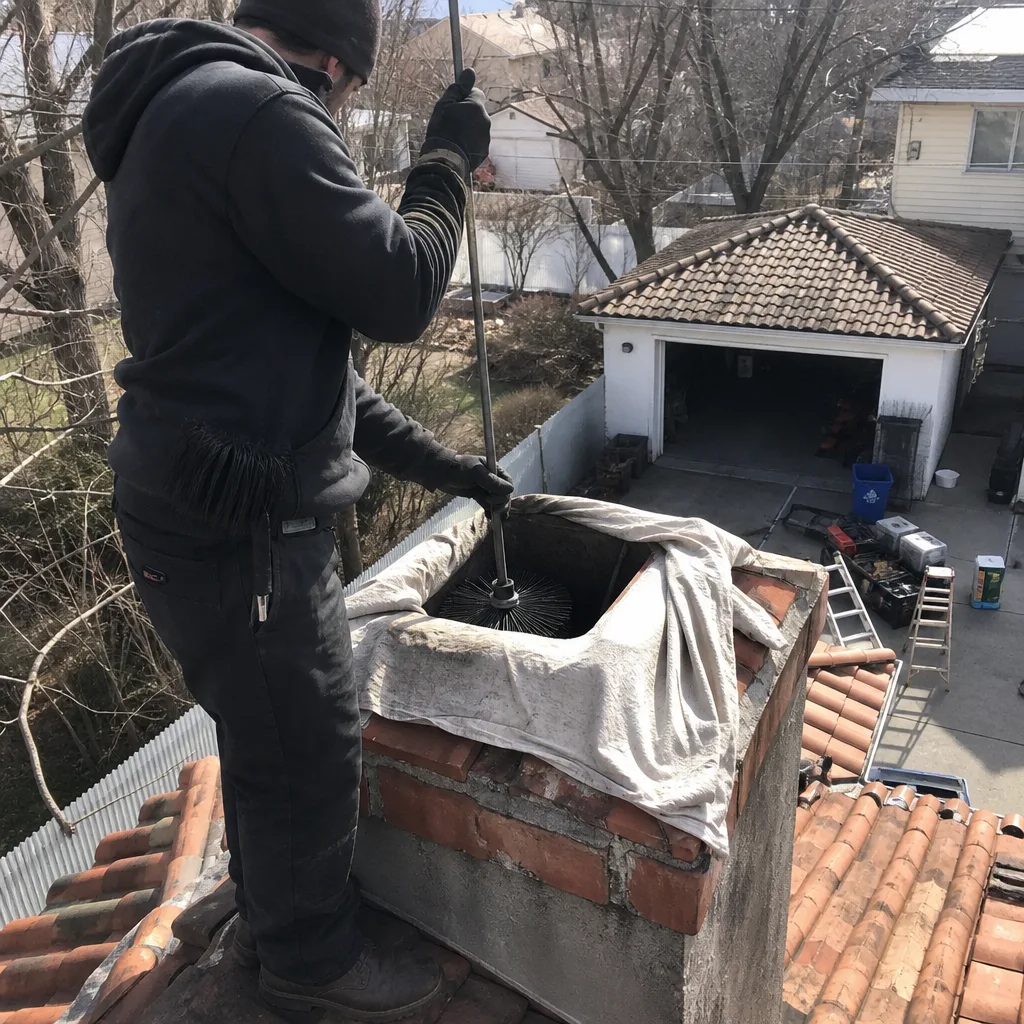
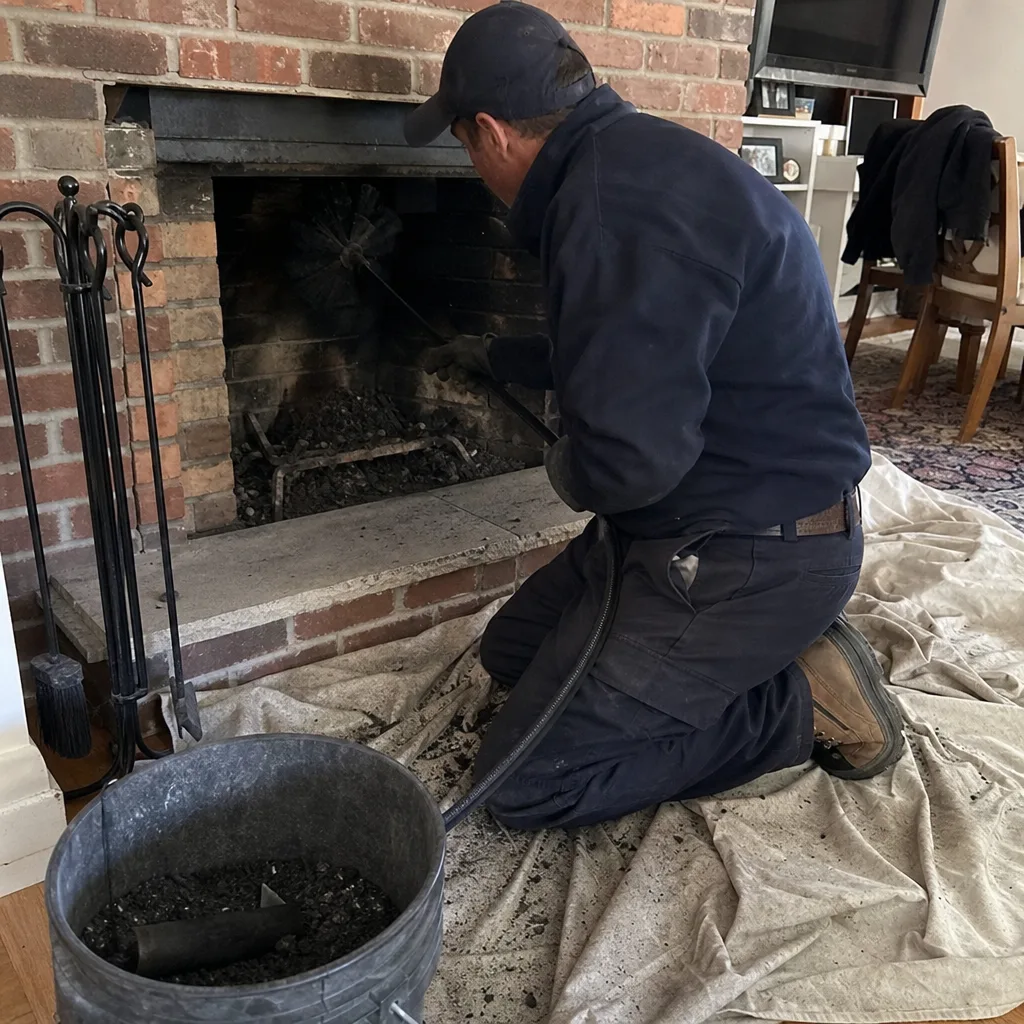
Level 1 sweep and inspection to the NFPA 211 annual standard - flue, crown, cap, and flashing checked and photographed
Chimney sweep logs do not sweep chimneys. They loosen some creosote - which then falls where a brush and vacuum still have to collect it.


 Before
 After
After Before
 After
After Before
 After
AfterCrumbling Mortar Inside the Firebox
What’s Happening
Crumbling mortar inside the firebox is almost always a sign that the refractory mortar joints between your firebrick have been thermally degraded – either from years of normal heat cycling, a past chimney fire, or water penetration working its way into the masonry. This is a structural and safety issue, not a cosmetic one. A firebox with failing mortar is no longer an intact combustion chamber.
The firebox is built to contain combustion. When the mortar that holds the firebrick together starts breaking down, gaps open between the bricks. Those gaps allow heat, flame, and combustion gases to reach materials behind the firebox wall that were never meant to see fire. The brick itself can look fine while the joints are already compromised – which is exactly why a camera-scan inspection matters more here than a look with a flashlight.
Why It Happens
Normal Heat Cycling Over Many Years
Refractory mortar expands when it heats and contracts when it cools – hundreds of times over the life of a fireplace. Eventually, those small movements add up. The mortar develops hairline cracks that widen season by season until you start seeing actual chunks on the firebox floor. If your fireplace is 15 or more years old and has been used regularly, this is the most likely cause. What you’ll see: a fine gray or tan powder on the firebox floor, small wedge-shaped chunks of mortar, and visible gaps along the horizontal joints between the courses of firebrick.
Water Getting In from Above
Water is the primary enemy of masonry systems. If your chimney cap is missing, cracked, or improperly sized, or if the crown at the top of the masonry has cracked, rainwater runs straight down and saturates the firebox walls from inside. Wet mortar doesn’t hold up to heat; it spalls and crumbles faster than any amount of normal firing would cause. If you notice the crumbling gets worse after heavy rain, or if the brick itself looks darkened or stained, water intrusion is the likely culprit – and fixing the mortar without addressing the entry point just means you’ll be back here in two years.
A Past Chimney Fire You May Not Have Noticed
Not every chimney fire is a dramatic event. Many are low-grade burns in a creosote-coated flue that the homeowner experiences as a louder-than-usual roar and then nothing. The heat from even a brief chimney fire reaches temperatures that standard refractory mortar wasn’t designed to survive. If you’ve noticed a sudden increase in crumbling – not gradual, but a jump from “some fine powder” to “chunks on the hearth” – or if you find cracks in the firebrick itself running diagonally, a chimney fire should be ruled out before the fireplace is used again. This is exactly the scenario NFPA 211 Level 2 inspection was written for.
Wrong Mortar Used During a Previous Repair
Standard gray masonry mortar from a hardware store is not the same as refractory mortar rated for firebox temperatures. If someone – a general handyman, a previous owner doing DIY – patched the firebox with the wrong material, it will fail quickly and visibly. You’ll often see the failed patch as a distinct color or texture difference from the original mortar, and it crumbles in softer, more uniform pieces rather than sharp fragments. The fix here is to remove all the wrong material and replace it with the correct product – partial patches on top of failed material don’t hold.
What to Do Right Now
- Stop using the fireplace. A firebox with compromised mortar joints is not a sealed combustion chamber. Until the extent of the damage is documented and repaired, using it risks pushing heat and carbon monoxide into wall cavities or adjacent framing. Don’t light another fire until a technician has inspected it.
- Take photographs of what you’re seeing. Get close shots of the joint lines, any chunks on the firebox floor, and any cracks running through the firebrick. Timestamp them. This gives the technician a baseline and helps the written estimate be precise before anyone starts work.
- Check your chimney cap from ground level only. Look up from outside. If the cap is visibly missing, tilted, or obviously broken, note that – it’s relevant context. Do not go on the roof to inspect it yourself. Roof work at height is a job for someone equipped for it.
- Look at the firebox floor and smoke shelf area. If you see dark, shiny flakes or what looks like dried black foam alongside the mortar debris, that’s creosote. It doesn’t change the immediate plan – the fireplace stays off – but it tells you the cleaning and inspection need to happen together.
- Don’t attempt a mortar patch yourself before an inspection. Adding material to failing joints hides the damage pattern that tells a technician how far it has spread and what caused it. A patch on top of compromised material won’t hold, and it can mask a worse problem underneath.
BeforeAfterHow We Fix It
When your local Emberly Chimney Cleaners team arrives, the first step is a camera-scan inspection – NFPA 211 Level 2 – so we can see exactly what’s happening inside the flue and behind the firebox walls, not just at the visible joint lines. A flashlight look misses too much. The camera documents what’s actually there, and you get a photo record of the findings before we quote anything.
Based on what the inspection finds, the repair path is usually one of two things: targeted firebox repair, where we remove all the degraded mortar, clean back to sound material, and repack the joints with the correct refractory product; or a more extensive rebuild if the brick itself has been compromised. We source refractory materials from suppliers including HeatShield and Olympia Chimney specifically because the material properties matter for the application – not every product rated for “high heat” is rated for firebox temperatures.
A joint repair on a standard firebox typically takes one visit of two to four hours. A partial or full firebox rebuild takes longer, and the scope is determined by what the camera finds – not estimated from the door. Either way, you get a written price covering exactly the scope of work before anyone picks up a tool. That’s Haven Standard Clause 1: have it in writing. Every job is also backed by the 365-Day Done Right Promise – if it’s not done right, we make it right.
Frequently Asked Questions
It’s genuinely dangerous if the fireplace is used while the mortar is failing. Gaps in the refractory joints allow heat and combustion gases to migrate into adjacent wall framing or into the chase – neither of which is built to handle direct flame contact. We don’t say this to alarm you: we say it because it’s the honest answer. The fireplace should stay off until the extent of the damage is assessed. Call us at (980) 580-8641 and we’ll get a camera-scan inspection scheduled so you know exactly what you’re dealing with.
We don’t publish a flat price for this one because the scope depends entirely on how far the damage has spread – which a camera inspection determines, not a guess from the firebox opening. What we can tell you is that every job gets a written price before work starts, covering the full scope. No estimates given verbally, no numbers that change once a technician is already in your home. Call (980) 580-8641 and your local Emberly team will get the inspection scheduled and a written quote in hand.
Scheduling depends on your local team’s current availability, which varies by location and season. The best way to find out is to call (980) 580-8641 – our phones are answered by a live person around the clock, not a voicemail. We’ll tell you exactly when we can be there, and you’ll get a text when your assigned technician is on the way.
That depends on what the camera finds. If the mortar failure is confined to the joints and the firebrick is structurally sound, a targeted joint repair is typically the right call. If the brick itself has cracked, spalled, or shifted – which can happen after a chimney fire or long-term water damage – a partial or full rebuild may be necessary. We won’t recommend work that isn’t supported by what the inspection actually documents: that’s the principle behind our photo record requirement on every visit. If you’ve received a written estimate from another company recommending a rebuild, we’ll give you a free second opinion on that quote – bring it to us and we’ll tell you if the recommendation is warranted.
Get It Fixed
Your firebox mortar isn’t something to watch and wait on while the fireplace is still in use. Call (980) 580-8641 – live answer, around the clock – or book online. Your local Emberly Chimney Cleaners team will inspect it with a camera, document what they find, and give you a written price before any work starts.
Written by Corrine Halstead, Owner at Emberly Chimney Cleaners, serving communities nationwide since 2009.
What Our Customers Say
"They told me the flue was fine and I did not need a liner. Charged me for the inspection and nothing else. That is why I have called them twice since."
- Hal M."Cap and crown replaced after water was getting in. Price was quoted in writing, and they showed me the mortar failure first."
- Neil O."Gas insert service done properly with the readings written down. The technician had the certification number printed on the paperwork."
- Bettina A.