

Level 1 sweep and inspection to the NFPA 211 annual standard - flue, crown, cap, and flashing checked and photographed
Chimney sweep logs do not sweep chimneys. They loosen some creosote - which then falls where a brush and vacuum still have to collect it.


 Before
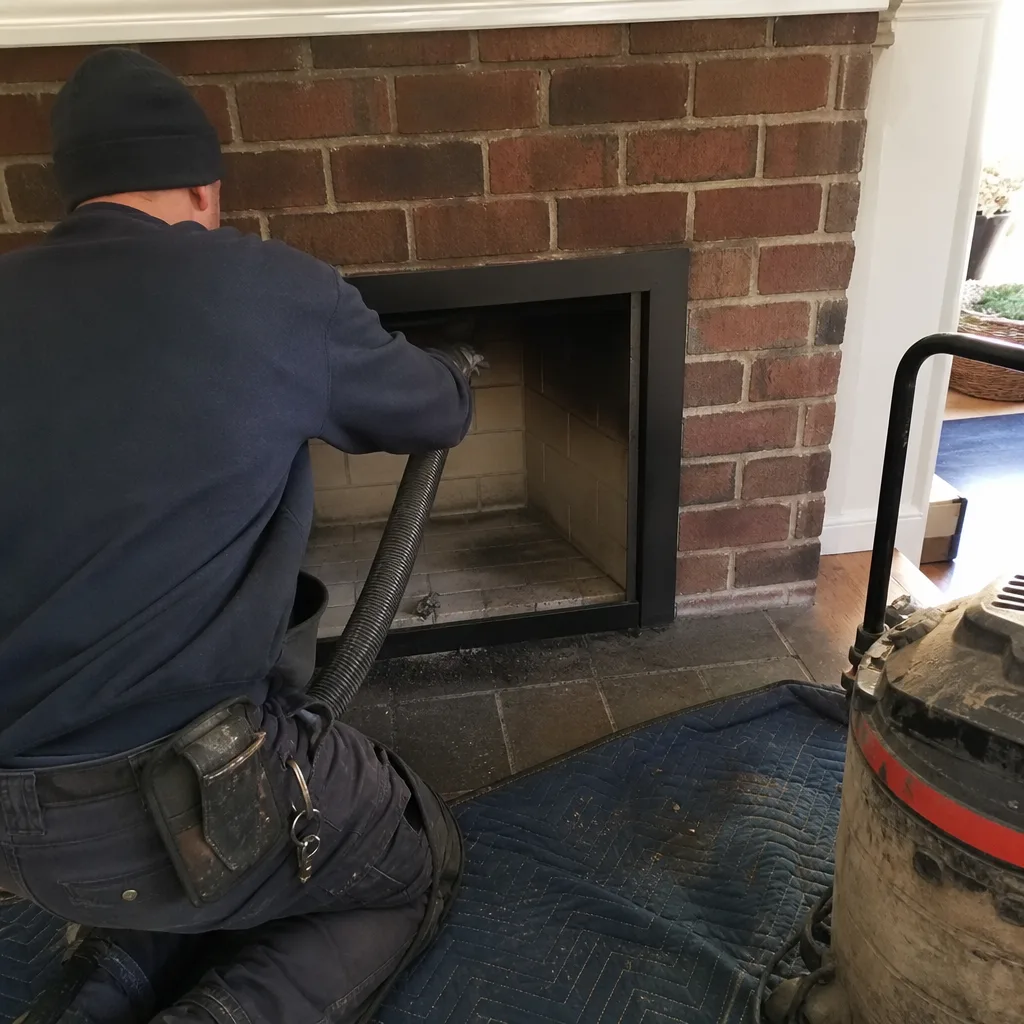 After
After Before
 After
After Before
 After
AfterFireplace is Hard to Light or Won’t Draw
A fireplace that won’t draw is almost always a ventilation problem: cold air sitting in the flue is pushing back against your fire, or a blockage is stopping combustion gases from rising the way they should. In most cases the fix is a chimney cleaning, a damper adjustment, or both – and a technician can usually find the exact cause in the first fifteen minutes of a visit.
The longer explanation: your chimney works by creating a column of rising warm air. When something disrupts that column – a cold, unprimed flue, a partially closed damper, a debris blockage, or a structural problem with the liner – smoke has nowhere to go but back into the room. Lighting the fire gets harder, the room fills with smoke, and eventually you stop trying. None of those causes are the same repair, which is why diagnosing the right one first matters more than just lighting a bigger starter fire.
Why It Happens
A Cold Flue with No Airflow Path
In cooler months, the air column inside your chimney can be significantly colder and denser than the air in your living room. When you open the damper and strike a match, that dense cold air pushes back down against the flame. You’ll notice it most on the first fire of the season, or after the fireplace has sat unused for several weeks. The smoke puffs back into the room within the first two or three minutes, before the flue has had a chance to warm up.
A Blocked or Partially Blocked Flue
Leaves, bird nests, and creosote buildup can choke airflow even when the damper is fully open. A partial blockage lets some air through – so the fireplace seems to work, but smokes badly in any wind. A full blockage means the fire won’t take at all, or goes out shortly after lighting. If you shine a flashlight up from the firebox and can’t see daylight at the top, that’s a strong indicator something is obstructing the flue.
A Damper That’s Stuck, Damaged, or Badly Seated
Throat dampers sit just above the firebox and can warp, corrode, or collect debris until they won’t open fully. Even a damper that appears to be open can be restricting airflow to maybe 40 percent of the flue’s capacity if the plate is bent or the pivot is seized. You can often feel this by reaching up carefully and checking whether the plate moves freely across its full range – but stop there. Don’t force a damper that resists, and don’t reach past what you can see comfortably.
Negative Air Pressure in the House
Tightly sealed modern homes – especially those renovated with good insulation and new windows after 2015 – can develop negative pressure indoors. Kitchen exhaust fans, bathroom fans, and HVAC returns all pull air out of the house. When the house is under negative pressure, the chimney becomes a convenient makeup-air path, meaning air flows down the flue instead of up. A simple test: crack a window near the fireplace by two inches before lighting. If the draw immediately improves, negative pressure is at least part of the problem.
What to Do Right Now
- Don’t keep trying to light it if smoke is entering the room. Carbon monoxide and combustion gases backing into living space are a real hazard. One failed attempt is diagnostic. Repeated failed attempts with heavy smoke are a signal to stop and get the system checked before using it again.
- Check the damper position before anything else. Open it fully and confirm it moves through its complete range without catching. If it’s fully open and stiff or will only open partway, note that and stop – a damaged damper needs a technician, not more force.
- Shine a flashlight up the flue from the firebox. You’re looking for an obvious blockage: a bird nest, a dense creosote ledge, or anything that breaks the clear view toward daylight. Photograph what you see. That photo is useful information for the technician who arrives.
- Try the negative pressure test. Crack a nearby window two inches and hold a piece of tissue near the open damper. If the tissue pulls upward (toward the flue), draft is present. If it blows into the room, the house is pulling air down the chimney.
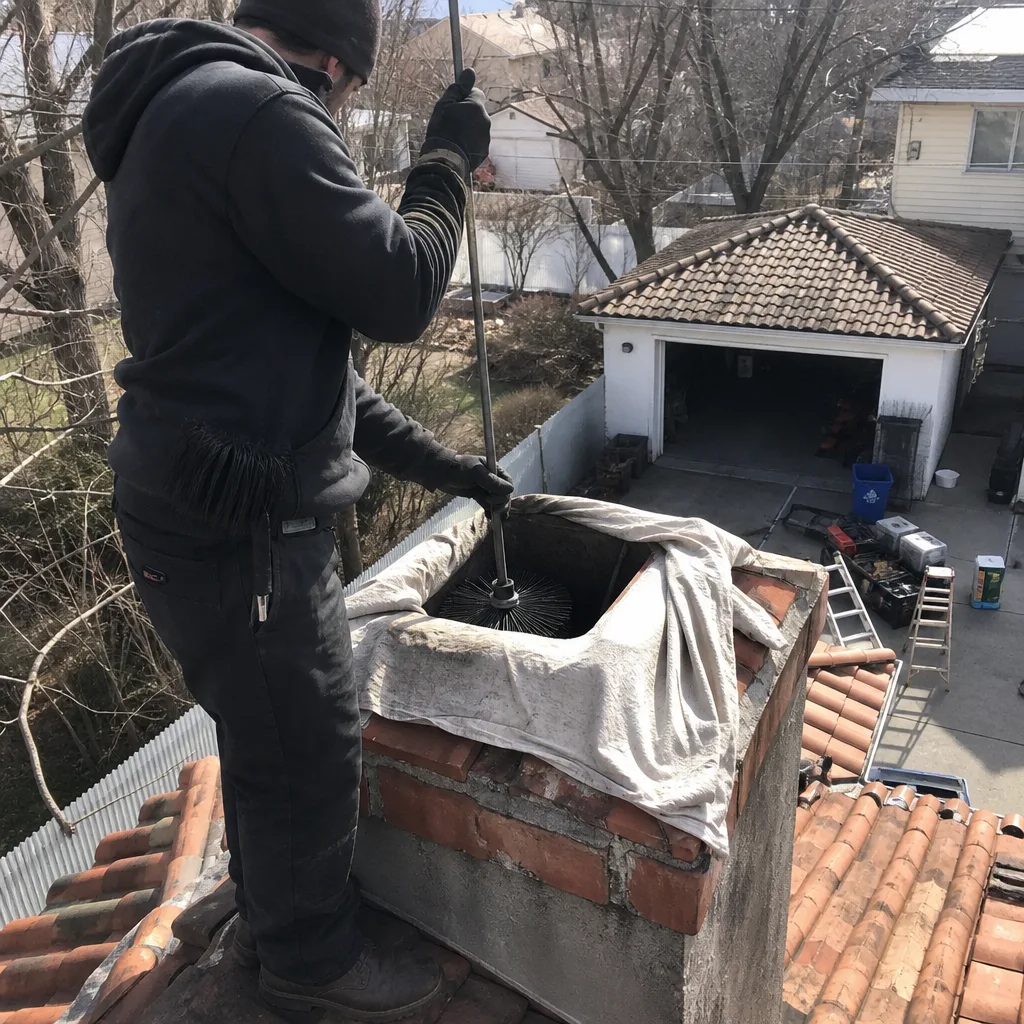
- Do not attempt to clear the flue yourself from the top. Climbing onto a roof to probe a chimney is height work with real fall risk, and dislodging a blockage without proper containment sends debris – sometimes including creosote – directly into your firebox and living space. Call your local Emberly Chimney Cleaners team at (980) 580-8641 and let them do it with drop cloths, a camera, and the right tools.
BeforeAfterHow We Fix It
When your local Emberly Chimney Cleaners technician arrives, the first step is a camera-scan inspection – what NFPA 211 calls a Level 2 inspection – that goes from the firebox throat to the top of the flue cap. The name Emberly isn’t arbitrary: Level 1 is a flashlight look. Level 2 puts a camera inside, which is the only way to see a cracked tile liner, a collapsed flue section, or a ledge of glazed creosote that’s choking airflow from the inside. We’ve been running this as standard since 2009, not as an upsell.
Based on what the camera shows, the repair path branches. A creosote or debris blockage routes to a chimney sweep. A damaged damper or failed liner section routes to chimney repair or chimney liner service, depending on what the footage shows. You’ll get a written price for the specific work required – before anyone starts – along with a written scope and written warranty under Haven Standard Clause 1. The 365-Day Done Right Promise is stamped on every job. Most cleaning visits take 60 to 90 minutes. Liner or damper work varies by what the camera finds, but you’ll know the scope and price before the work begins, not after.
Frequently Asked Questions
If smoke is entering the room when you attempt to light it, don’t use the fireplace again until it’s been inspected – carbon monoxide produced by a fire venting back into a living space is a genuine health risk, not a minor inconvenience. If the fireplace simply won’t light but isn’t smoking into the room, the urgency is lower, but you still shouldn’t try to force it through trial and error. Either way, getting a camera-scan inspection before the next fire is the right call. Call (980) 580-8641 and we’ll get your local team scheduled.
We don’t publish a flat number for this symptom because the cause determines the repair, and the repair determines the price – a cleaning is priced differently from a liner replacement, and those are genuinely different jobs. What we can tell you is that you’ll receive a written price before anything starts, every time, with no exceptions under Haven Standard Clause 1. Bring us a competitor’s written estimate and we’ll give you a free second opinion on it. Call (980) 580-8641 to get a written quote from your local Emberly Chimney Cleaners team – there’s no charge for the estimate itself.
Often, yes. If the cause is creosote buildup, debris, or a damper issue, your technician arrives with the tools to clean and clear the flue in the same appointment. More involved work – a cracked liner, a collapsed flue section – may require a follow-up once materials are sourced, but you’ll know that from the camera inspection findings before anyone commits to anything. We source materials from suppliers including DuraFlex, HeatShield, and Olympia Chimney specifically to keep turnaround realistic and prices honest.
A cold flue is the most common culprit: dense cold air in the chimney column resists the rising warm air your fire needs to establish a draft. This is especially common on the first fires of the season or after a stretch of mild weather when the fireplace hasn’t been used. It can also be a sign of creosote buildup narrowing the flue enough that it works marginally in good conditions but fails when conditions aren’t ideal. A camera-scan inspection will tell you which one – or both – you’re dealing with.
Get It Fixed
Your local Emberly Chimney Cleaners team handles this from diagnosis to repair, with a written price before anything starts and a documented photo record when we’re done. Call (980) 580-8641 – a live person answers, any time of day – or book online. We’ll get your fireplace drawing the way it should.
Written by Corrine Halstead, Owner at Emberly Chimney Cleaners, serving communities across the country since 2009.
What Our Customers Say
"Cap and crown replaced after water was getting in. Price was quoted in writing, and they showed me the mortar failure first."
- Neil O."Gas insert service done properly with the readings written down. The technician had the certification number printed on the paperwork."
- Bettina A."We were buying the house and needed a real inspection. The report had photographs, the standard it was done to, and a clear repair figure. The seller paid for the repair."
- Lorna D.