

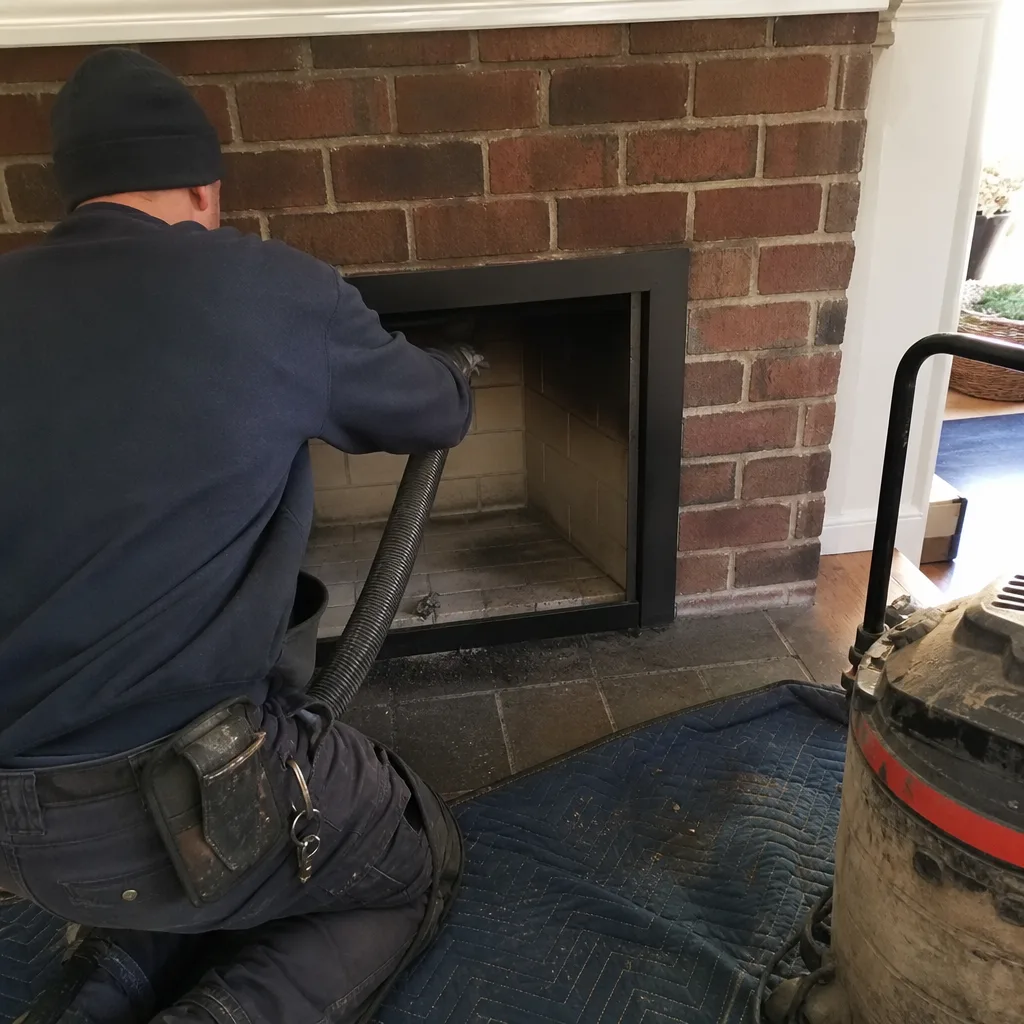
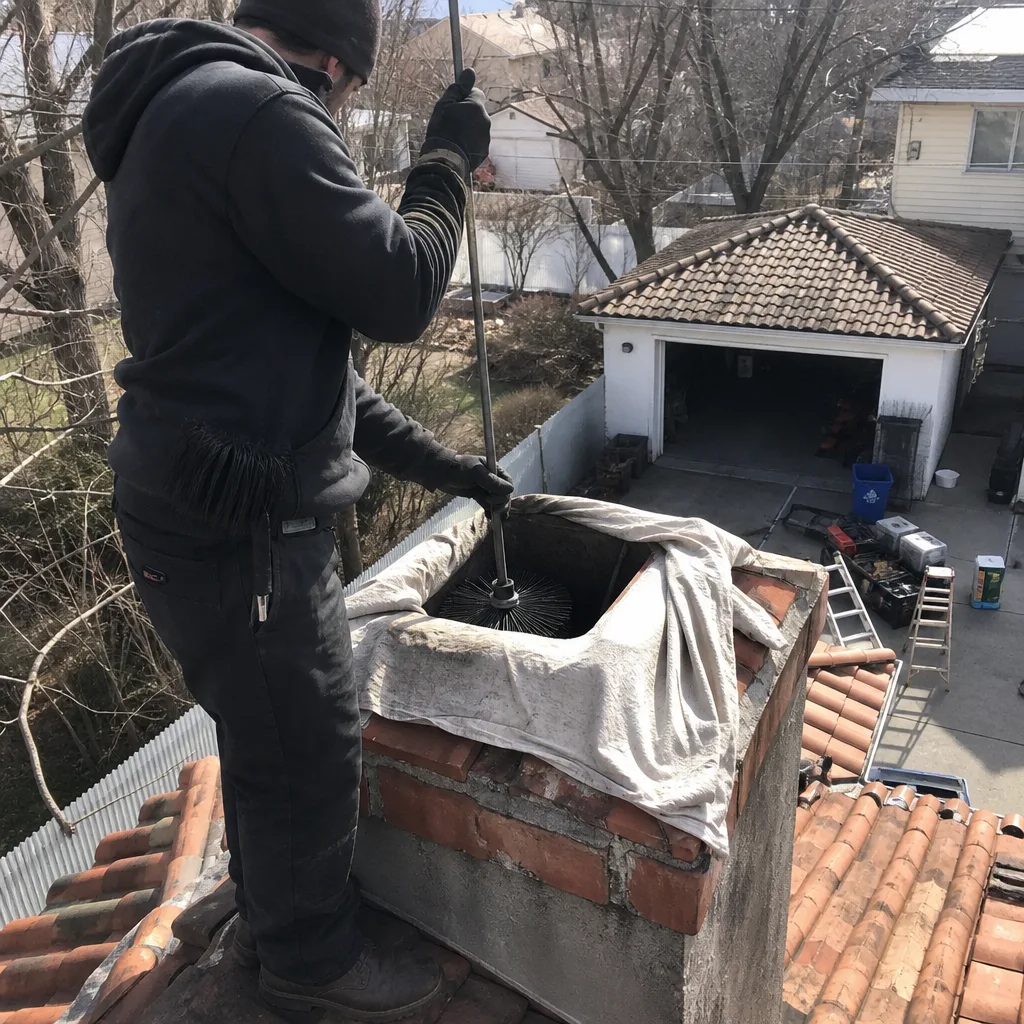
Level 1 sweep and inspection to the NFPA 211 annual standard - flue, crown, cap, and flashing checked and photographed
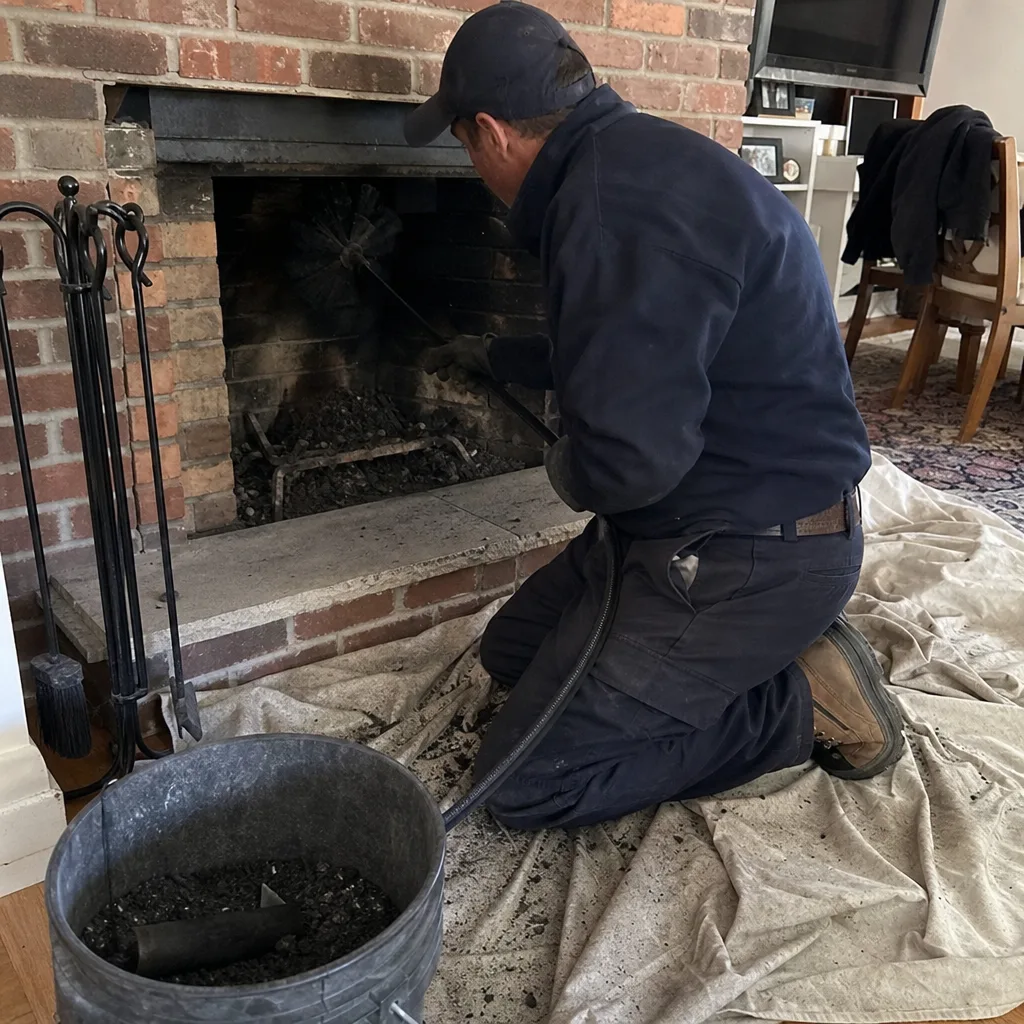
Chimney sweep logs do not sweep chimneys. They loosen some creosote - which then falls where a brush and vacuum still have to collect it.


 Before
 After
After Before
 After
After Before
 After
AfterWater leaking down the chimney
What’s Happening
Water leaking down your chimney almost always means the chimney’s weatherproofing has failed at one or more points: the flashing, the crown, the cap, or the masonry itself. It is not the fireplace leaking – it is the chimney system failing to keep rain out, and the water is finding the path of least resistance into your home.
That distinction matters because the fix is not a roof repair and it is not a plumbing repair. The entry points that let water into a chimney are specific to chimney construction, and each one fails in a predictable way. A camera-scan inspection (what NFPA 211 calls a Level 2) can locate the exact entry point in about an hour. Until someone does that, you are guessing – and water that finds one path tends to find more. The damage compounds quietly inside the masonry, which is why a small drip now can mean a deteriorated liner or spalled brick in two or three winters if it goes unaddressed.
Why It Happens
Damaged or missing chimney cap
The chimney cap sits at the very top of the flue opening and is the first thing that fails. When it cracks, shifts, or blows off entirely, rain falls directly into the flue with nothing to deflect it. You can often spot a missing or visibly tilted cap from the ground with a pair of binoculars. If water appears inside the firebox immediately after rain – not hours later – a failed cap is the most likely culprit.
Cracked or eroded chimney crown
The crown is the concrete or mortar slab that seals the top of the chimney stack around the flue opening. It goes through years of freeze-thaw cycles, and hairline cracks are nearly inevitable on any chimney older than 15 years. Water wicks into those cracks, expands when it freezes, and widens them each winter. From the ground, a crown problem is hard to see without getting on the roof – which is exactly why we document it with photos on every visit, so you can see what we see without going up there yourself.
Failed chimney flashing
Flashing is the metal seal where your chimney meets your roofline. It is a two-piece system – base flashing and counter-flashing – and when the sealant or the metal itself fails, water runs along the chimney’s exterior and into the attic or ceiling cavity before it ever appears inside the firebox. If the stain on your ceiling is near but not directly above the fireplace, or if you see dampness in the attic near the chimney, flashing is worth examining first.
Porous or spalled masonry
Brick and mortar are not waterproof by nature. Over time, mortar joints erode (a process called spalling), and the brick face itself can absorb enough water to transmit it inward. This type of leak tends to show up as a general dampness on the inside face of the firebox or as efflorescence – white mineral deposits – on the exterior brick. It is slower-moving than a cap or crown failure, but it signals that the masonry needs either repointing or a water-repellent treatment before the damage reaches the liner.
What to Do Right Now
- Stop using the fireplace. A wet flue is a compromised flue. Burning in it before the entry point is identified risks accelerating moisture damage to the liner and can affect draft, which means combustion gases may not vent the way they should. Leave it closed until someone has had a look inside.
- Place a bucket or towels inside the firebox and note where the water is landing. The position – front, back, left, right – is useful diagnostic information. Take a photo with your phone before you dry anything up. That image is worth sending when you call.
- Look up at your roofline from the ground (do not go on the roof). You are looking to see whether a cap is visibly missing or tilted, and whether any flashing appears to have pulled away from the chimney face. Binoculars help. Write down or photograph what you see.
- Check the ceiling and walls near the chimney for staining. A stain that appears two or three feet from the firebox, rather than directly above it, often points to flashing failure rather than a cap or crown issue. Note its location and whether it has changed size since the last rain.
- Do not attempt to seal the crown, cap, or flashing yourself before the source is confirmed. Applying sealant over the wrong surface can trap moisture inside the masonry and make a minor problem significantly worse. A written diagnosis first – then a written repair quote.
BeforeAfterHow We Fix It
When your local Emberly Chimney Cleaners team arrives, the first step is a Level 2 camera-scan inspection of the full flue, per NFPA 211. The camera tells us whether the liner is intact or has already taken moisture damage – something no flashlight inspection can confirm. At the same time, the technician documents the cap, crown, flashing, and visible masonry with photos. You get a copy of that record whether any repair is needed or not; that is standard practice under Haven Standard Clause 4, not an optional add-on.
Once we know the source, we give you a written price for the specific repair – cap replacement, crown sealing or rebuild, flashing re-bed, masonry repointing, or liner work if the moisture has already reached that point. That price is flat, it is in writing before anything starts, and it is backed by the 365-Day Done Right Promise. Most chimney cap and crown repairs are completed on the same visit. Flashing work and liner repairs take longer, and if they do, we will tell you that in the scope before we start. No surprises is not a slogan here – it is Clause 5 of the Haven Standard.
Frequently Asked Questions
It depends on how long it has been happening and whether the liner is involved. A wet liner can affect how combustion gases travel through the flue, which makes carbon monoxide venting less predictable – that is a real safety concern, not a marketing one. Keep the fireplace closed until the source is identified. If you are using a gas appliance vented through the same chimney, call us today at (980) 580-8641 – a technician will walk through what to check before your appointment.
Water damage in masonry is cumulative: each wet-dry cycle opens cracks a little wider, and each freeze-thaw cycle does more. A leak that costs a straightforward cap replacement today can, in two or three seasons, mean liner work or partial masonry rebuilds. We will never tell you something needs emergency repair unless the photos show it does – but “it can wait” and “it gets cheaper if you wait” are not the same sentence. Call (980) 580-8641 and we will get a written diagnosis in front of you so you can make that call with actual numbers.
That is the right question to ask, and the honest answer is: you need to see the camera footage. A liner failure is visible – it shows cracking, separation, or collapse in the footage – and we document it with photos you receive as part of the standard visit record under Haven Standard Clause 4. If you have a written estimate from another company recommending a liner replacement, bring it to us. We offer a free second opinion on any written estimate, and we will show you the camera evidence that either supports or contradicts the recommendation.
Your local Emberly Chimney Cleaners team schedules visits based on current availability in your area. Calls are answered by a live person 24 hours a day, 7 days a week – not a voicemail, not a web form. When you call (980) 580-8641, you will find out the first available window immediately, get a named technician assigned, and receive a text when they are on their way. That is what we call “Arrive on schedule” under the H.A.V.E.N. standard – a real window, not a four-hour block and a hope.
Get It Fixed
Call (980) 580-8641 – a live person answers around the clock. Your local Emberly Chimney Cleaners team will schedule your camera-scan inspection, hand you a written price before any work starts, and document exactly what we found. Book online if you prefer. Either way, no voicemail, no surprises.
Written by Corrine Halstead, Owner at Emberly Chimney Cleaners, serving communities nationwide since 2009.
What Our Customers Say
"Found a bird nest and a blocked flue we had no idea about. Photographed everything, cleared it, and explained what the smell had been."
- Curtis V."They told me the flue was fine and I did not need a liner. Charged me for the inspection and nothing else. That is why I have called them twice since."
- Hal M."Cap and crown replaced after water was getting in. Price was quoted in writing, and they showed me the mortar failure first."
- Neil O.