

Level 1 sweep and inspection to the NFPA 211 annual standard - flue, crown, cap, and flashing checked and photographed
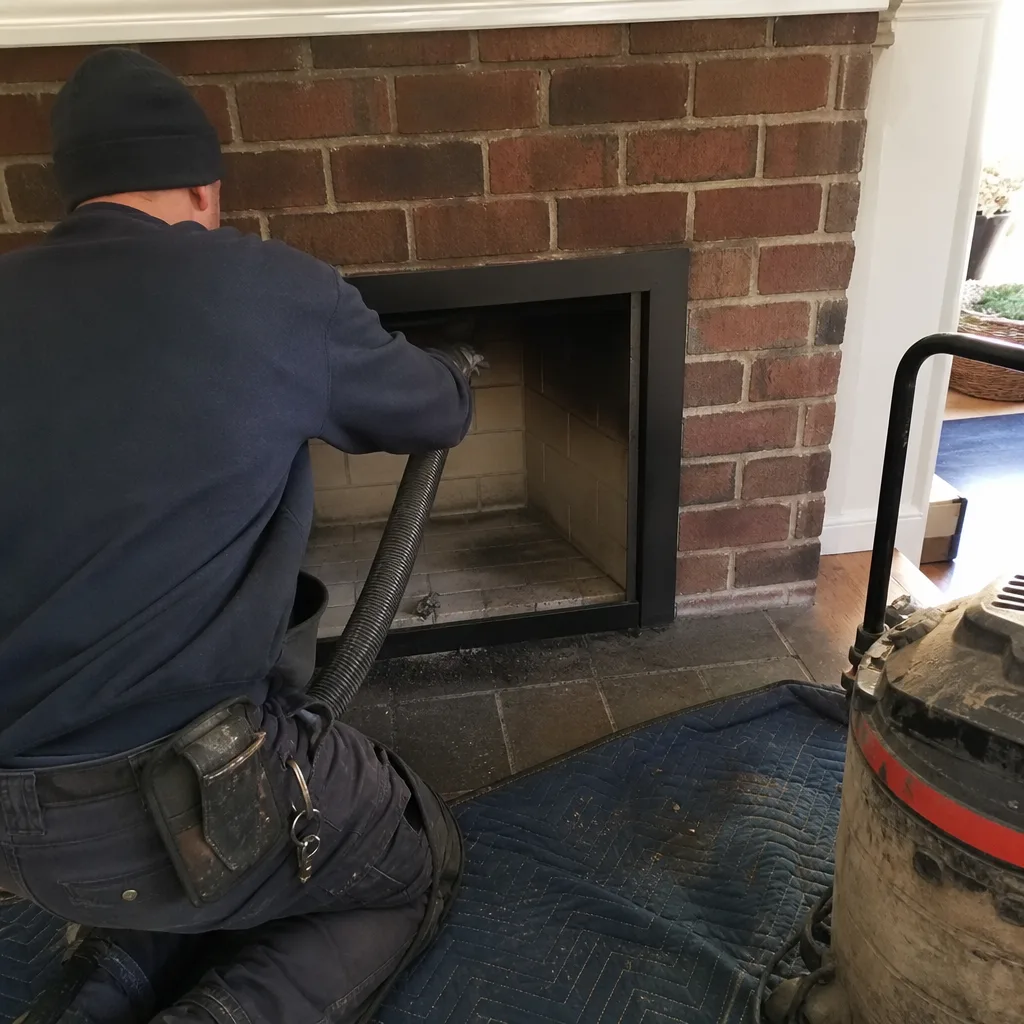
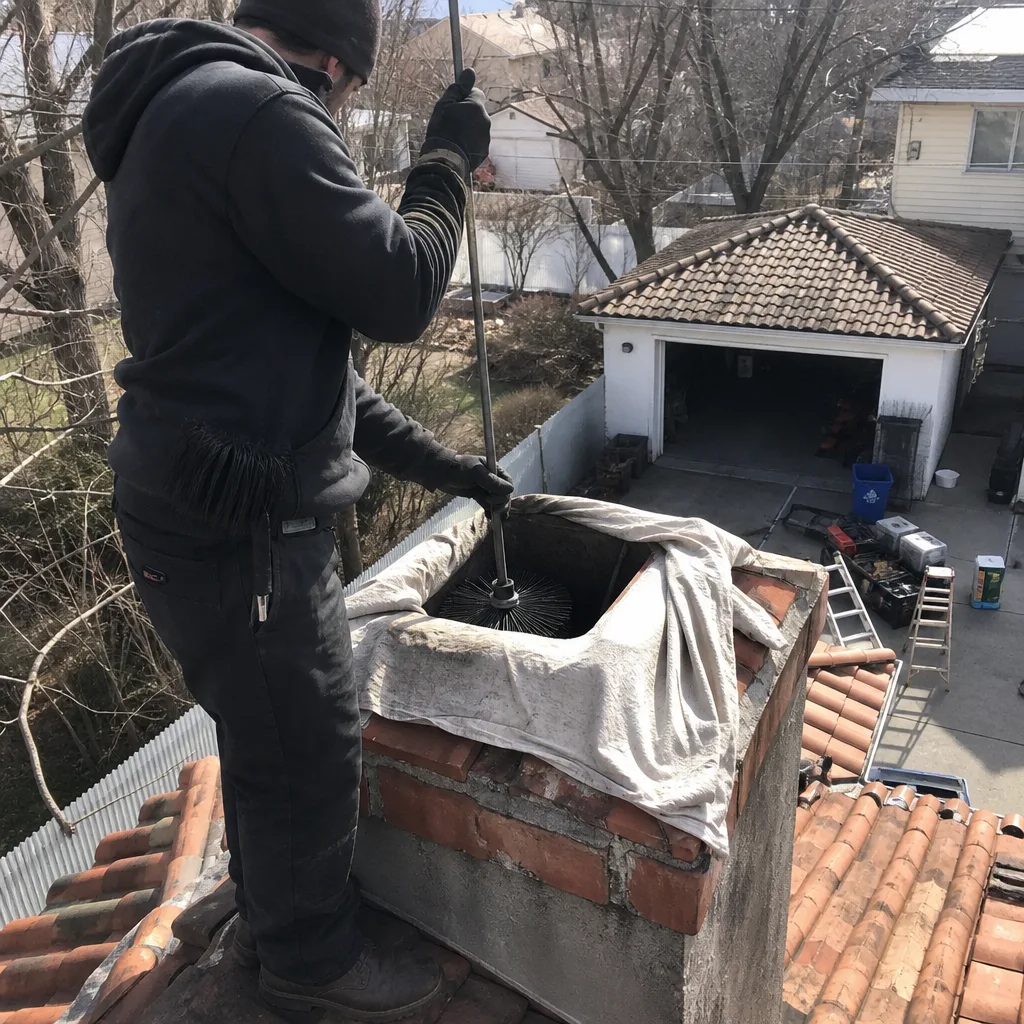
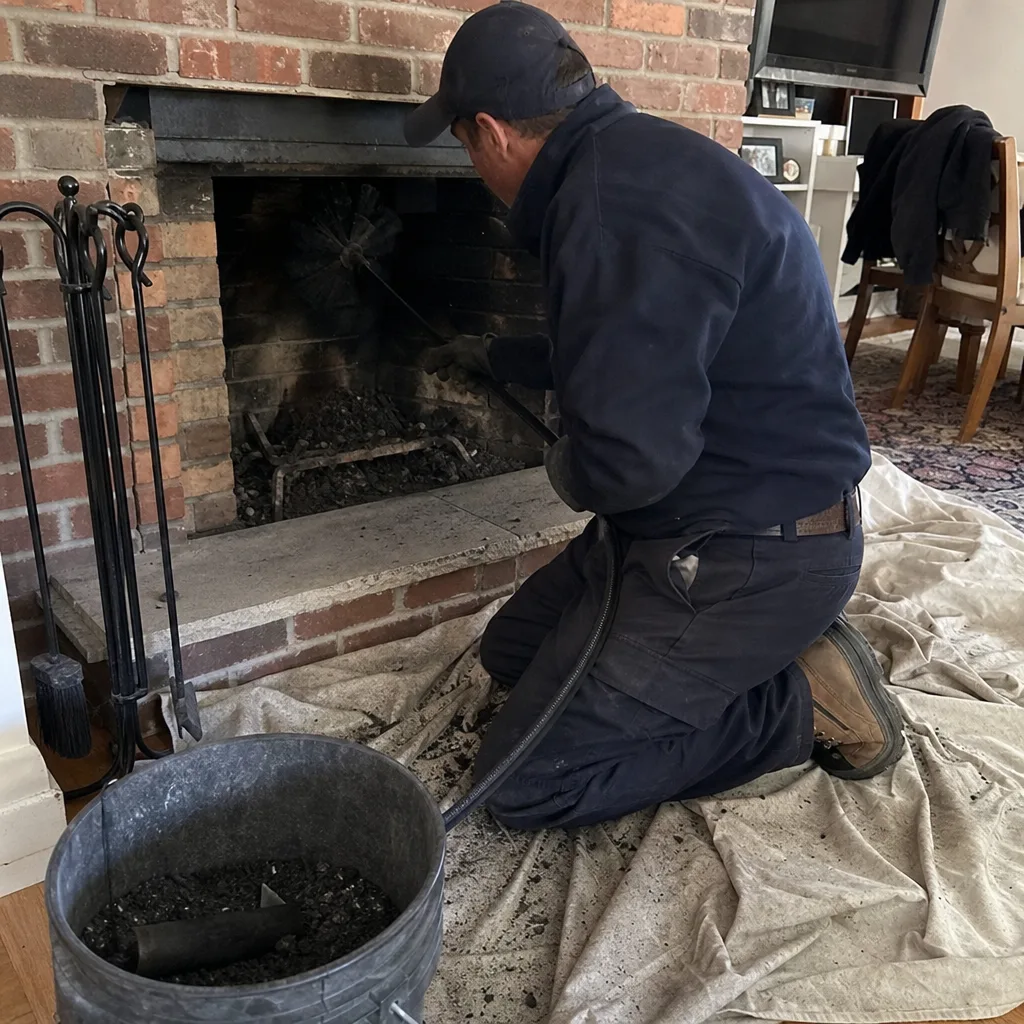
Chimney sweep logs do not sweep chimneys. They loosen some creosote - which then falls where a brush and vacuum still have to collect it.


 Before
 After
After Before
 After
After Before
 After
AfterFast, Reliable Fireplace Services Across Louisville
A wood-burning fireplace in Louisville isn’t decoration. Through January and February, when the Ohio River valley locks into weeks of gray cold, it’s often the difference between a livable evening and a miserable one. We run fireplace services across Jefferson County from our Louisville office, and our crews know what they’re walking into before they ring the bell: 120-year-old brick in Old Louisville, 1970s prefab boxes in Jeffersontown, and everything between. If your fireplace is drafting badly, smoking into the room, or you just haven’t had it looked at since you bought the house, call (980) 580-8641. We’ll put it on the schedule and give you a written price before anyone starts.
What happens when you call
- 1
A real person answersNo phone trees - you reach a local pro.
- 2
You get an upfront price rangeHonest numbers before anyone is dispatched.
- 3
A background-checked tech heads outLicensed & insured, dispatched right away.
- 4
You approve before work beginsNothing starts until you say go.
Why Emberly Chimney Cleaners Is Louisville’s Preferred Fireplace Services Company
Most Louisville homeowners have never seen the inside of their own flue. That’s not a knock on them. It’s a knock on the industry standard, which for decades was a flashlight and a shrug. We do it differently. Every fireplace service call in Louisville includes a camera scan down the flue, and the photo record goes to you when we’re done. Clause 4 of the Haven Standard, which we’ve operated under since 2009, requires it.
The freeze-thaw cycle here is brutal on masonry. Louisville sits right where winter temperatures seesaw across the freezing line, sometimes two or three times in a single week. Water gets into hairline cracks, freezes, expands, and by March the crown looks like a dry creek bed. Corrine Halstead, who runs our Louisville operation, trains every tech to look for that specific pattern on every inspection. It’s not subtle if you know what you’re watching for.
We’ve completed more than 38,000 inspections and cleanings since 2009, and every single one came with a written price before work started. Not a verbal estimate. Not a “we’ll see when we get in there.” A written scope, written price, and written warranty. That’s the entire point of how we operate.
Our Fireplace Services Services in Louisville

Wood Burning Fireplace
An open wood-burning fireplace in a Highlands or Crescent Hill home built before 1940 is usually running on the original clay tile liner, which is now 80 to 140 years old. We sweep it, camera it, and tell you exactly what kind of creosote is in there and what it means. Louisville’s river-valley humidity does something specific: it causes first-degree, fluffy creosote to harden into a stubborn second-degree coating faster than it would in a drier climate. That’s not a reason to panic. It’s a reason to sweep on a real schedule, not “whenever I remember.”

Fireplace Insert
An insert changes the math. It’s more efficient, but it also runs hotter and longer than an open fire, which means the flue loads creosote differently. In eastern Jefferson County, where 1970s ranch homes got prefab fireplaces during the energy-crisis wood-burning boom, we see inserts connected to flues that were never rated for what the insert throws at them. We inspect the connection, check the liner, and if the liner’s compromised, we line it. HeatShield and DuraFlex liners are what we stock for Louisville jobs because they hold up to the wet winters here.

Damper Repair
Here’s what we see constantly in Louisville’s vintage homes: the original throat damper has warped or rusted completely open, so the chimney becomes a permanent cold-air shaft into the living room. You’re heating the house and the chimney is exhaling it into the Ohio River valley. A top-sealing damper fixes this. It mounts at the crown and actually seals when closed, instead of the leaky metal flap the house came with. We install them in Germantown, Crescent Hill, and everywhere else in Louisville where the heat bill has been quietly subsidizing the outdoors.

Gas Fireplace Service
Gas fireplaces in Louisville are mostly conversions from old coal or wood setups, and the gas logs sit in a firebox that was never designed for them. We clean the burner, check the venting, and verify the gas line is sound. If the fireplace is vented through an old flue, that flue still needs to be checked, because a partially blocked flue on a gas unit is a carbon monoxide risk, not just a draft problem. No one gets a clean bill of health without a camera in the flue.
 BeforeAfter
Trusted Brands We Service in Louisville
We service and source parts for the brands that dominate Louisville’s fireplace inventory: HeatShield for liner repair, DuraFlex for stainless relining, and Copperfield for damper hardware and chimney components. If you have a fireplace insert or gas unit and you aren’t sure what brand it is, we’ll identify it during the visit and tell you whether parts are worth ordering or whether a replacement makes more sense. Because we buy through Haven’s network, the pricing on materials stays honest. Most common parts for Louisville jobs are on the truck or available within a day or two.
Common Fireplace Services Problems We See in Louisville Homes

- The hidden second flue. Old Louisville homes built between the 1880s and 1910s almost always have two flues: one for the fireplace, one for the coal furnace that’s been gone for 70 years. The furnace flue is often sealed at the firebox but left open at the crown. It becomes a vertical shaft for rainwater, raccoons, and debris, and the homeowner never knows it exists. A camera scan finds it in about ten seconds.
- Crown cracking from freeze-thaw cycling. Louisville’s winter temperatures swing across 32°F constantly, which is worse for masonry than a steady freeze. Crowns crack, water gets in, and the spalling starts. By the time you see loose brick on the exterior, the interior flue has been getting wet for years.
- Humidity-hardened creosote. The Ohio River valley holds moisture in the air even when it’s cold. Creosote that would stay fluffy and easy to sweep in a dry climate bakes into a hard glaze here, especially in fireplaces used only a few times per season. Second-degree creosote doesn’t brush off. It takes rotary tools and time.
- Cold-air pull through failed dampers. We see it in every Louisville neighborhood: the damper is either missing, warped, or rusted into the open position, so the house is losing conditioned air 24/7. The fix is usually straightforward, and it pays for itself in a single heating season.
Pricing for Fireplace Services in Louisville, KY
A standard fireplace sweep and Level 2 camera inspection in Louisville runs $189 to $289, depending on flue count and creosote condition. If a damper replacement is needed, most jobs fall between $350 and $550 for a top-sealing unit, installed. Fireplace insert installation ranges from $1,800 to $4,200 depending on the unit and whether the flue needs a new liner. Wood-burning fireplace restoration, which is common in Old Louisville and the Highlands where original fireboxes have cracked, typically runs $1,200 to $3,500. Every price we quote is written, itemized, and handed to you before any work starts. No one starts a job without you seeing the number in writing. For an exact quote, call (980) 580-8641. The estimate is free.
Here’s what you’ll walk away with on any visit: a written scope of work, the price in writing, the photos from the camera scan, and a warranty document. That’s Haven Standard Clause 1 and Clause 4, and that’s been our default since 2009.
We Also Serve Cities Near Louisville
Our Louisville crews travel throughout the metro and into surrounding areas. We run fireplace service calls in Radcliff, Florence, and Covington regularly, and the same pricing structure and written-quote policy applies no matter which side of the county line you’re on. If you’re in one of those areas, check the local Fireplace Services in Louisville details or call us directly for scheduling.
For a broader look at everything we handle, including repairs, relining, and full rebuilds, see our Fireplace Services overview page.
Serving Louisville, KY - Our Local Coverage Area
We’re based in the Louisville area and know this community well. Use the map below to see our service coverage - if you’re nearby, we can almost certainly help.
FAQs - Fireplace Services in Louisville

Yes, and honestly that’s one of the most important flues to inspect, even though you never use it. In Old Louisville, that sealed-off flue is almost always the original coal-furnace flue, and it’s typically still open at the crown. You’ve got an open pipe running from your chimney top down through the middle of your house, sealed at the bottom where you can’t see it. Water and animals get in, and the first sign is often water staining on an interior wall nowhere near the fireplace. We camera every flue on a multi-flue chimney, including the abandoned ones. Call (980) 580-8641 and we’ll schedule it.
It’s the humidity. The Ohio River valley holds moisture year-round, and that moisture accelerates how fast creosote hardens from a brushable powder into a tacky, stubborn second-degree coating. Fireplaces used infrequently are actually worse for this, because the flue never gets hot enough long enough to cook off the early deposits. If you only burn a handful of times each winter in the Highlands, schedule a sweep every other year at minimum, and burn smaller, hotter fires with dry hardwood when you do.
Yes, in most cases a top-sealing damper solves the cold-air draft that converted coal-era fireplaces are famous for. These homes were built tight for a coal fire that burned constantly, and the original throat dampers were never designed to seal properly. A top-sealing damper mounts at the crown and actually closes, which stops the chimney from pulling warm air out of your house when there’s no fire. It’s a straightforward install and it makes an immediate difference in how the room feels.
Louisville’s freeze-thaw cycle is unusually aggressive. Winter temperatures here don’t stay below freezing; they oscillate above and below 32°F repeatedly from December through March, sometimes daily. Water seeps into microscopic pores in the crown, freezes and expands, and the cycle repeats until chunks start spalling off. Add the year-round river-valley humidity, and you get crowns that fail faster here than in drier inland cities. The fix is a proper crown with expansion space and the right mix, not just another layer of patch cement.
Yes, typically every year, and sometimes twice a year if you’re burning as a primary heat source. Inserts run hotter and longer than open fireplaces, which sounds cleaner, but they also run at lower air settings for longer stretches, which produces denser creosote in the liner. We service a lot of 1970s ranch homes in eastern Jefferson County where the insert was connected to an original clay liner that was never rated for the temperatures or the loading. If that describes your setup, get it camera’d. If it needs a liner, HeatShield or DuraFlex will run cooler and safer than what’s currently in there. For a Louisville insert inspection, call (980) 580-8641.
The Chimney You Can’t See: Louisville’s Dual-Flue Problem
Here’s something that applies specifically to Louisville, and it’s the kind of thing a generic fireplace services page will never tell you. Old Louisville is the largest Victorian-era preservation district in the United States. Hundreds of homes built between the 1880s and 1910s have original masonry chimneys with two flues: one for the parlor fireplace, and a second for the coal furnace that was converted to gas decades ago. When that conversion happened, most contractors simply bricked off the firebox opening and left the furnace flue exactly as it was at the top of the stack. Open to the sky. Open to rain, squirrels, birds, and debris. Silently accumulating water inside the chimney structure, season after season, while the homeowner on the couch below has no idea the second flue even exists.
We’ve pulled nests, carcasses, and years of compacted debris out of these abandoned flues. The water damage they cause shows up first as spalling brick or interior staining on a wall that isn’t anywhere near the fireplace. The homeowner calls a mason. The mason repoints the brick. A year later, the stain is back, because the actual source is an open flue twenty feet above their head. You cannot diagnose this from the firebox. You can only see it with a camera in the flue. And when the camera finds it, the fix is usually straightforward: a proper cap, sometimes a partial reline or seal, and documentation so the next owner of that house knows exactly what’s in the chimney.
Out in eastern Jefferson County, the failure mode is different. We serviced a 1970s ranch whose fireplace insert was drafting poorly. The culprit was third-degree creosote glaze in the original clay flue liner, baked on hard enough that our tech had to use a rotary chain whip before installing a new HeatShield liner. The damper was also deteriorated, so we replaced it with a top-sealing model to stop the constant cold-air pull between fires. Same county, same company, two completely different problems. Louisville isn’t one housing stock. It’s several generations of it, stacked, and each generation fails in its own way. You want a crew that can read the difference.
Call (980) 580-8641 for a fireplace service visit anywhere in Louisville. You’ll get a camera inspection, a written price, and a documented record of everything we found. We’ll tell you plainly if work can safely wait, and we’ll show you the evidence either way. That’s the job.
Written by Corrine Halstead, Owner at Emberly Chimney Cleaners, serving Louisville under the Haven Standard since 2009.
Fireplace Services in Nearby Areas